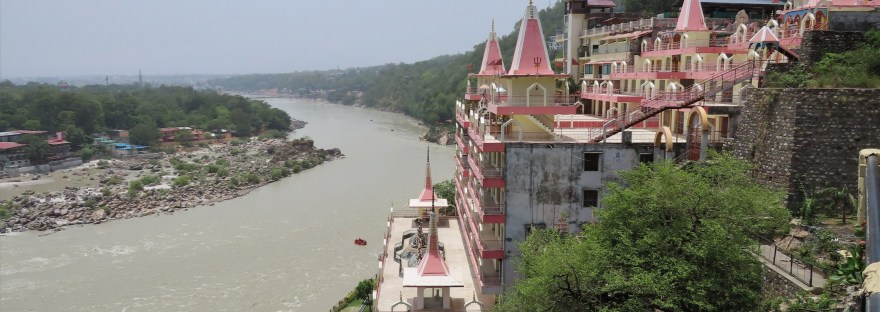
After a somewhat challenging start to our trip to India, we needed a place that was going to help us unwind a little bit. Following some research, we decided that Rishikesh had the best prospects for our purpose. Situated on the banks of the river Ganges with its sacred water, it is considered a Holy City and has long been popular with tourists looking for a spiritual retreat. Would we be able to overcome the challenges on our path and connect with the holiness of Rishikesh?
A difficult start
Bus problems
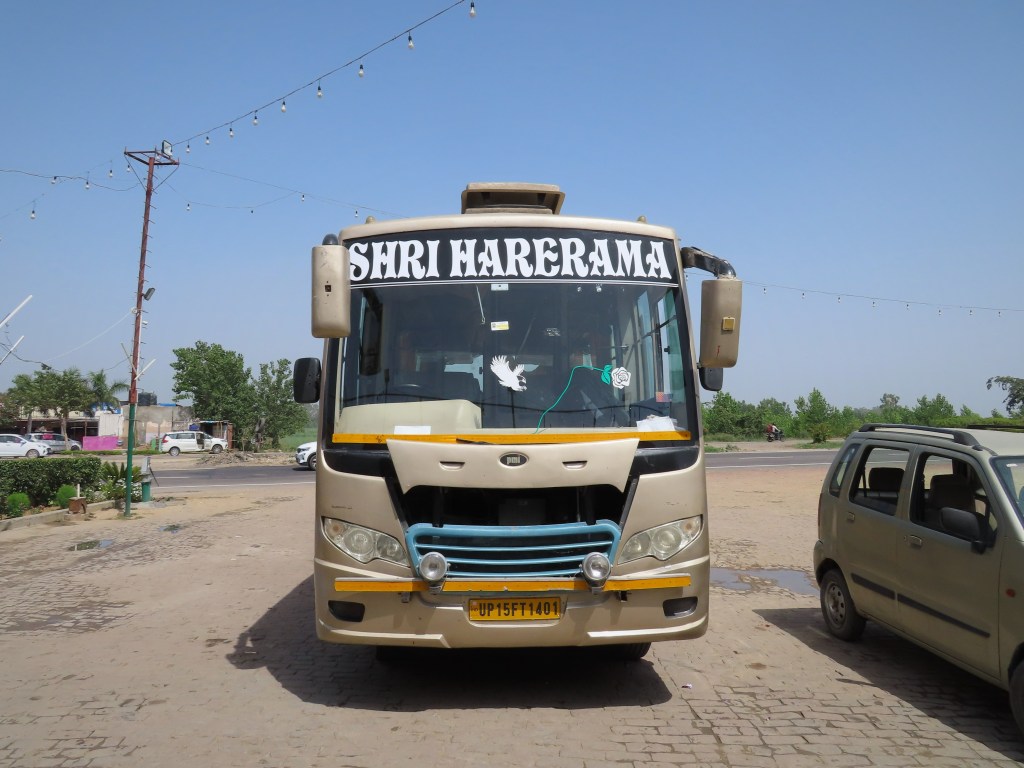
The bus ride from Delhi to Rishikesh had been mildly uncomfortable yet bearable, when suddenly the vehicle broke down. The gearbox screeched desperately, but nothing happened. We were on the side of a busy highway somewhere on the countryside and I started imagining what would happen if we really got stuck here in this scorching heat. One of the bus supervisors left the vehicle in order to investigate the problem. The other passengers, all Indians, remained surprisingly calm and so I decided that I should not worry too much yet. Indeed, not long after, the bus sprung back into gear and we immediately started driving again, only to come to another stop some hundred meters further. Apparently, the guy who fixed the problem still had to get back on the bus!
Getting to Rishikesh
It was already dark when we stood in front of the Lakshman Jhula bridge hours later, on the other side of the river from where our hostel was, and noticed that it was closed. The taxi who had brought us here was long gone, our bags were starting to feel heavy and our phones were running out of power. It had not been a straightforward journey since our bus from Delhi had dropped us on the far side of a highway exit.
After we had run across the busy road and climbed over the crash barrier with our big bags, it had taken us some time to realize that the tuktuk drivers were right when they claimed that we were still quite a distance away from Rishikesh. We initially thought that they might be trying to scam us and so we haggled quite hard for the ride to the town center. Once we were traveling on the little country roads, the sun turning orange in the dusty sky during the long ride, we understood our mistake. We probably even negotiated too low of a price!
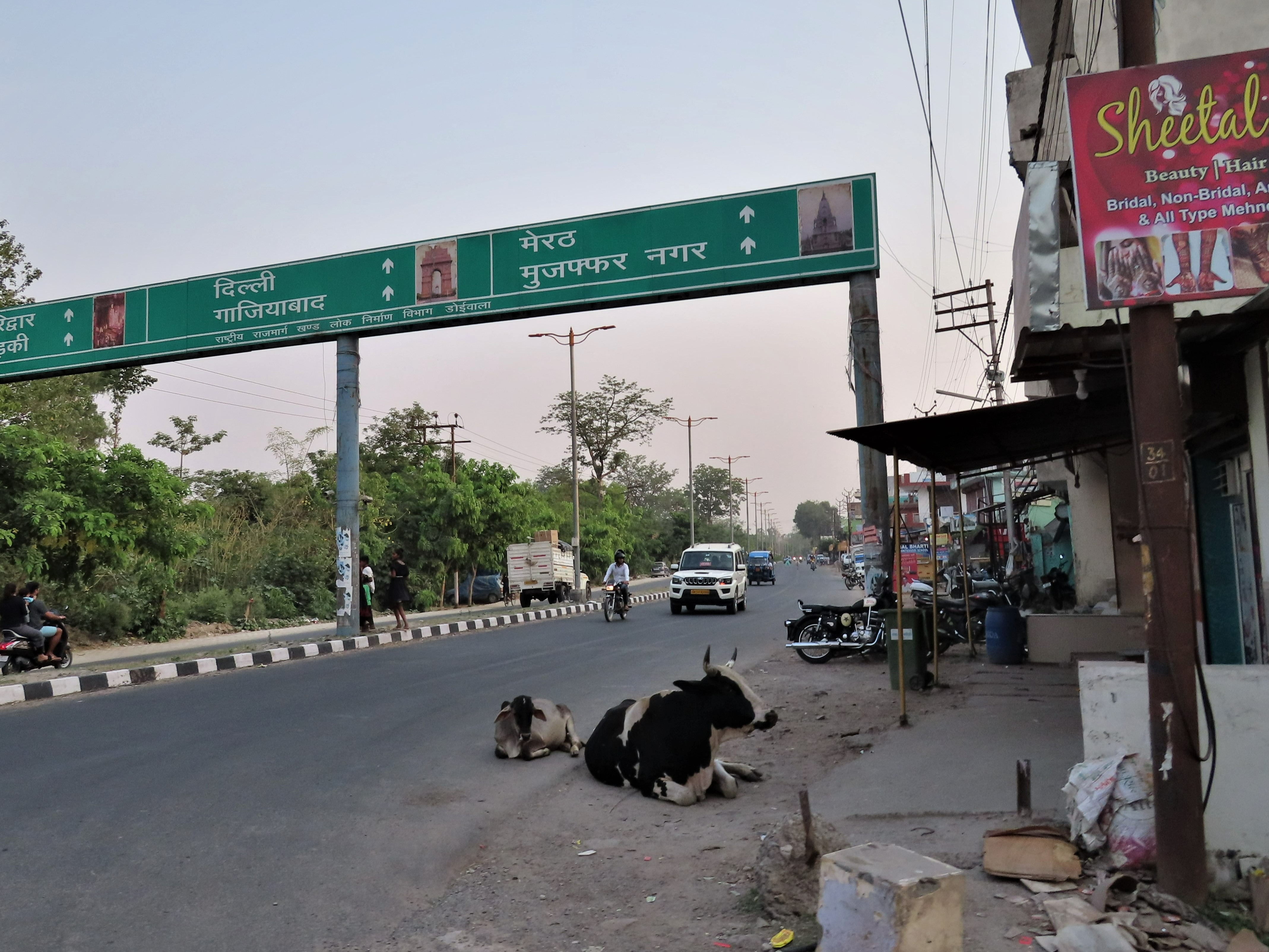

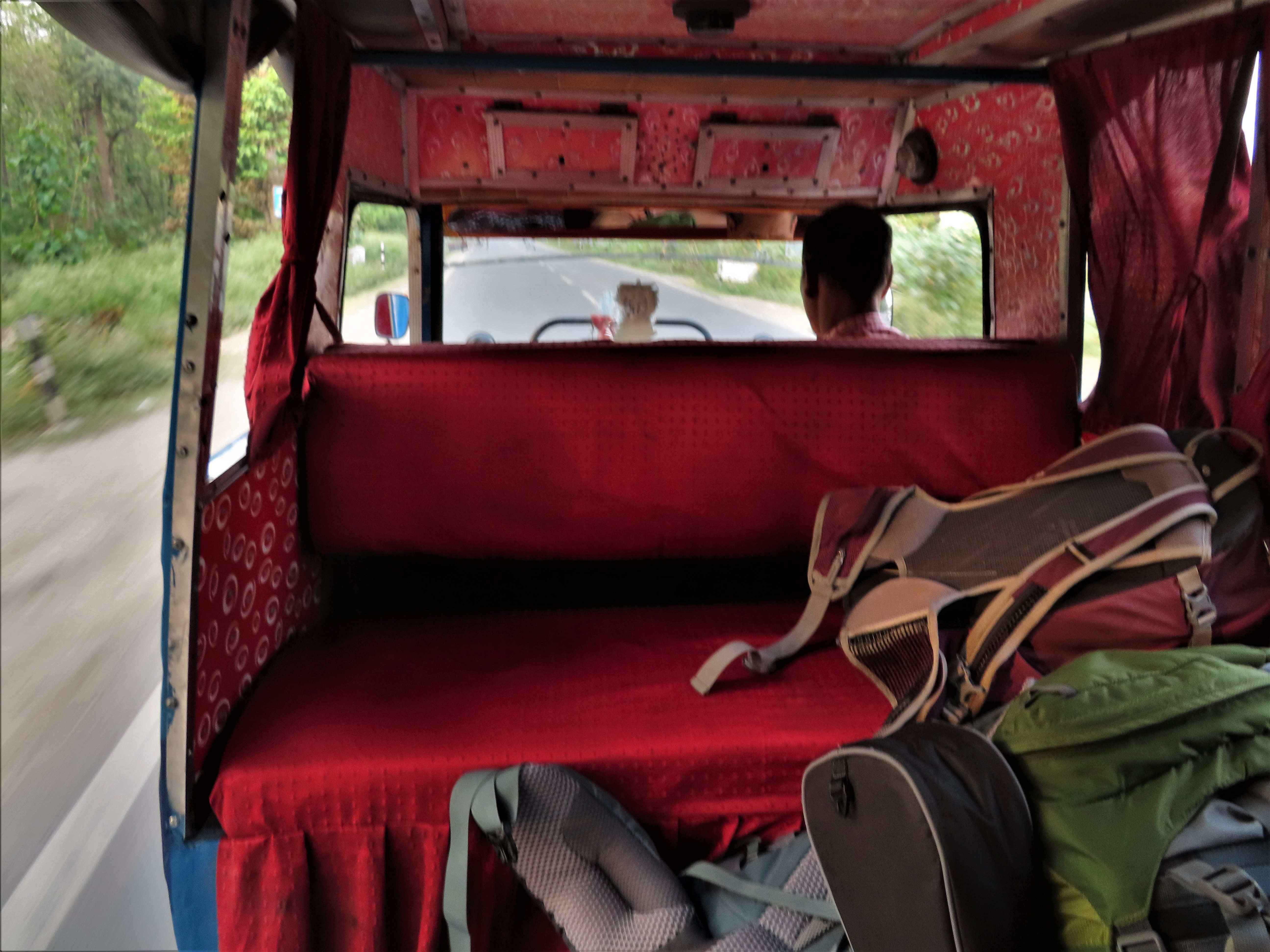
When we were dropped off at the bus station in downtown Rishikesh, we still needed another ride to get to the touristic area several kilometers further. According to our hostel’s instructions, a certain road was closed for traffic, so we needed to either take a ferry or drive around by taxi. Unfortunately, the taxi drivers who had soon gathered around us had not only no clue about a ferry, but also a hard time understanding where we were trying to go. Eventually, we asked them to drop us at the pedestrian bridge, which we would only need to cross in order to reach our hostel on the other side of the river.
But that bridge was closed, as we had just found out. I realized this was what the hostel had referred to – a closed bridge, not a closed road. The ferry suggestion suddenly made more sense, but unfortunately it was not running this late. We were surrounded by a lot of little shops and restaurants, but at this point, all we wanted was to put down our heavy bags at the hostel.
The way to the hostel
The receptionist tried to help us over the phone: they would pick us up by car from a specific spot. All we had to do was get there and call them back. But things happened differently. We never found the spot, taxi and tuktuk drivers told us either that it was closed or too far, and our phones and power banks ran out of power. Eventually, a tuktuk driver brought us to a different, very crowded pedestrian bridge a good end further downstream.
All we had to do was get there and call them back. But things happened differently.
Once on the other side, we covered the final stretch on foot using the last 1% battery I had left on my phone to guide us. It miraculously held up and we found the receptionist waiting for us on the threshold.
“I wondered where you were!” he exclaimed, before ushering us in as soon as he saw the exasperated look on our faces, which soon made place for one of relief. It had not exactly been an easy day, but we had finally made it!
A holy place
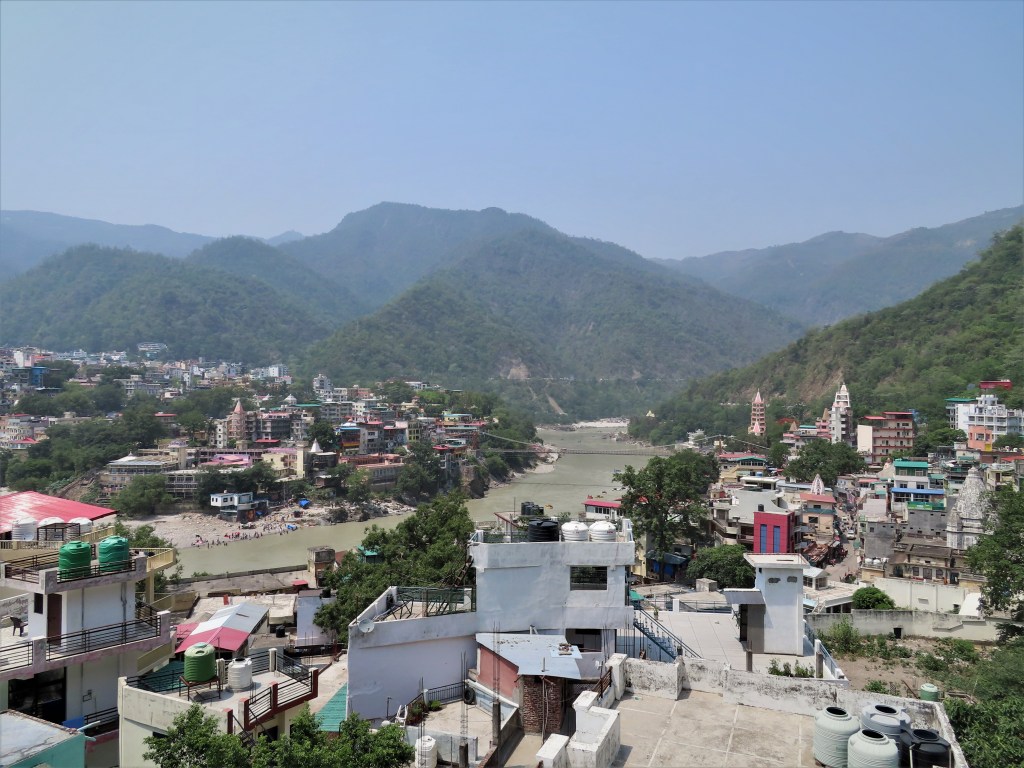
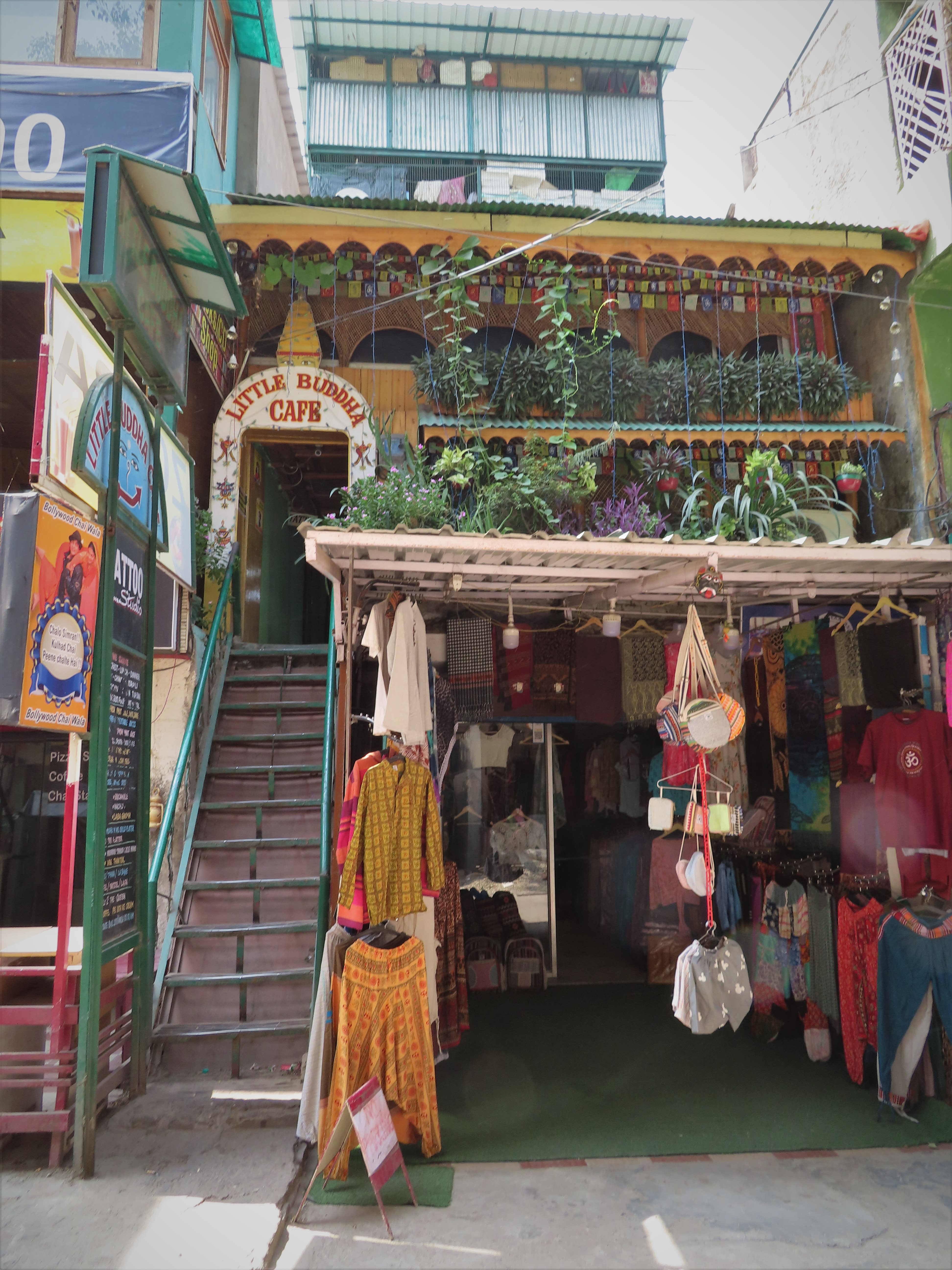
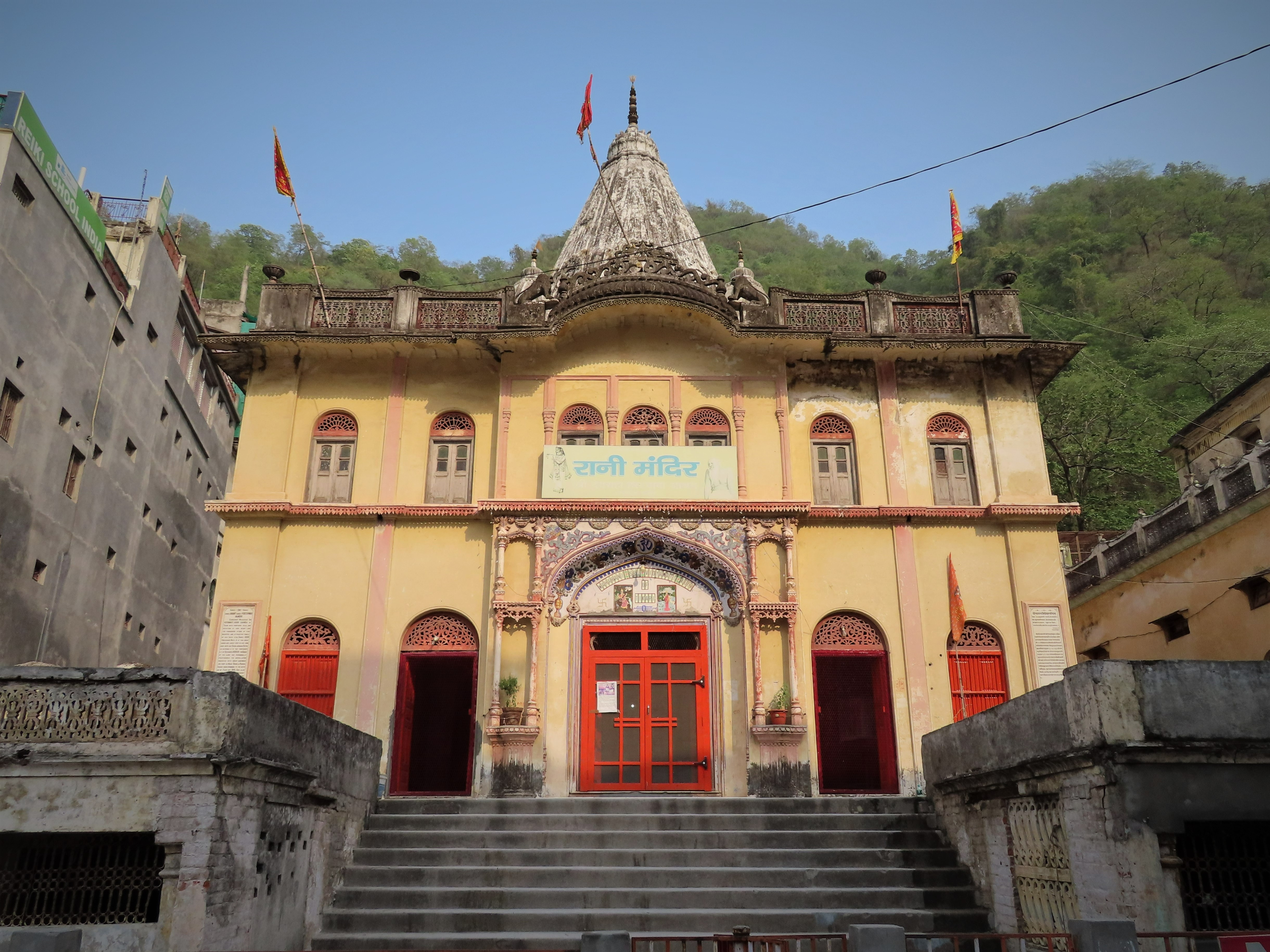
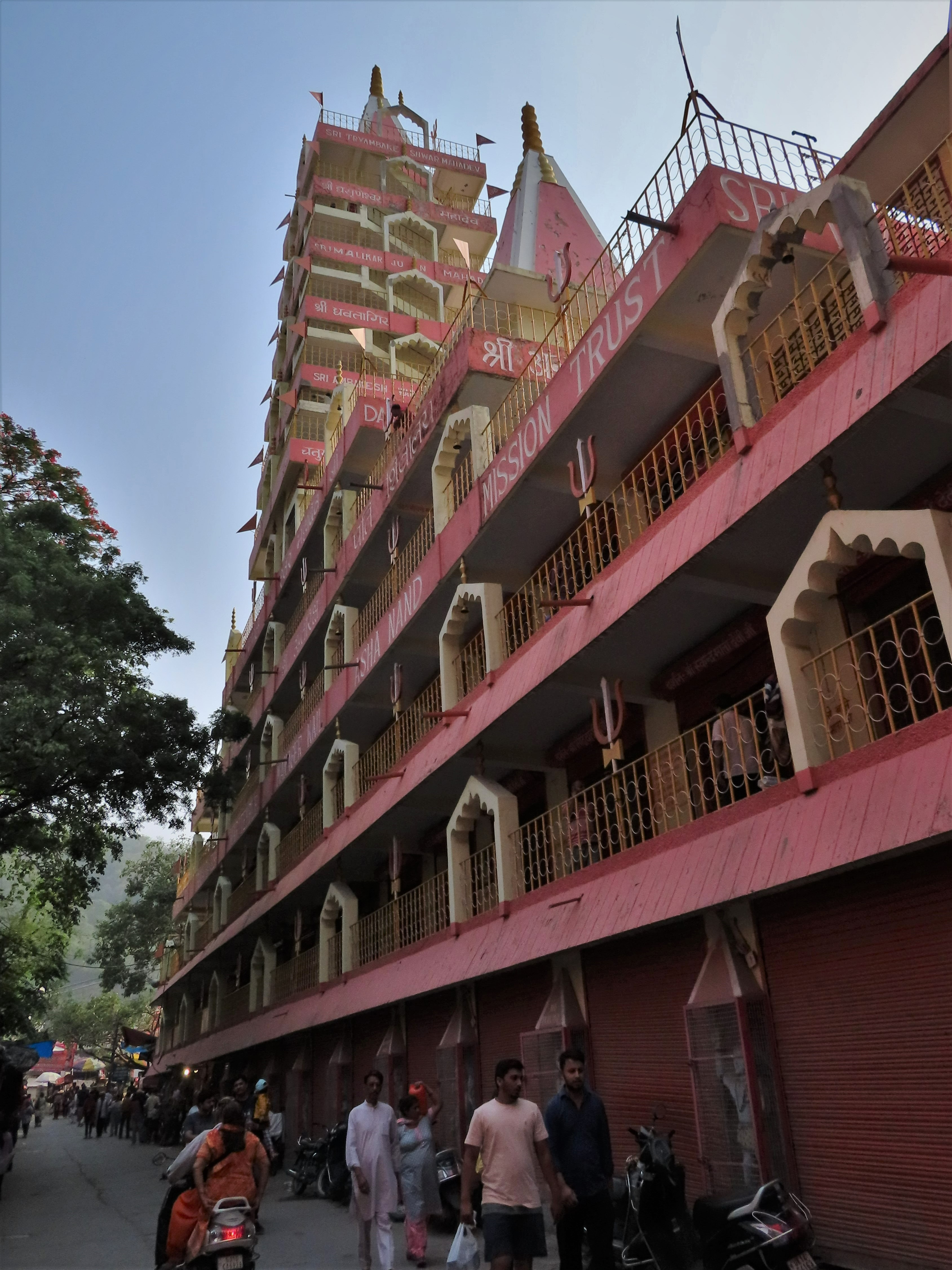
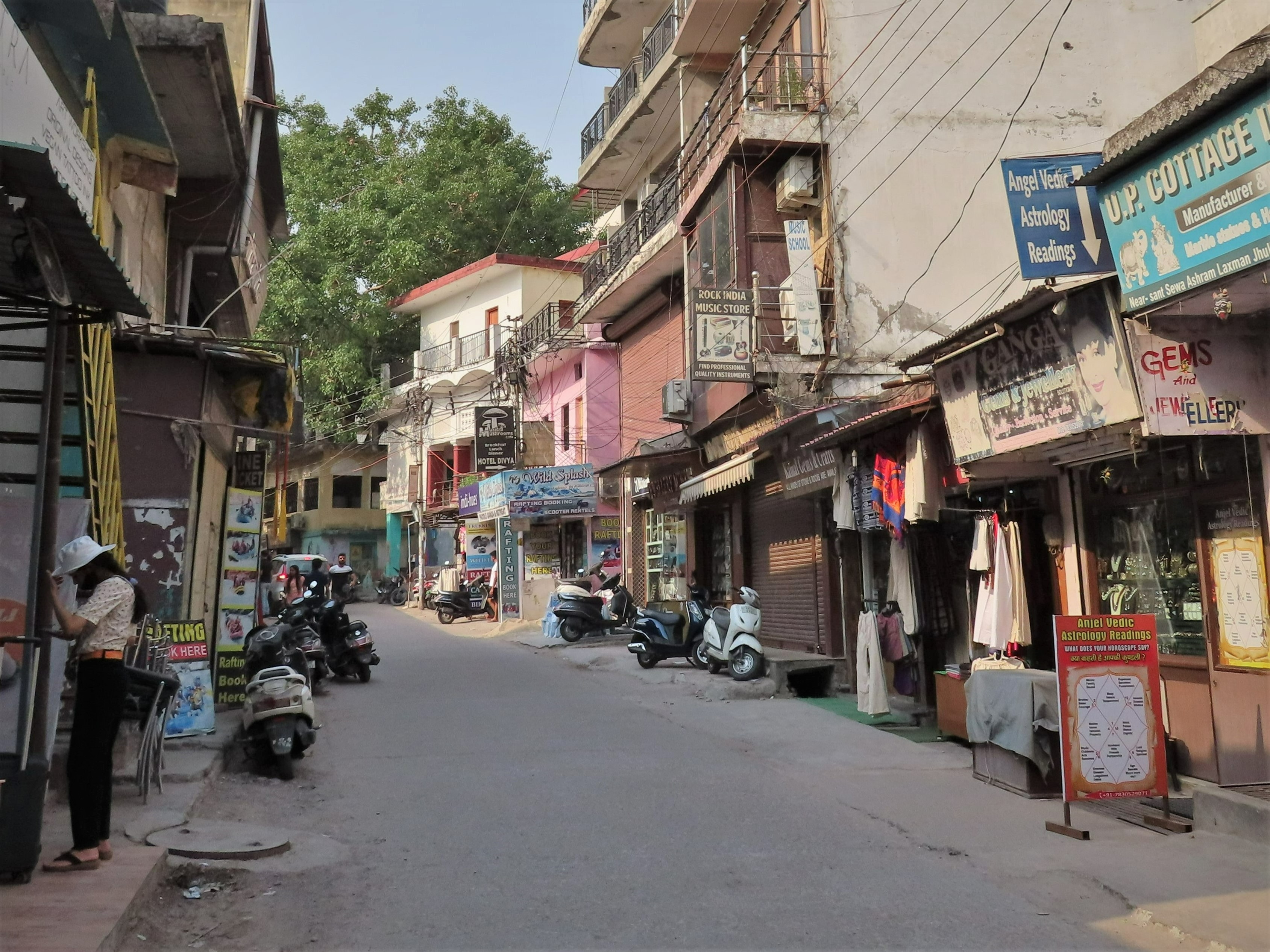
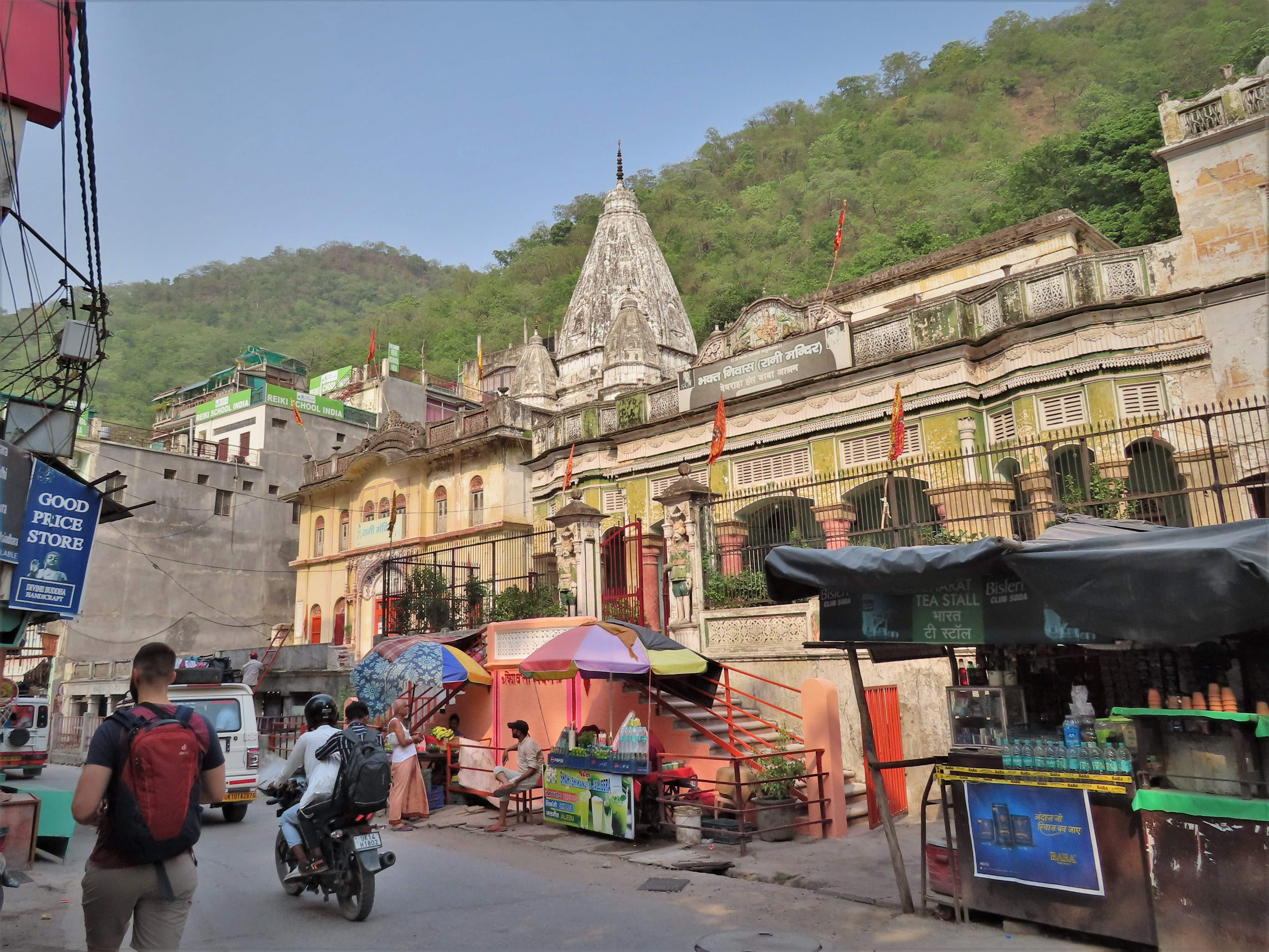
Rishikesh was a big change from Delhi. The drivers were still crazy, but the streets were smaller and the urban environment had a completely different vibe to it. Colorful little stores and restaurants, modestly decorated or with a relaxed hippie look, alternated with an occasional temple and a view on the grey-colored river Ganges below. As we walked through the main street on our side of the river, I imagined what this place must have been like pre-covid (probably buzzing with western tourists), but also back in the sixties, when this was a popular destination on the hippie trail.


Vegetarian menus
The hippie vibe in some of the cafés really appealed to me and we sat down in a place called Little Buddha Café, with a view on the river, to get some breakfast.
“Did you know all the food here is vegetarian?” D remarked. Indeed, as I looked at the menu, there was no single dish which contained meat or fish.
“Since Rishikesh is a holy place, it is forbidden to serve meat or to kill an animal here.”
I could certainly live with that! What a wonderful feeling not to have to skim through the menu at this or any other restaurant in Rishikesh, just to find the vegetarian options. The entire menu was always available to me! I was a little worried for D though, since he’s not a vegetarian, but all the food turned out to be so good and nutritious that he never had a problem finding a dish to his liking.


The holy cows of Rishikesh
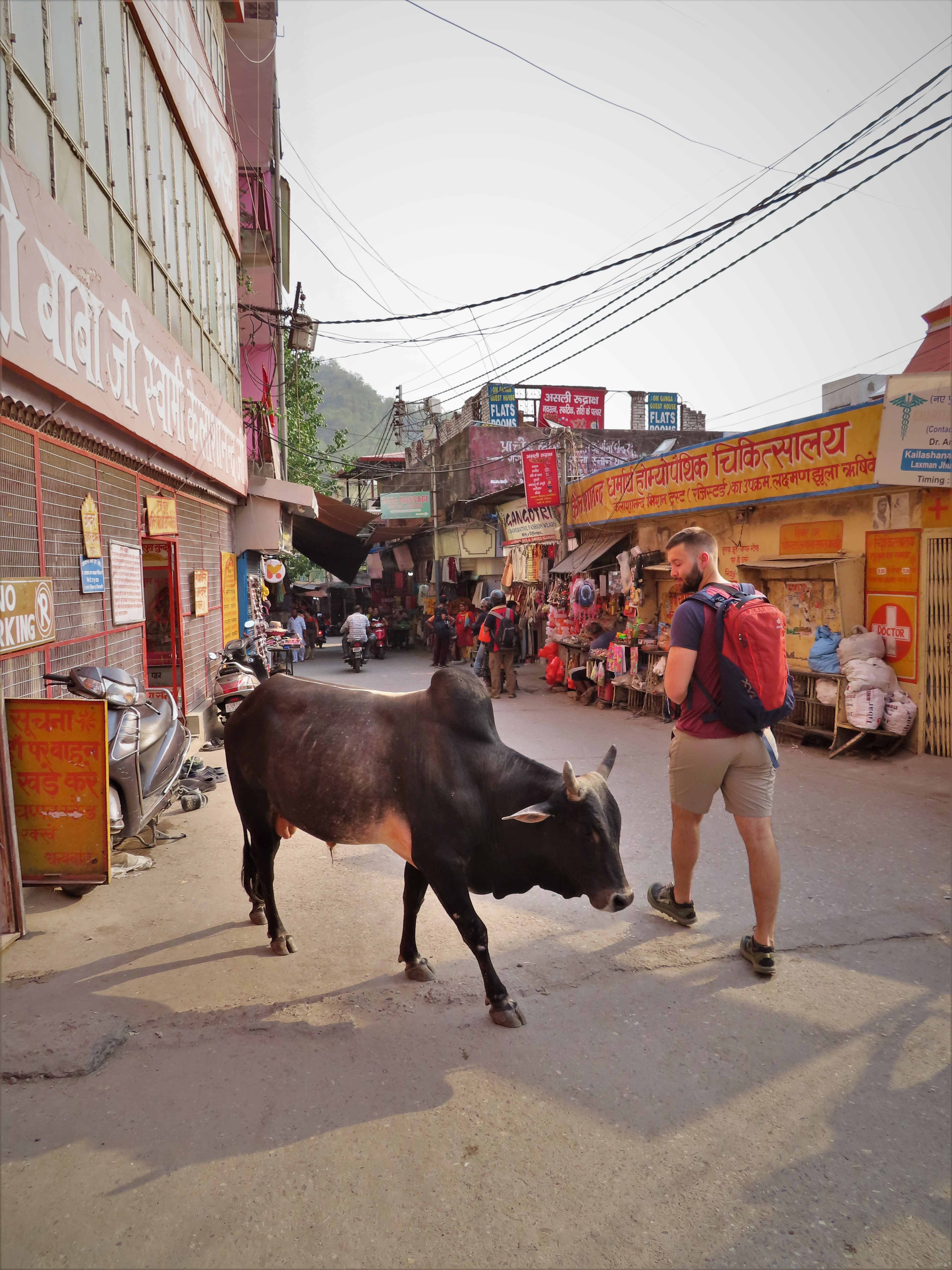
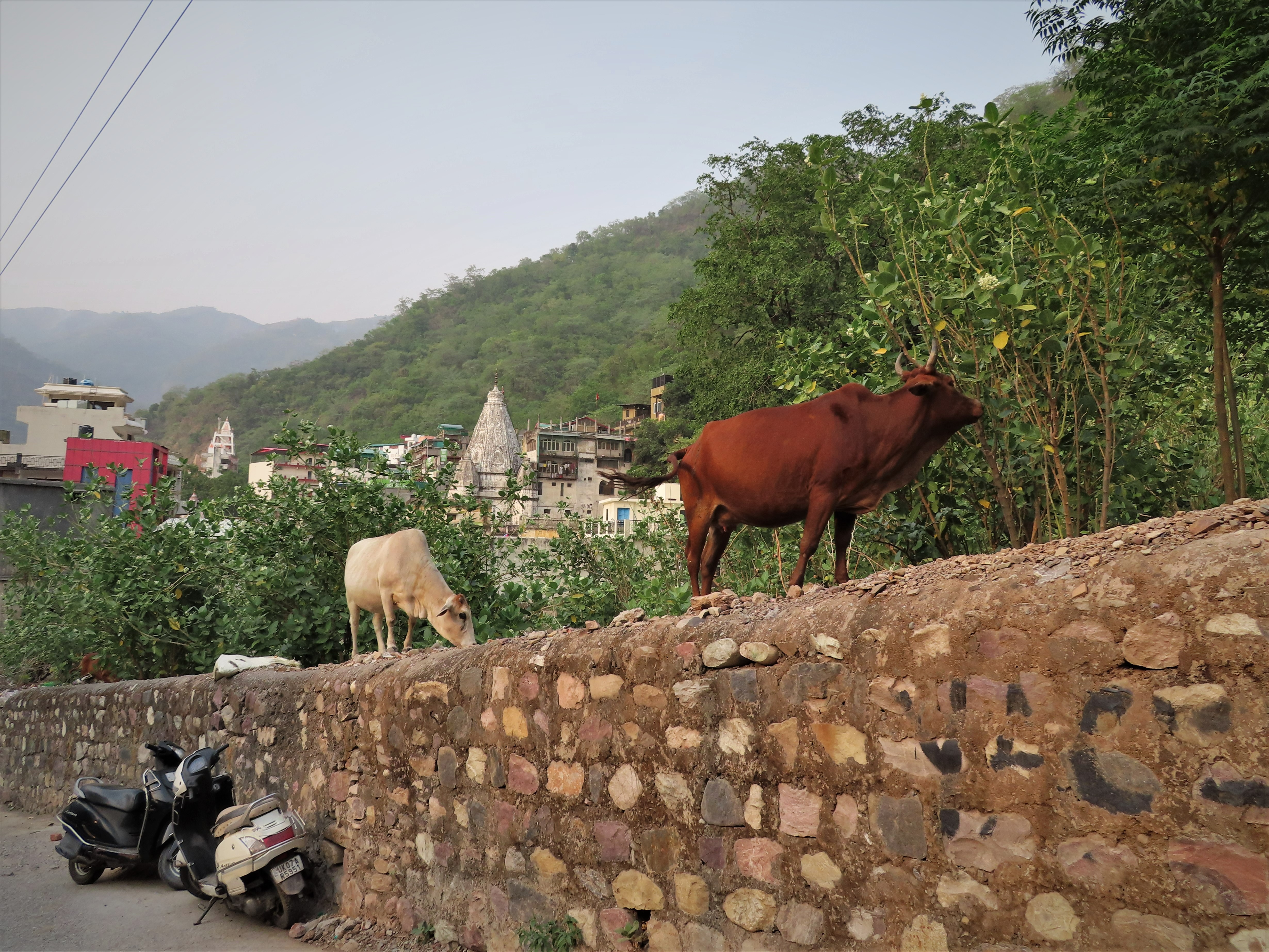
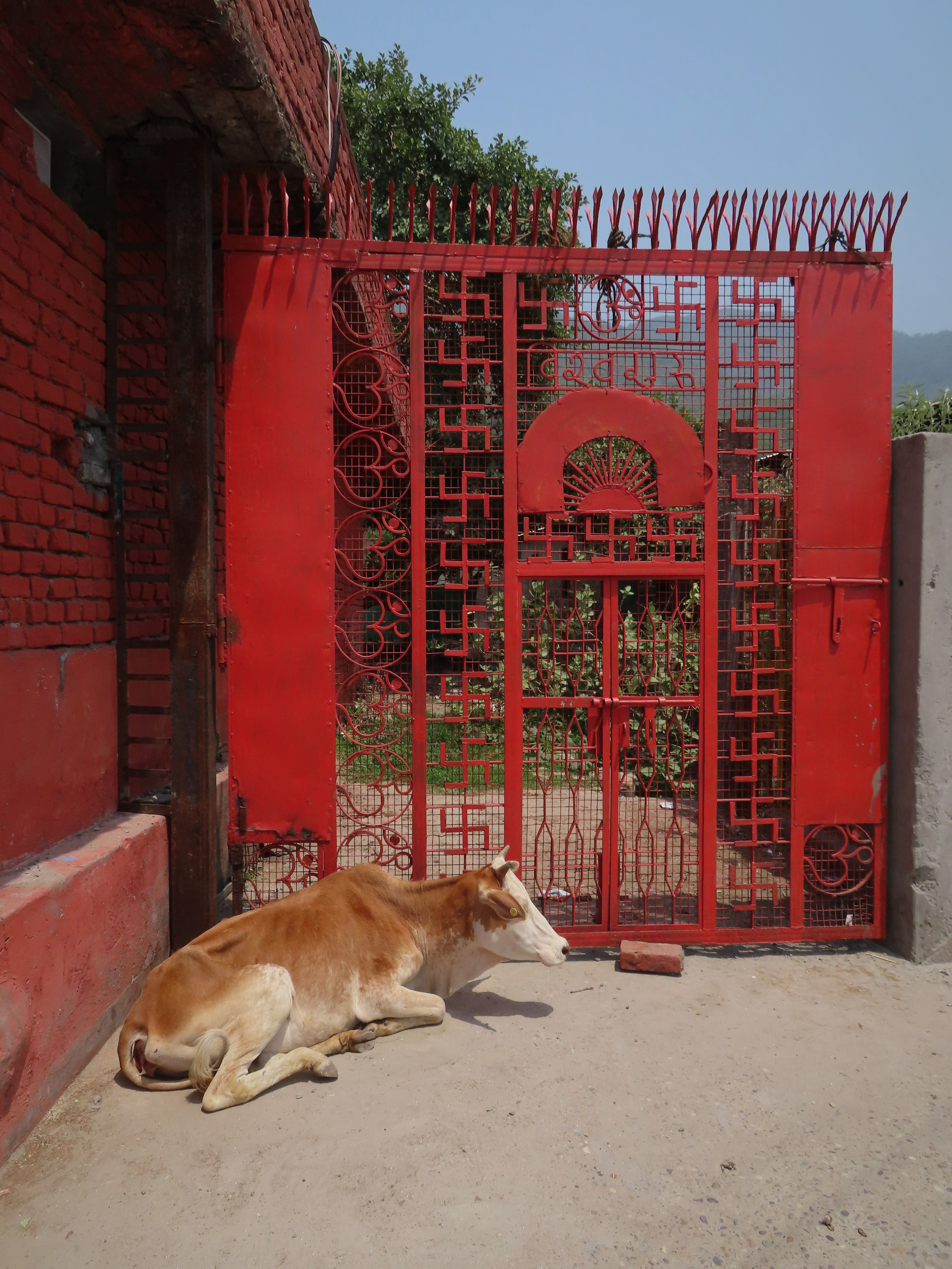
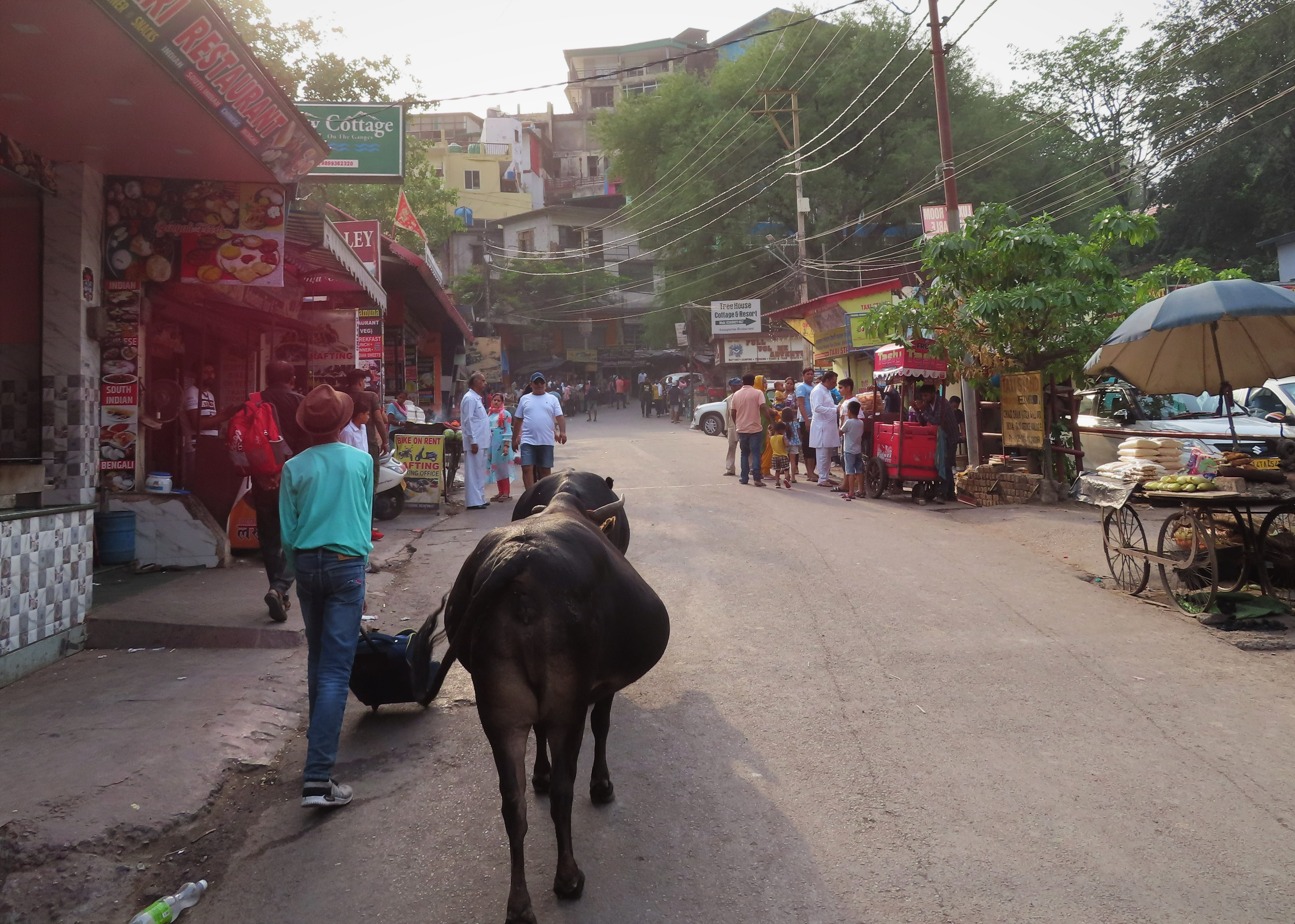
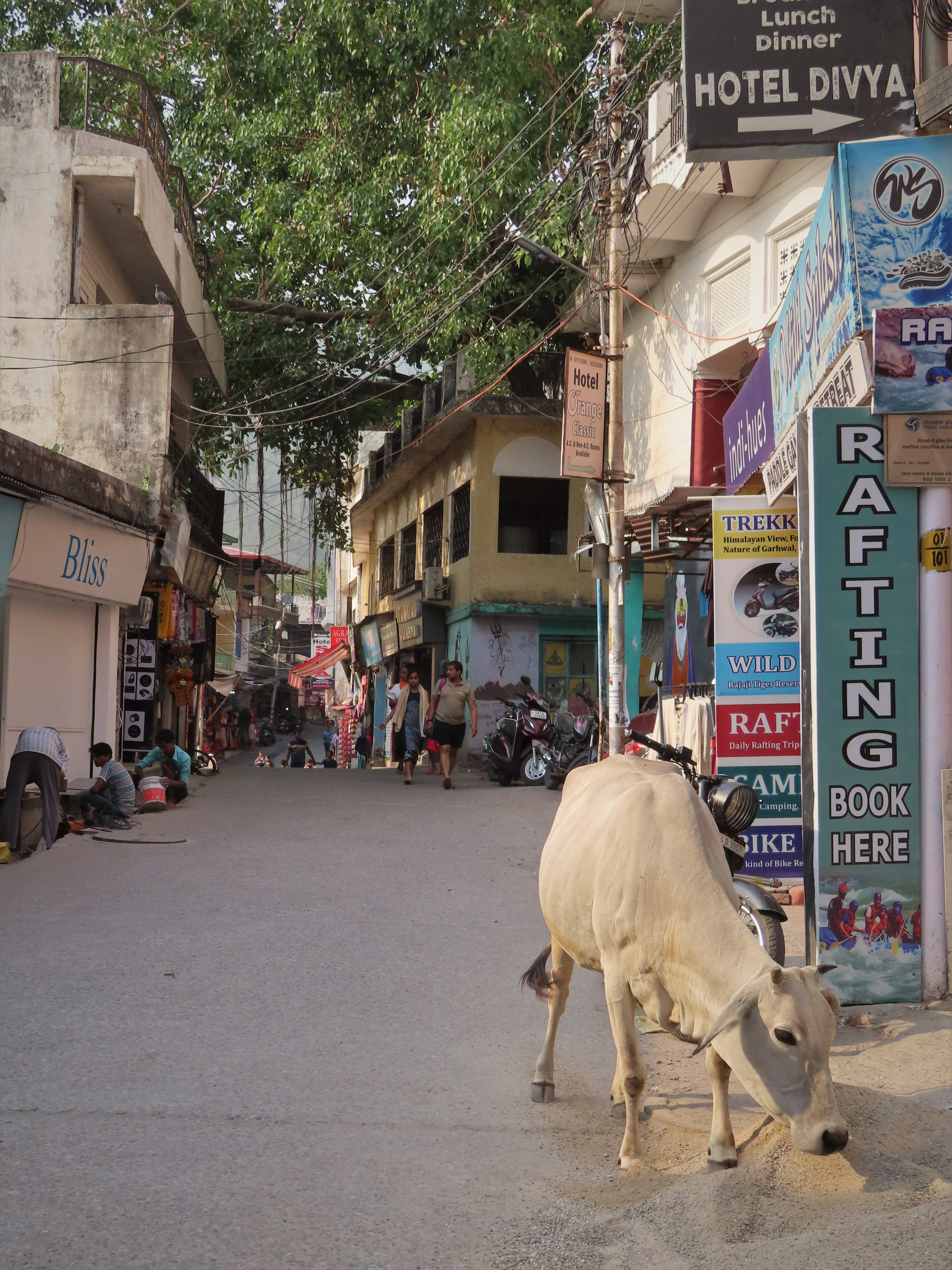
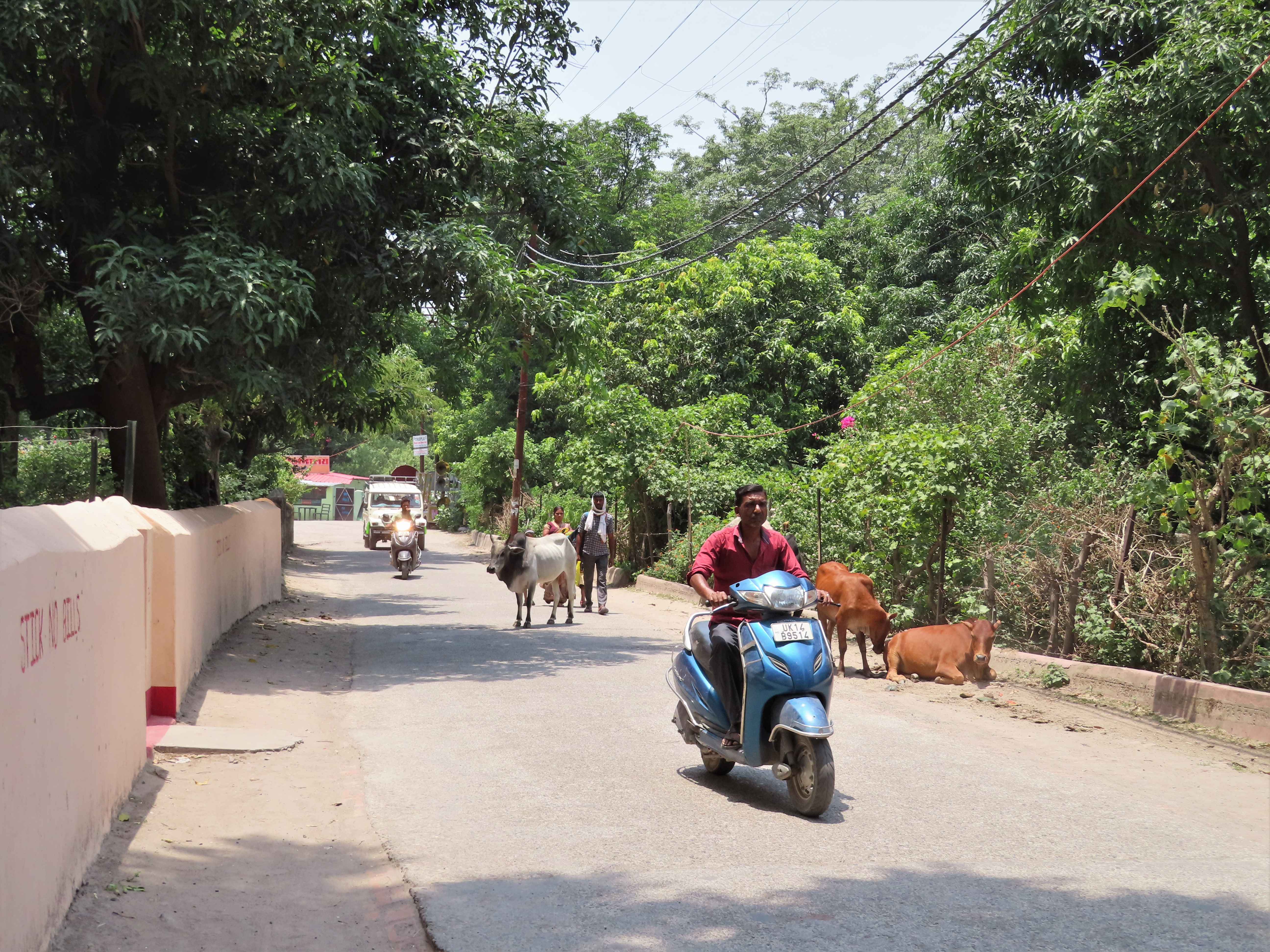
Instead of being featured on the menu, the holy cows of Rishikesh were crowding the streets. Behind almost every turn in the road we would see one, two or even more cows just minding their own business, whether that was looking for food, answering calls of nature or simply taking a little nap on the side of the road. They were honestly the most peaceful animals you’ll ever see.
Yoga capital
Rishikesh is also known as the yoga capital in the world, which showed in the high amount of ashrams (religious hermitage inhabited by gurus), most of them offering yoga retreats, dotted around the town. Aside from shops and restaurants, they were probably only outnumbered by agencies offering Ganges river rafting tours. Since we had already signed up for a meditation retreat in Dharamsala in July, we did not partake in yoga classes or retreats here. However, there was one very special ashram that we absolutely wanted to visit.
A special ashram
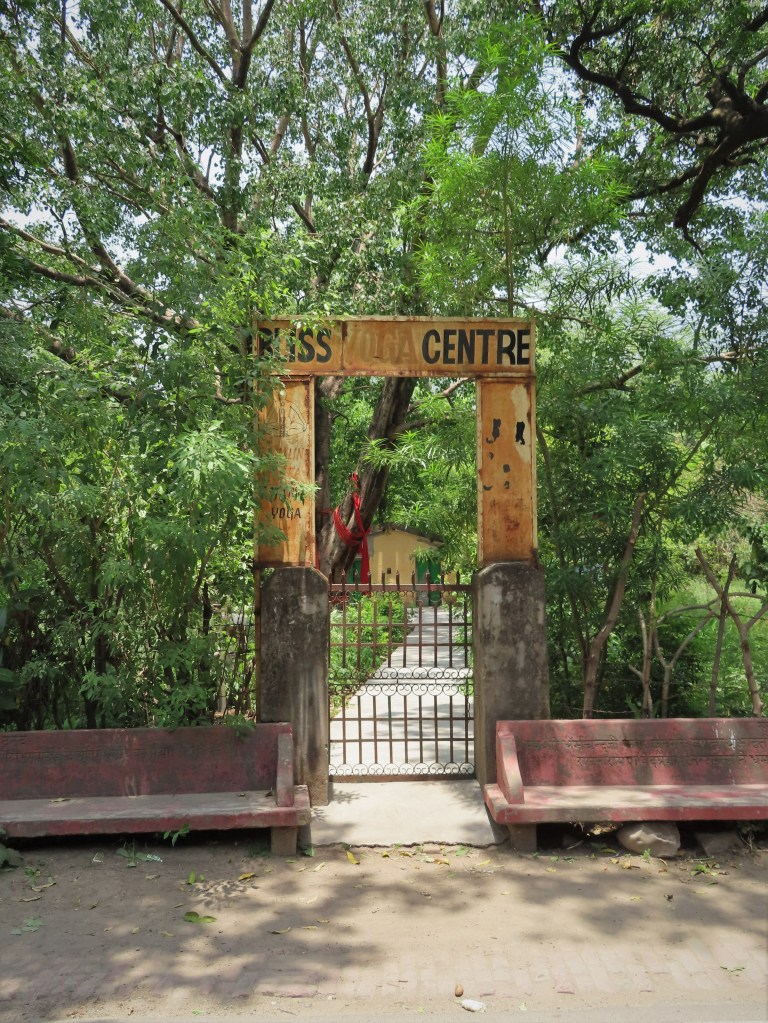
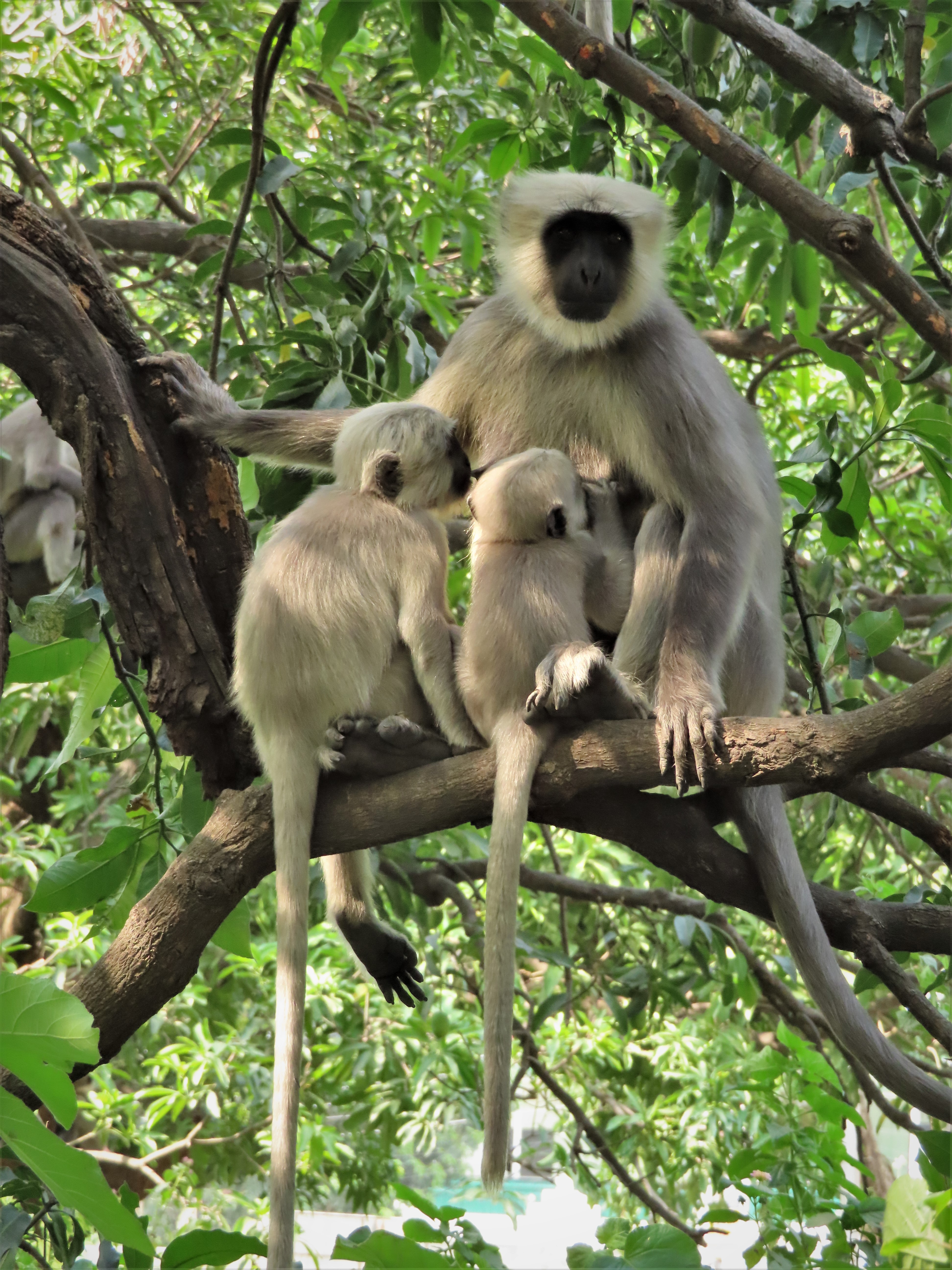
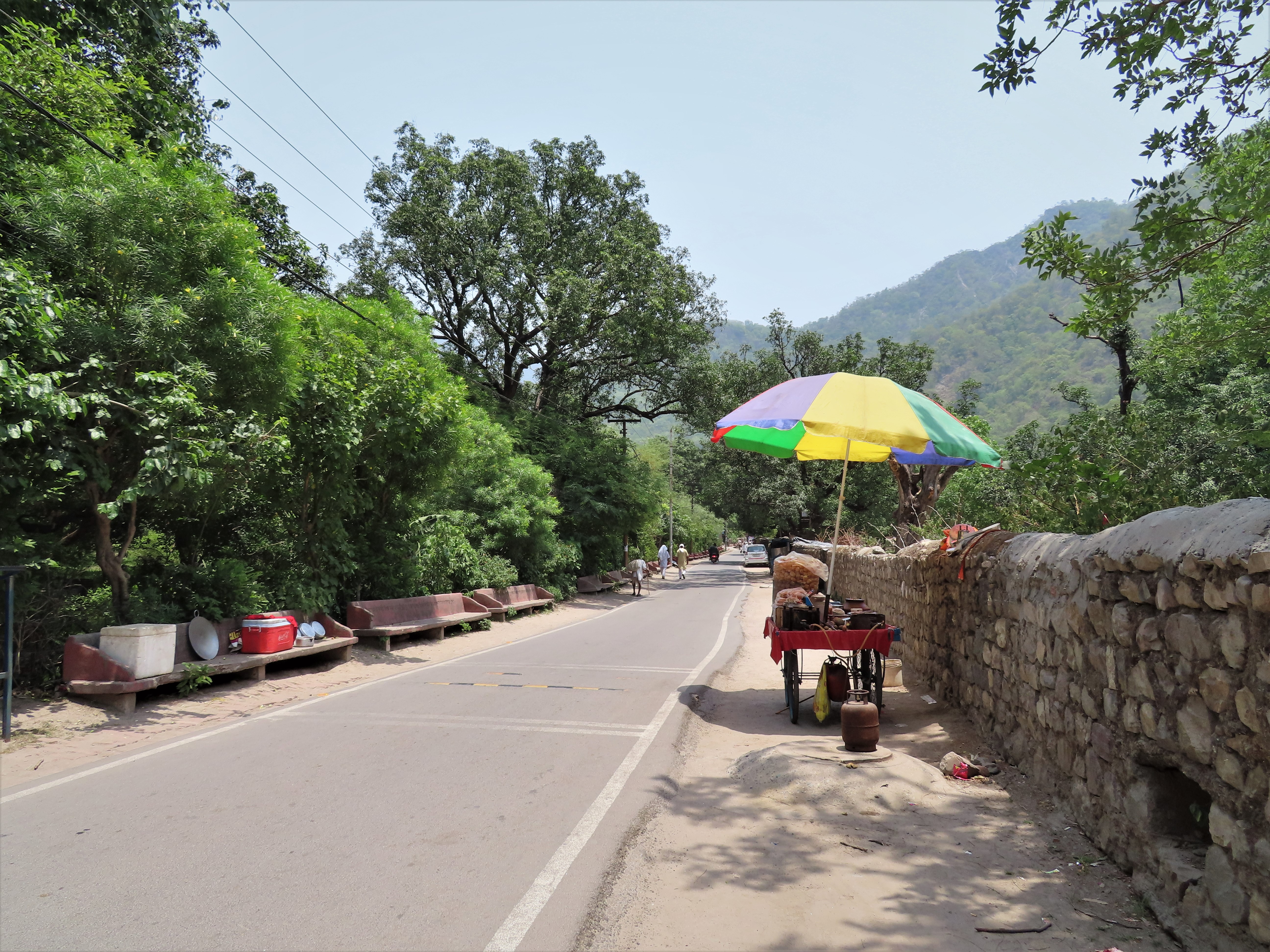
Situated a bit outside of the town, the Maharishi Mahesh Yogi’s Ashram was a half hour walk away, along a calm and dusty country road, past some monkey territory and a colorful little market.

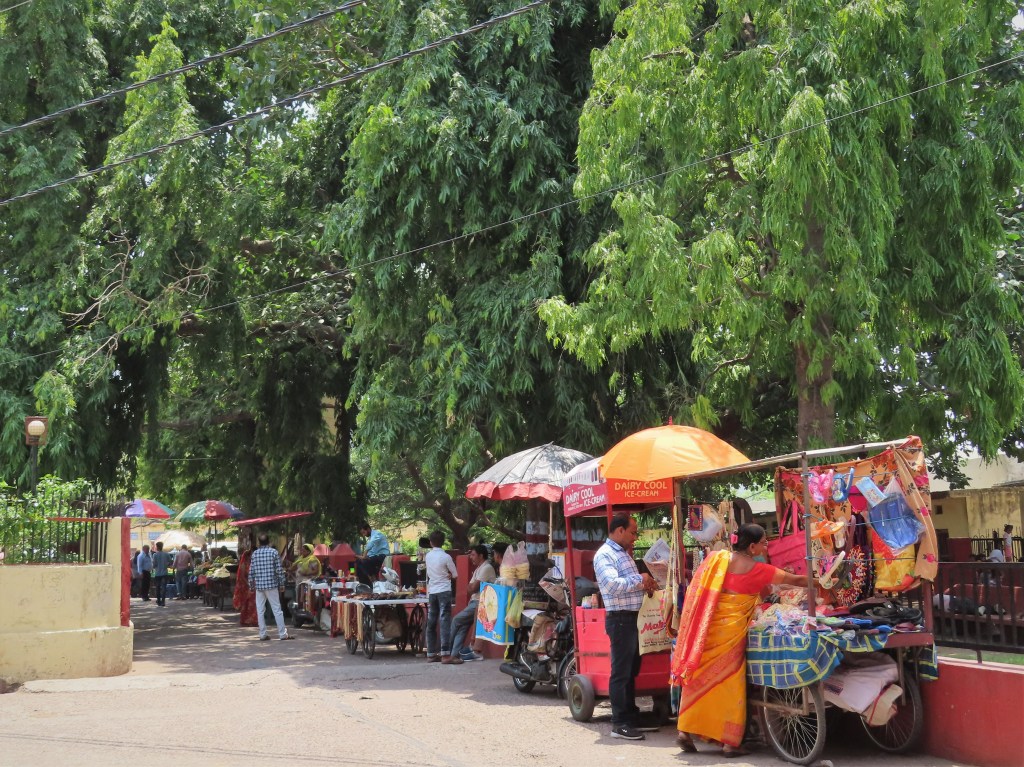
However, no Maharishi was to be found at the ashram, since he abandoned it several decades ago, after which it fell into ruins. This did not change my fascination for the place, which is now better known under the name “The Beatles Ashram”. Indeed, this was the exact spot where the Fab Four studied transcendental meditation and wrote most of the songs for their White Album: the site of their famous visit to India in 1968!
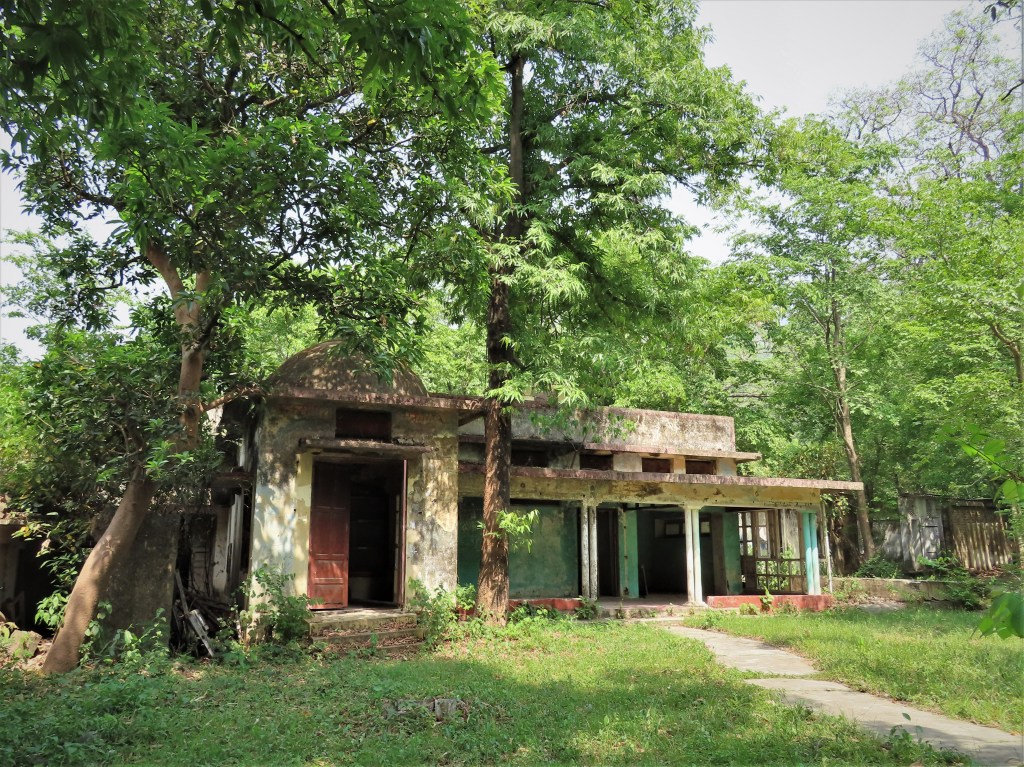
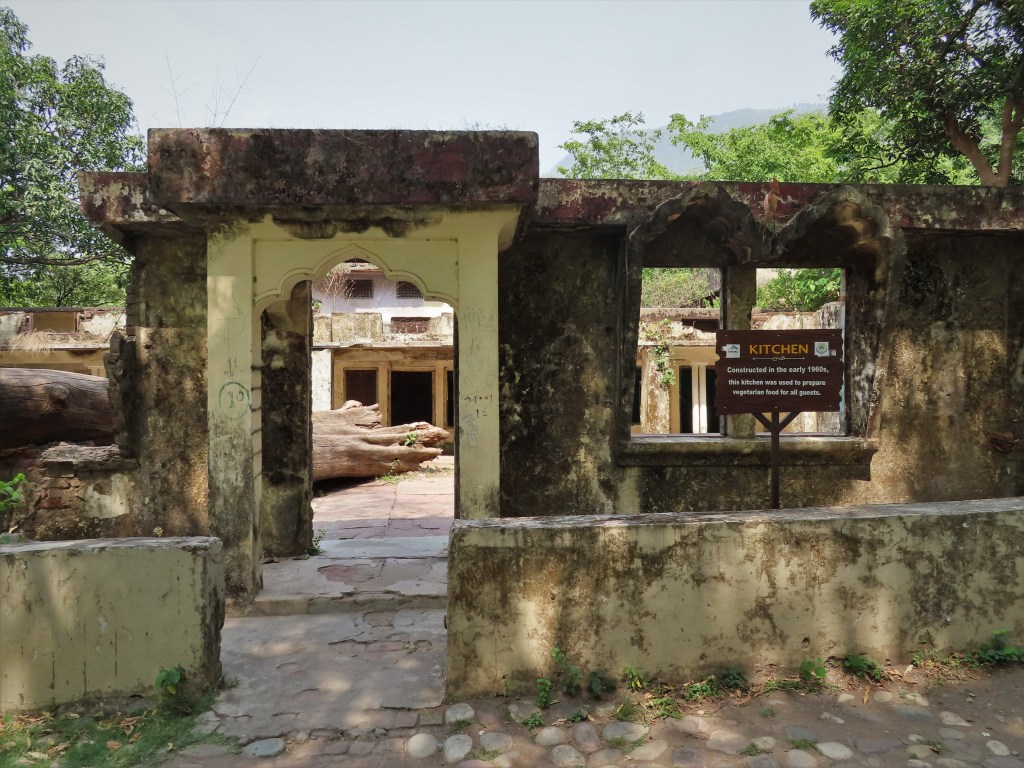
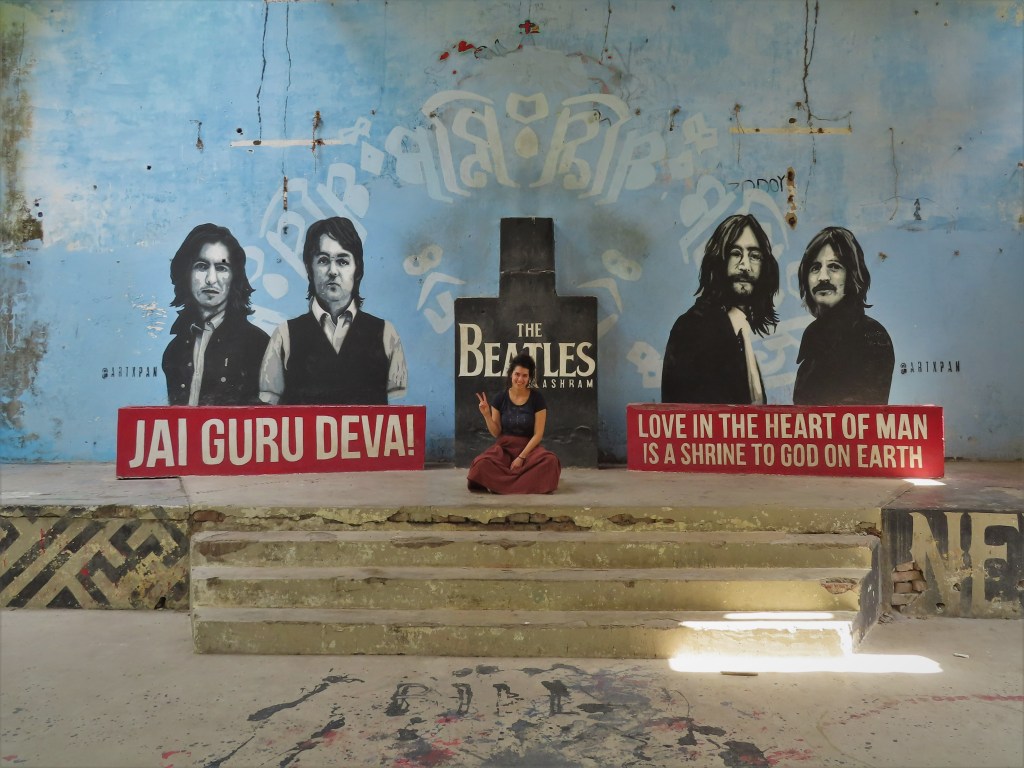
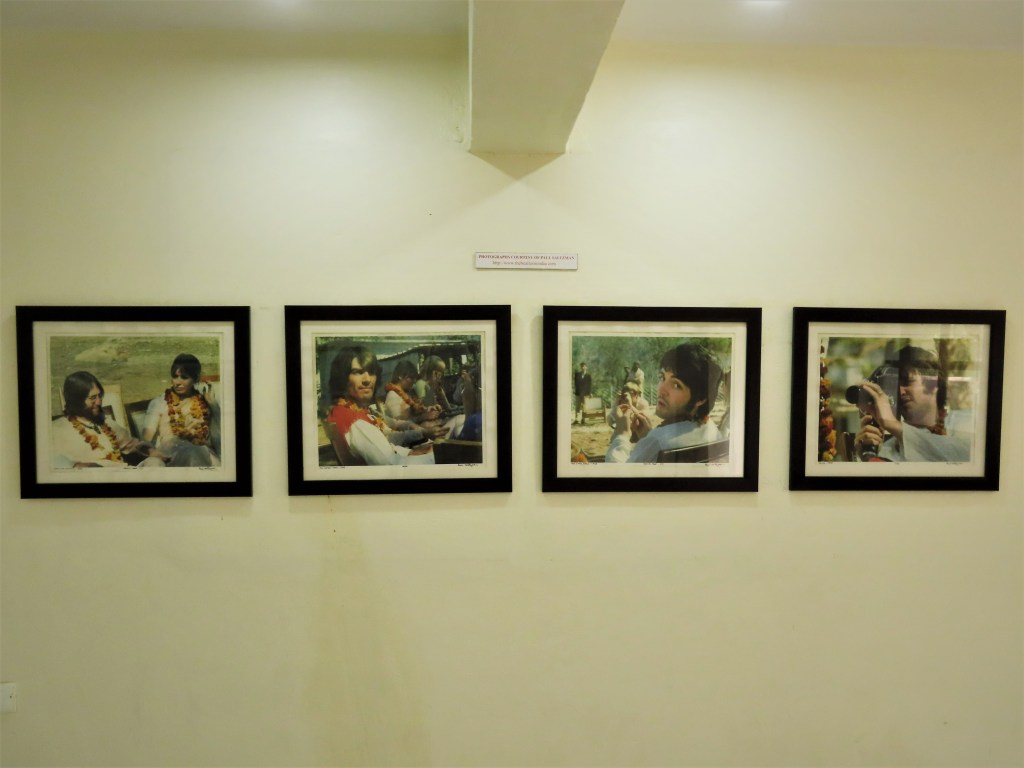
As a Beatles fan, I was especially happy to find the big murals depicting my idols, as well as the exhibition of the picture report by photographer Paul Saltzman of the Beatles’ visit to this ashram. Here they had been, with their wives and some other famous artists, learning about meditation, playing music, discussing all sorts of things…
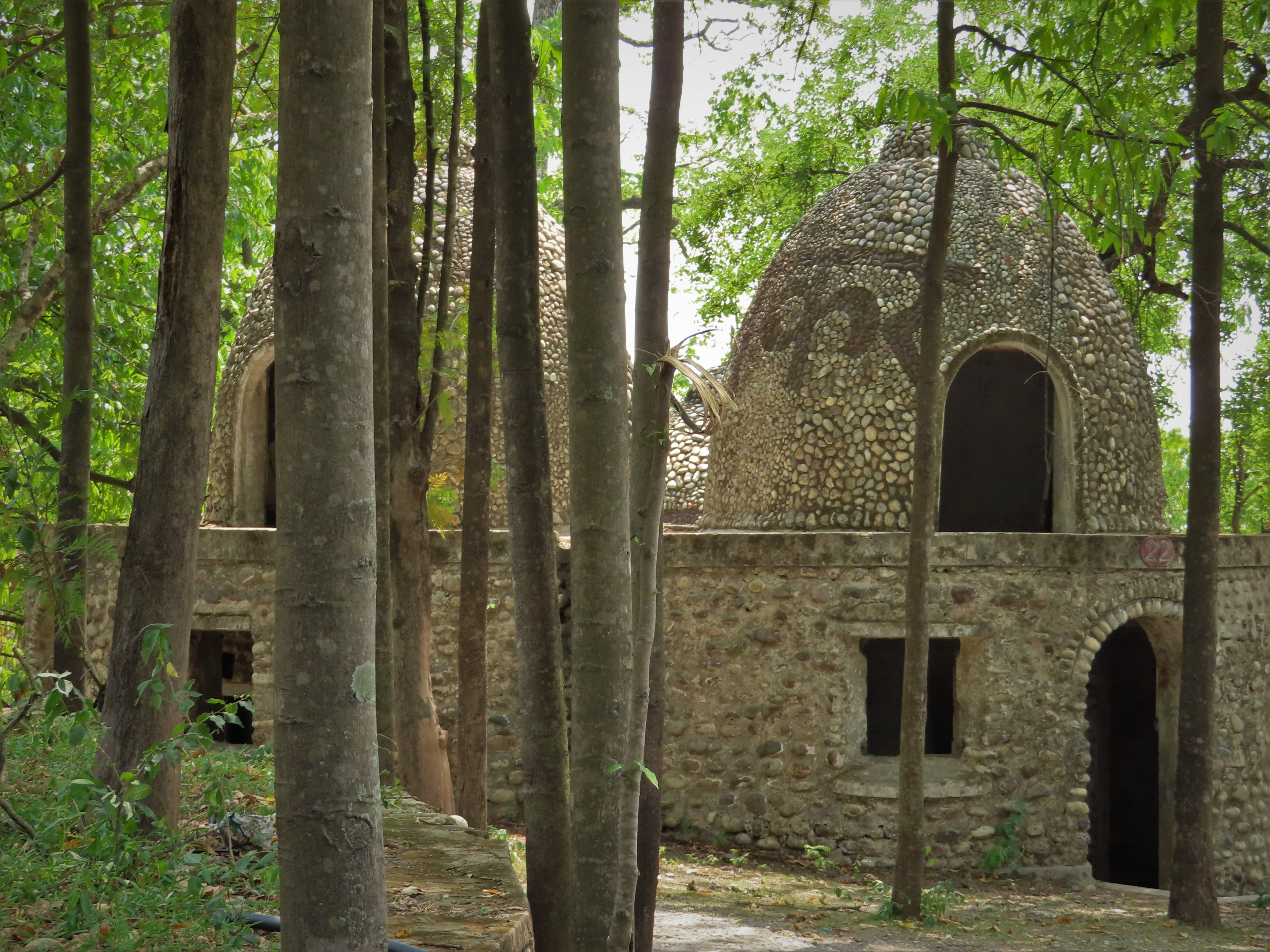
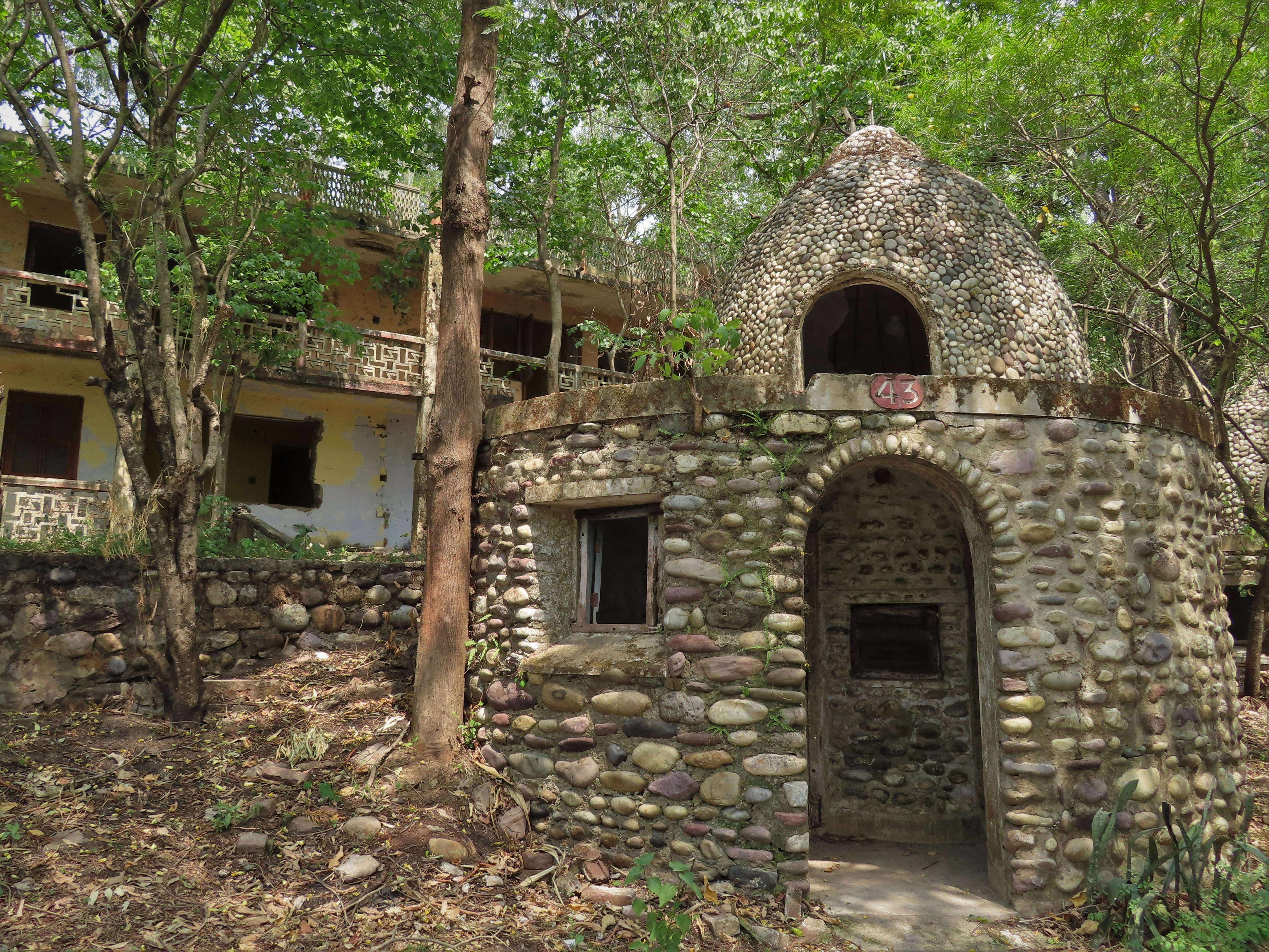
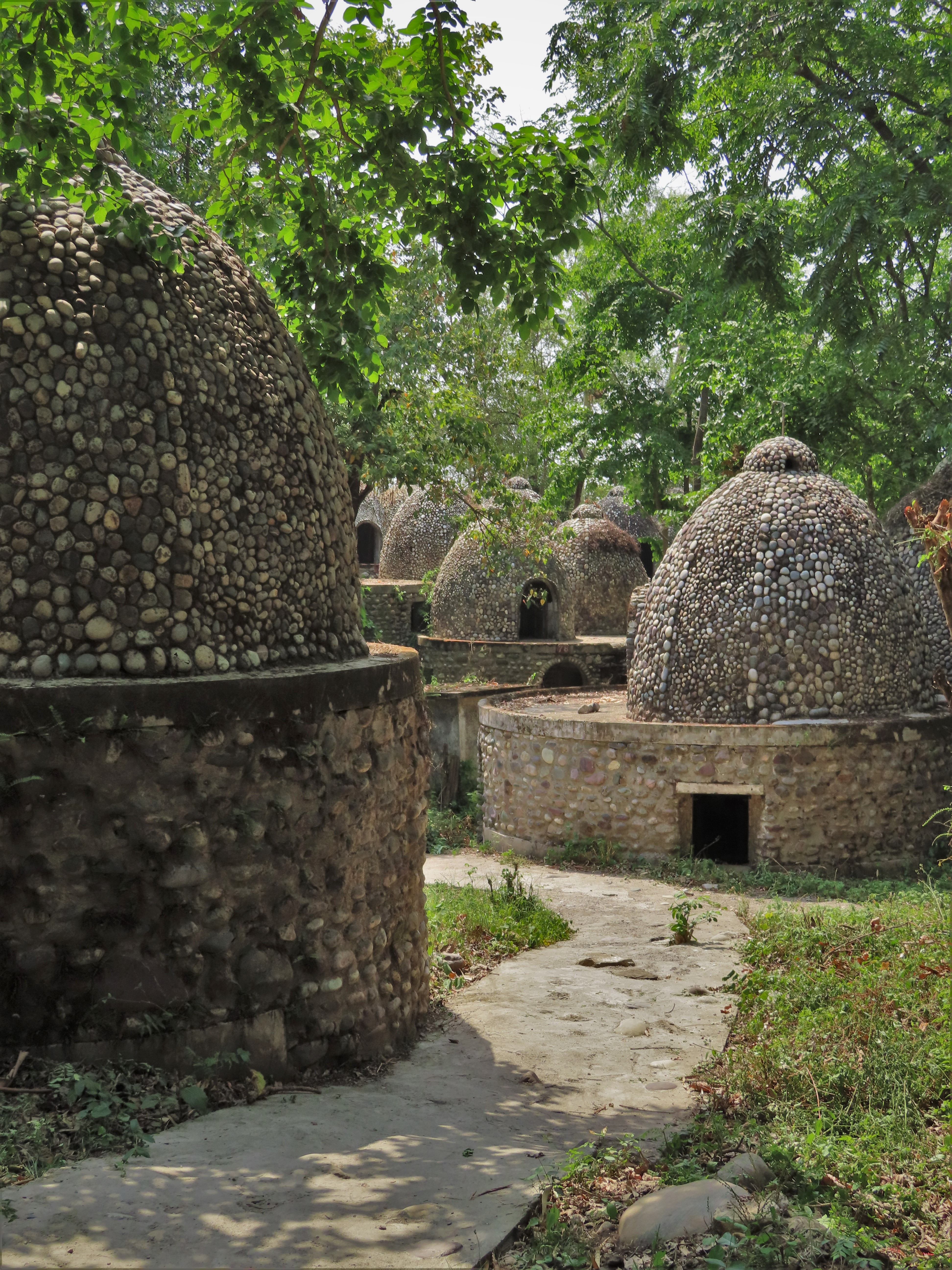
Nonetheless, one of the most fascinating parts of the ashram had nothing to do with our four British friends. Not long after entering the site, we were greeted by an entire village of tiny egg-shaped meditation houses. I imagined week-long retreats where participants would individually practice meditation in their own little house, built with river stones, after listening to the teachings of the Maharishi. Now, the little houses were completely decayed on the inside, but these silent witnesses of a spiritual past conveyed a mystical energy to the entire place.
Overcoming some hurdles
A different approach
As we were visiting The Beatles ashram, we realized that we were doing something wrong. Being out and about in the hottest hours of the day in temperatures of 40°C and more was not healthy to keep up for more than a couple of days. Leaving Delhi, we had not escaped this incredible heatwave: it was raging just as hard here in Rishikesh.
“This is the hottest I have ever known it to be here in my lifetime,” a restaurant owner told us when we talked to him about the weather. We clearly felt that, despite being armed with hats and sunscreen, we definitely needed a more drastic approach to tackle this heat.

Simultaneously, we were growing more and more curious about exploring the other side of the river. Unfortunately, the pedestrian bridge that linked the two parts of town remained closed. We also felt like we had to connect more to this place and the people who inhabited it, so we ultimately decided to extend our stay in Rishikesh. We figured the best would be to spend some nights in Tapovan, the neighborhood right across the water. We just needed some sort of transportation to get all the way over there.
Sunita’s tea
On the morning that we checked out of our hostel to move to the next, a close encounter with someone living in Rishikesh was actually already waiting for us: we had to pick up D’s clean laundry. Since the hostel couldn’t take care of it for us, they had referred us to their neighbor the previous day, an Indian woman living in a very basic little house, who also offered a laundry service.
“She sells really good masala chai,” we were told at the hostel as we were heading to her place. Before we knew it, we were sitting on two chairs in what appeared to be this woman’s bedroom, living room and kitchen at the same time, while she was stamping the masala spices for our tea. We had ordered it right after receiving the clean laundry from her. She wore a traditional saree and spoke no English, but with a little bit of Hindi, we managed to get her name: Sunita. Otherwise, she seemed too shy to talk to us, even to smile or look at us. She handed us two cute little clay cups (the local alternative to single-use plastic) filled with masala chai, which was still hot but absolutely delicious. Sunita just sat there on the bed while we enjoyed it, and something about her whole appearance was so endearing that it made the entire experience even more special.


Moving to another hostel
The interaction, even though it didn’t involve much conversation, was a great start to our day. Now, we had to make it to our next hostel on the other side of the river without much further ado, since we wanted to implement our new tactic for tackling the heat: to stay inside during the hottest hours of the day. This meant that we had to reach our destination by early afternoon the latest. We asked our hostel reception how they recommended that we reach the other side of the river.
“You can take the ferry,” they kindly reminded us. That’s right, we suddenly realized, there was supposed to be a ferry. We hadn’t noticed it yet, nor seen any signs for it, but the receptionist explained that the departure point was near the closed bridge.
The ferry
We decided to go for it. Carrying our backpacks, we walked along the familiar main road but the exact spot was not easy to find. We received help from one of the locals, who pointed us in the right direction. When we arrived on the sandy riverbank, we were still a bit hesitant, although there were more people waiting there. When we found out that the little wooden shack next to the water was actually the ferry ticket window, we knew we were in the right place.
Soon enough, a wooden yellow boat appeared on the far side of the river and fought against the strong current to eventually make its way across to our side. The pier was narrow and some of the passengers were hesitant as they stepped onto it while leaving the boat. It didn’t inspire much confidence, but I chased the image in my head of my bag falling in the water before I tried to board the ferry.

We made it safely into the boat however, where some waves splashed the cold Ganges water onto my back as soon as I sat down. We were surrounded mostly by Indian people, but we also met an Australian yoga teacher who lived here and loved it.
The boat ride to the other bank was short and efficient. Upon arriving, we noticed just how hot it had gotten already, while we still had quite a walk ahead of us. We made it onto a busy road without a sidewalk. Jeeps, cars and motorbikes were zipping by, only narrowly avoiding pedestrians and cows on the side of the road. We toughed out the last bit of the way that led us on a steeply uphill path and through some confusing alleys to our new hostel, while the day had probably reached its peak temperature by now.
Rishikesh at night
We spent the afternoon in a nice nearby café, just as we did in the coming days conform to our new tactics, before heading out in the early evening to enjoy the buzzing streets of Tapovan at night.

That evening, we had another chai in a clay cup, since we were familiar with the concept now, and even felt adventurous enough to try some street food: mashed up potatoes in a special sauce. We walked down an alley that was actually a staircase and looked at all the little shops that sold colorful jewelry, clothes, artwork and so on. We even listened to some live music in a little café. We were really starting to vibrate to the pulse of the life in Rishikesh.


The river ceremony
There was still something missing from our Rishikesh experience. Even though we had seen some aspects of the city’s holiness and come closer to the locals, it wasn’t until the night that we attended the river ceremony that this place unlocked its full potential for us.
Going to the river ceremony temple
It took place every night at 6.30, we were informed, at the Parmarth Niketan temple near the further pedestrian bridge, the one that was open. Having spent the afternoon inside, sheltering from the heat, we started making our way over there. The bridge was again very crowded, but this time we were taking everything in just as much as the other people were. We enjoyed the view on the broad Ganges river, crowned by the orange sun, sinking through the sky towards the green mountain tops cradling the valley.
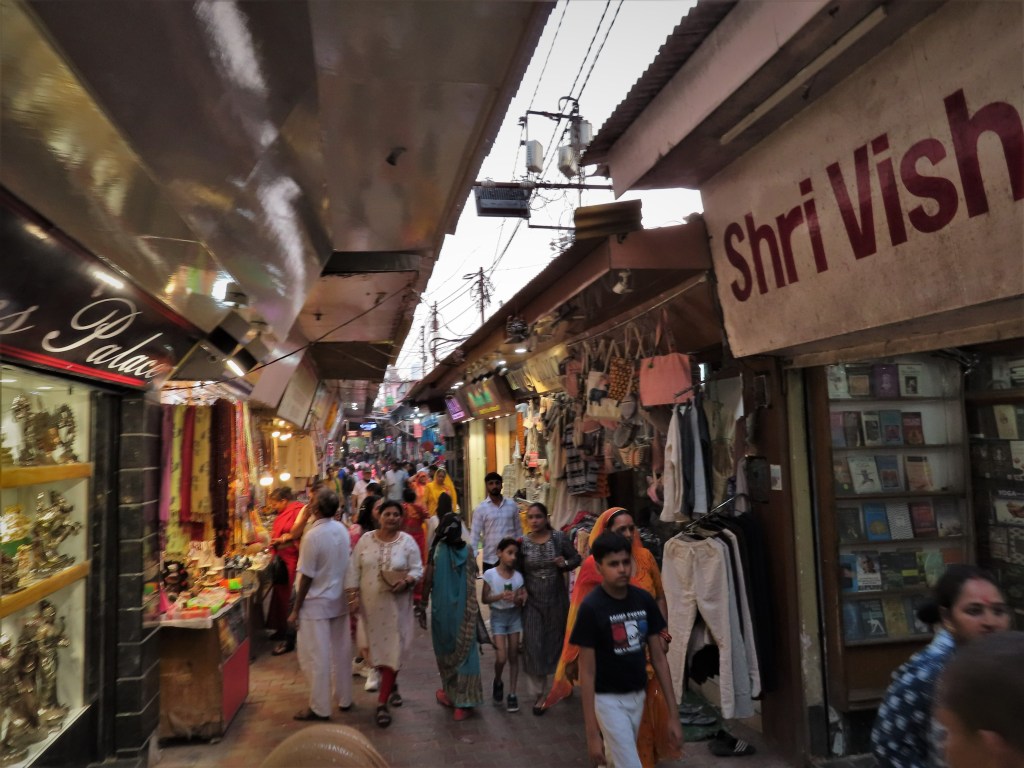
The way to the temple on the other bank led through some sort of covered bazaar street, narrow and lined with many little shops and restaurants. Young and old people, men, women with children, yogi’s and cows were all sharing the public space, most of them moving in the same direction as we did. The bazaar made place for little street food stalls, everything combining in an explosion of colors, sounds and smells as we continued walking towards the temple.
The temple ceremony
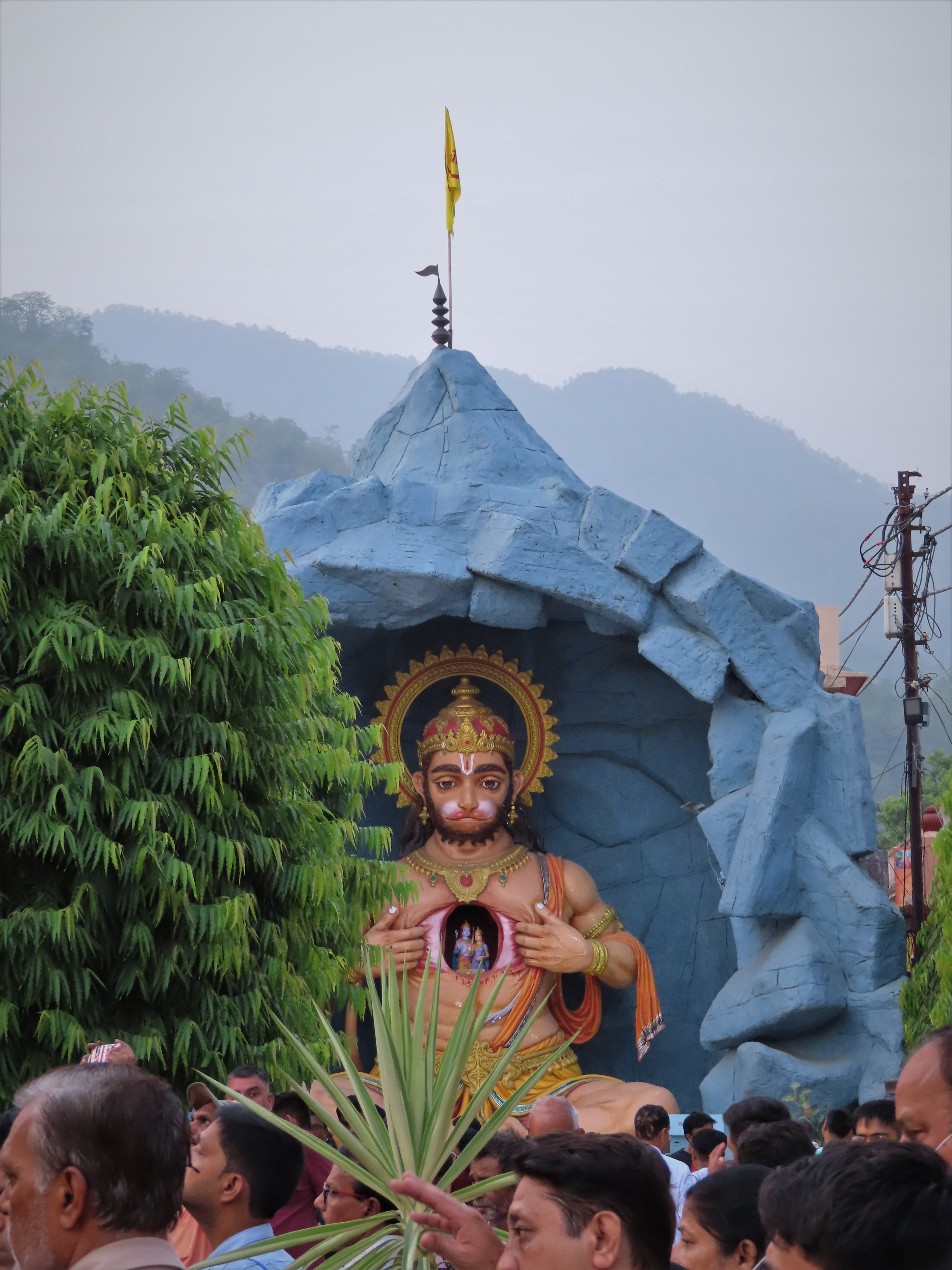
When we arrived, the ceremony had just started. So many people were attending that it was impossible to make our way towards the river. However, we could follow on some big screens what was happening down there, the sound coming through the speakers. Several temple monks, dressed in bright orange gowns, were sitting on a platform on the river, along with a group of musicians, and talked to the crowd in Hindi while the live music played in the background. Of course, we couldn’t understand a word of what they were saying, but it was pretty special to be attending this event with so many other people. Eventually, we decided to go and look at what was happening a bit further down the river.


The river ritual
Plenty of people of all ages had gathered on the ghats – the stairs that formed the embankment of the Ganges – and were performing a ritual of lighting a candle in a little flower bundle and sending it onto the fast-flowing water of the holy river. Women and children carrying baskets full of these flower bundles made their way through the crowd, trying to sell these. The sun was behind the mountains now, covering the scene in a languid, pre-dusk atmosphere.
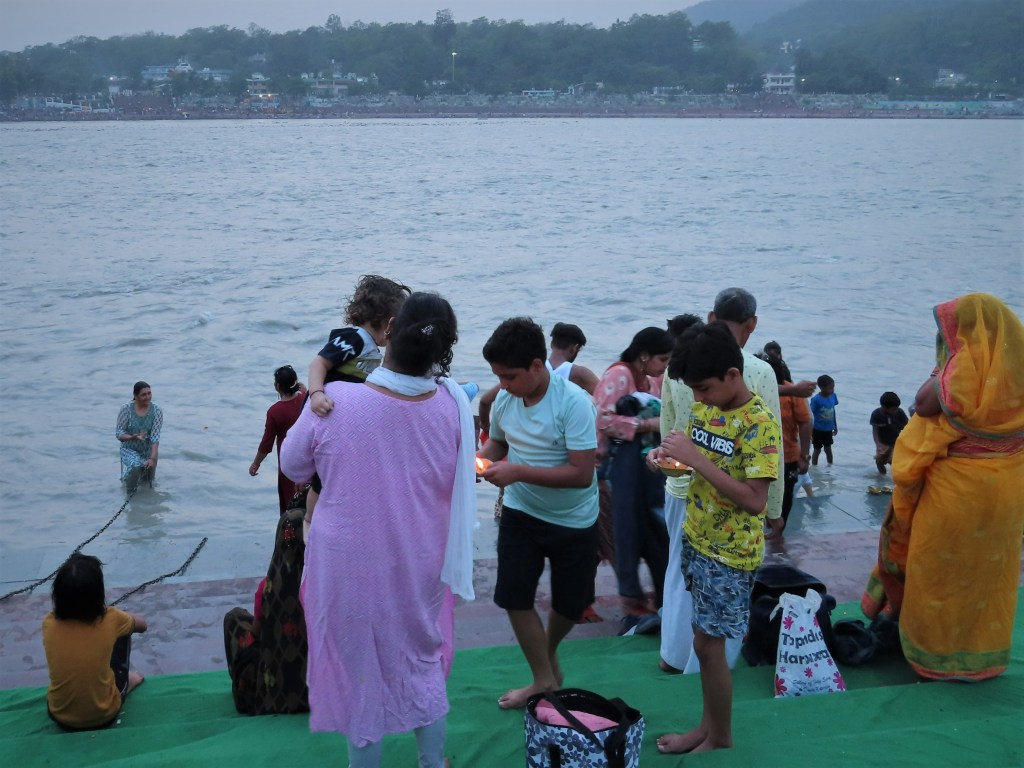
At first, we felt a little bit like intruders and kindly declined the requests of the flower merchants who walked up to us with their baskets. Hesitantly, we observed what the locals were doing. Some were chanting, others bathed in the river water, yet others contented themselves with lighting the candle and sending the flowers down the current. It was powerful to see how the river had brought all these people together to perform this peaceful ritual at the end of another long and hot day.
“How much?” we almost impulsively asked the next lady who came up to us with a basket full of flower bundles. We bought one from her and one from a little boy and they handed us a match to light the candle. D was the first to take off his shoes and walk down the river steps with his little flower bundle. After he came back, it was my turn. Barefooted, I walked down with the burning candle on top of my orange flowers. I kneeled next to the grey water, contemplated everything for a while, then let go of the flowers with the light. Soon, they were taken by the current, just as several others that were floating by before me. I sunk my hand into the water, to feel the energy of this river that has been considered holy for many thousands of years. In that moment, I knew that although I may just have been a visitor, above all I simply was a fellow human being to every person who had gathered here and we all were part of the same experience.


| Practical info We booked our bus from New Delhi to Rishikesh via 12go.asia (very reliable website to book bus tickets throughout Asia). As the Lakshman Jhula bridge was closed (this was June 2022), we used the ferry that operates right next to it. Tickets are for sale at the ticket booth next to the pier. Another option was using the Ram Jhula bridge further down the river. The pedestrian crossing will be closed until a new bridge has been built. The river ceremony that we attended, takes place every night at 6.30 pm at the Parmarth Niketan temple. In Rishikesh, we stayed at: goSTOPS Rishikesh Lakshman Jhula (relatively recommended) The Hosteller Rishikesh Mini (recommended). On a different occasion, we stayed at Moustache Rishikesh Luxuria (much recommended). Restaurant & café recommendations: Shivani’s Cafe – cozy hippie vibe and absolutely delicious food. One of our best meals in India! Little Buddha Cafe – relaxed wooden veranda with Ganges view. Tasty food. The Beatles Cafe – very tasty food (Indian and western) with an incredible view. Bistro Nirvana – inviting wooden interior with great Indian food. Pure Soul – healthy vegan and organic food with a beautiful view on the mountains. Honey Hut Cafe – great pitstop in bustling Tapovan for a drink and some pastries in a nice interior. |
 Morgane's Travel Tales
although i do not envy you and dylan the heat, or this trip, i am completely enamored by your beautiful pictures
and your commentaries. thank you so much for sharing! i still miss dylan and you, hoping you don’t stay the full year!
that’s way too long!!!!
love you guys, please share this with D!
LikeLiked by 1 person
Thank you Bibi, that’s so nice to hear! I look forward to visiting you again. I shared your comment with D 😉 Love you too!
LikeLike
Very interesting journey in a part of India I never heard of. Thank you for sharing
LikeLiked by 1 person
You’re welcome! Glad you enjoyed it 🙂
LikeLike
Glad jaystreazy stumbled onto you guys, this is good stuff!
LikeLiked by 1 person
Wow, thank you so much!
LikeLike
I have intended on spending a bit of time reading through your blog and viewing the photos and I am glad I did. I envy your adventurous souls and wish I had the opportunity to embark on travels like you and Dylan have. Deep down though, I am a five star resort type of person and wouldn’t fare well with the hostel lifestyle. Enjoy the time! Life is short. Savor the moments! I will continue to live vicariously through you guys! 🙂
LikeLiked by 1 person
Thank you Mark! We definitely are making the most of it! Glad you enjoy the blog 🙂
LikeLike