When D first suggested that I sign up for a Buddhist meditation retreat in July, I have to admit that I was daunted. It was June and we were sitting in our hostel room in Rishikesh. D had been wanting to do a retreat like this and after a lot of research, he had finally reached a decision on where to go. Tushita Meditation Centre in Dharamshala was widely recommended and since it was a beginner’s introduction course, he suggested that I could participate in it as well. I carefully read the description on their website and it honestly sounded extremely difficult. Ten days without a smartphone, laptop, or non-spiritual books. Ten days of strict discipline by following the schedule and not leaving the premises. And above all, ten days of being silent. How would I be able to pull off something like that?
| Warning: this article is quite long, in fact it almost falls more into the category of a short story than of a regular blog article. I invite you to read it in that way: sit down for it, take some time out and enjoy the story. Allow yourself to pause at the end of a chapter to resume your reading later. Happy reading! |
Table of contents
- Chapter 1: The decision
- Chapter 2: The first day of the meditation retreat
- Chapter 3: The meditation retreat schedule
- Chapter 4: Struggles, anticipation and a game in my head
- Chapter 5: The big day
- Chapter 6: Continuing the meditation retreat: a remarkable sequence of emotions and events
- Practical information
Chapter 1: The decision
After the first feelings of resistance and doubt however, I started to feel ashamed for reacting that way. Had I not already proven to myself that I could take on a challenge? Why not this one? And to be fair, it would be a huge opportunity to learn a lot, because the retreat was about more than just meditation. It was an entire introduction course to the basic principles of Tibetan Buddhist philosophy. That should definitely be interesting. It would also be fascinating to see how I would handle these very unique circumstances.
Although ten days still seemed like a long time, D also rightfully pointed out that if I ever wanted to try anything like this, there would likely be no better time and place for it than this opportunity would offer. Eventually I signed up for it, thinking it needn’t be my final decision just yet, since I could still cancel my registration.
But of course, that’s not how I function. I don’t buckle at a challenge. And how difficult could it really be in all seriousness, compared to some huge challenges I’ve taken on in the past? No, I would go to this retreat and take everything it would offer me and sit through all the difficulties it would present me with. And just like that, the decision was actually already made in my head and all I needed to do was to mentally prepare for this interesting experience ahead.
Two weeks later, while we were already in the mountains of Himachal Pradesh, we received an email from Tushita containing a remarkable announcement that left us in disbelief. We had initially signed up for a retreat that promised to be interesting yet ordinary. Now, we suddenly were set to participate in an event that would end up being a completely unexpected once-in-a-lifetime experience.
Chapter 2: The first day of the meditation retreat
The first day of the retreat almost felt like a first day at summer camp: tentatively looking at who the other participants were, taking in the premises and listening to all the practical information. It was early afternoon and the silence rule would not be effective until after dinner. In the previous days, I had arrived at a point where I felt fully mentally prepared for the experience ahead and actually even looking forward to it. I had also purchased a nice notebook and some color pencils, which gave me first day of school vibes. In a good way.
A German Buddhist nun
“This is not a five star hotel,” the Buddhist nun at the front of the small meditation hall clarified to us in a luscious German accent. She was obviously European but was wearing the dark red robe that went with her function, and her head was shaven. We were gathered there with the almost 100 participants of the retreat, a majority of 20- and 30-somethings, mostly westerners but also a lot of Indians and Israelis. The introduction talk by the German nun was more entertaining than I would have expected, incorporating plenty of anecdotes of participants in previous retreats while explaining some essential things to know before checking in.
“I’ve had people on the third day, crying in my office,” she continued, with a dramatic yet sarcastic emphasis on ‘crying’, “These buildings date back to the seventies and they have basic amenities. If that does not work for you then please, please,” she insisted, “don’t check in today.”
“I’ve had people on the third day, crying in my office,” she continued, with a dramatic yet sarcastic emphasis on ‘crying’, “These buildings date back to the seventies and they have basic amenities. If that does not work for you then please, please,” she insisted, “don’t check in today.”
Many people had questions about the exceptional event which would interrupt the retreat schedule on days 4 and 5, as mentioned in the eye-catching email announcement, but she would not answer these: a specific information session would be planned later in the week to address this.
My roommates
I was too late for the moment when all the girls in my dorm had introduced themselves, in order to organize the chore of cleaning our common bathroom. During check-in, I had been assigned a spot in a 10-person female dorm. As I entered the room, all the girls were centered around a piece of paper that assigned a name to each of the coming dates of the retreat. I had no idea who they all were and where they were from. Soon, my name landed at the end of the list. Since we had to hurry off to the big meditation hall immediately after that, I was left to guess for the next days, any time I laid my eyes on the list in the bathroom, which name belonged to which roommate.
Buddhist retreat rules
“Do not kill anybody,” the German nun urged us. Some giggles resounded in the big central meditation hall, where everybody had gathered for a more extended information session. We had now all handed in our phones, laptops and other electronic devices that could distract us from the teachings and meditations in the coming ten days.
“I know, it can be difficult sometimes, especially when your roommate is snoring, but please, please, do not kill anybody,” my already favorite nun continued. She went on to extend her plea to encompass all living beings: not just humans but also animals, including slugs, insects and spiders. It was one of the rules we were asked to pay attention to, which were following Buddhist principles. I could definitely get behind it, because aside from mosquitoes who decide to share the bedroom with me, I’m always in favor of letting even the tiniest creatures live. Some of the other Buddhist retreat rules included no sexual conduct and no lying.
“I know, it can be difficult sometimes, especially when your roommate is snoring, but please, please, do not kill anybody,” my already favorite nun continued.
Last conversations
It would not be much longer before the silence rule would take effect. The last opportunity to talk with other participants was during dinner. I met a Dutch couple who had been travelling and an American woman who had been living abroad. After dinner, I had my last conversation with D. The retreat rules were clear: we were not supposed to interact with each other during the ten days. D would spend his nights in a three-person male dorm, while any form of communication throughout the day between us was technically not allowed. However, we granted ourselves a tiny liberty and secretly decided that scratching the right side of our neck would mean “I love you”.
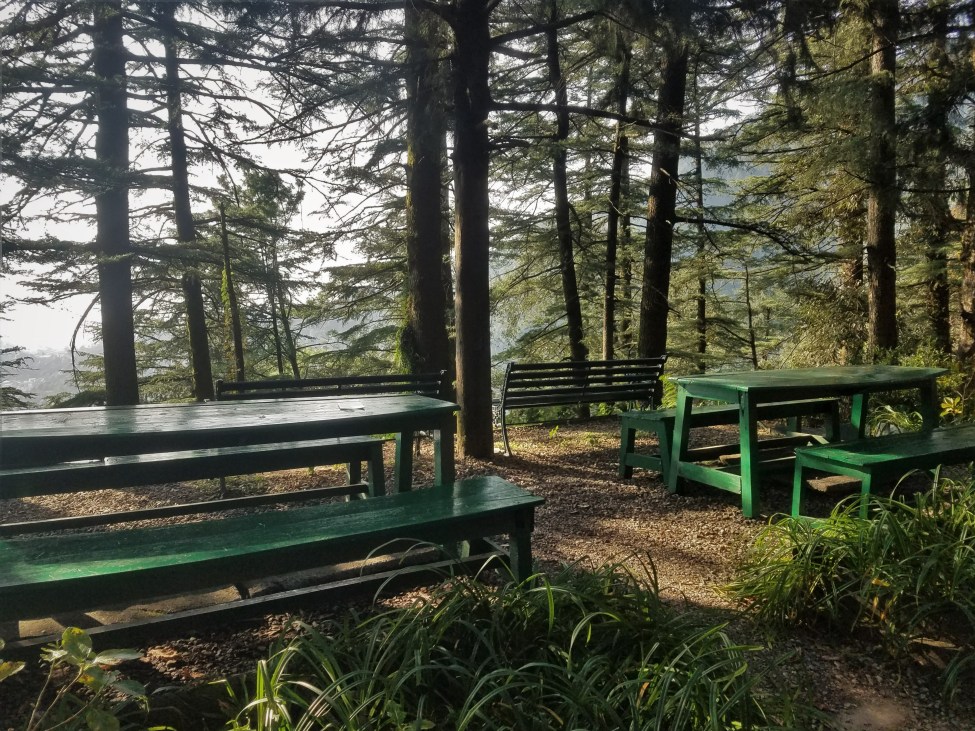
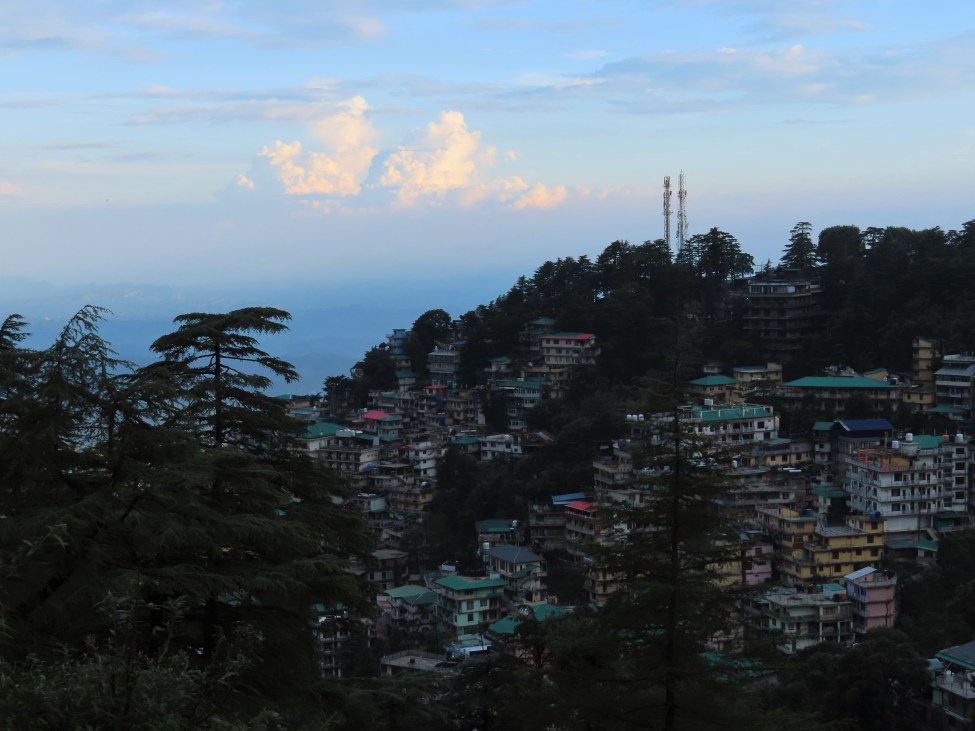
And then, there was silence. It landed awkwardly and tentatively over the roughly one hundred people who were walking around the limited Tushita grounds, watching out over the green valley below from the top of the Tushita hill.
Chapter 3: The meditation retreat schedule
An early arousing
It was only 6 in the morning when the gong rang outside, waking me up. Now, I felt like this whole experience really started, even though we had already had our first class and first guided meditation the previous evening. We had all gone to bed early after that, and even though I didn’t sleep comfortably, at least I was not too tired for how early it was. Somehow, I made it into the bathroom before the other girls. I tried to be quick in there before I headed to the big meditation hall for the 6.45 AM morning meditation.
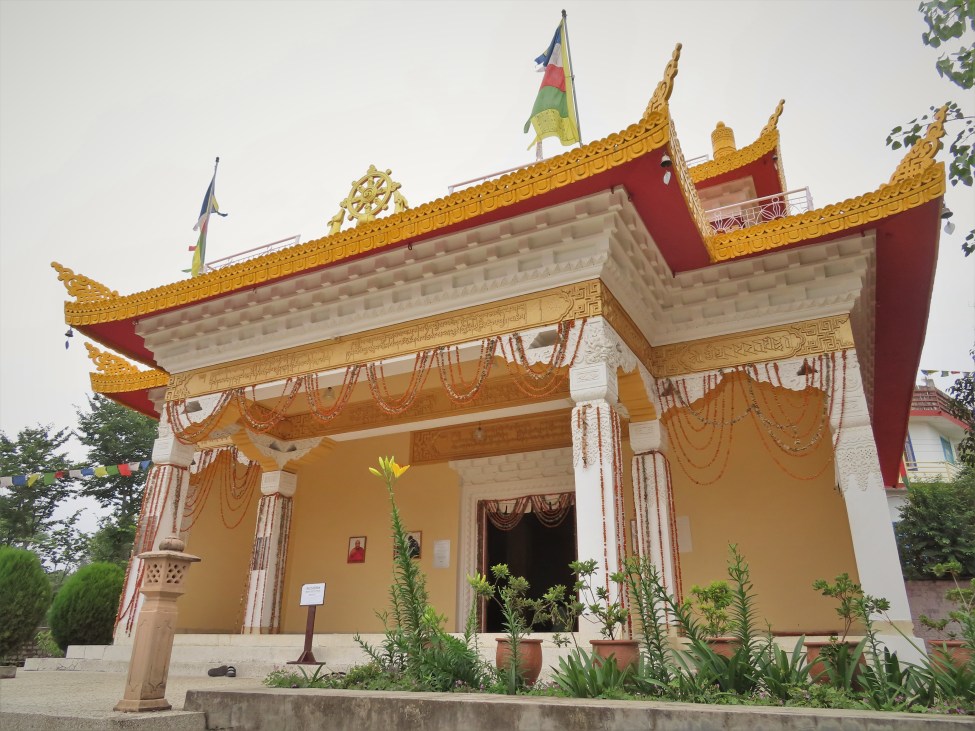
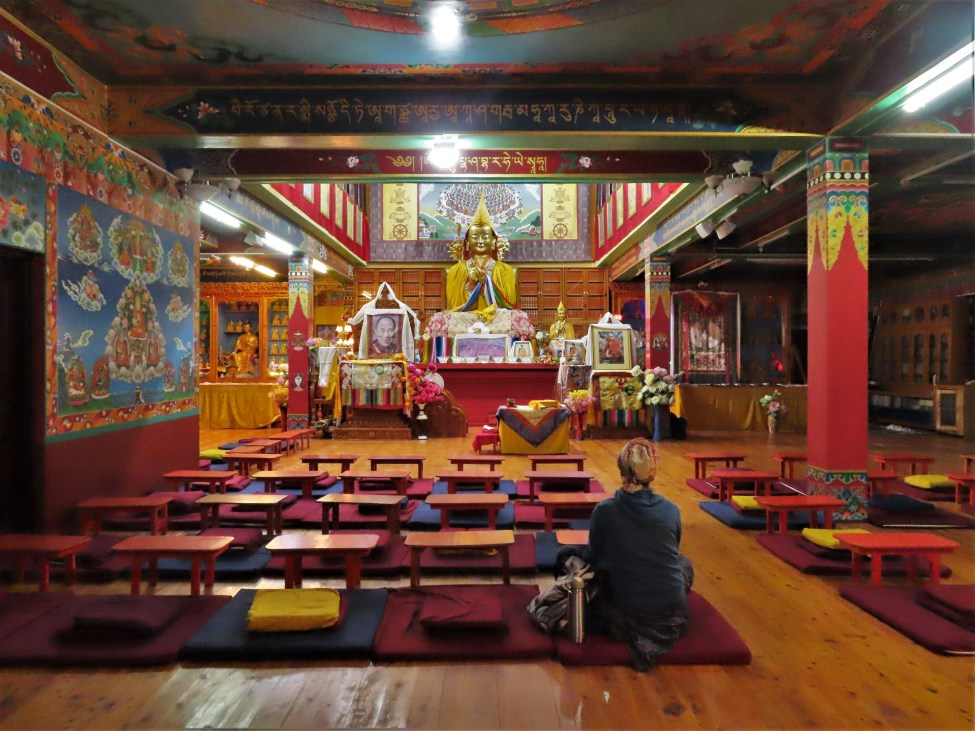
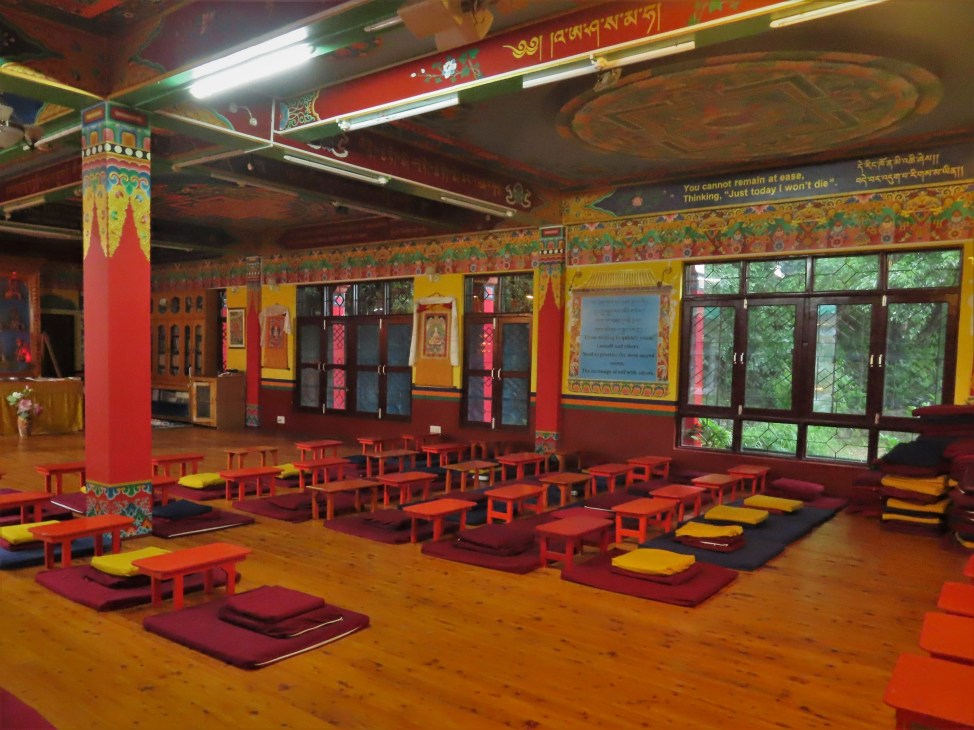
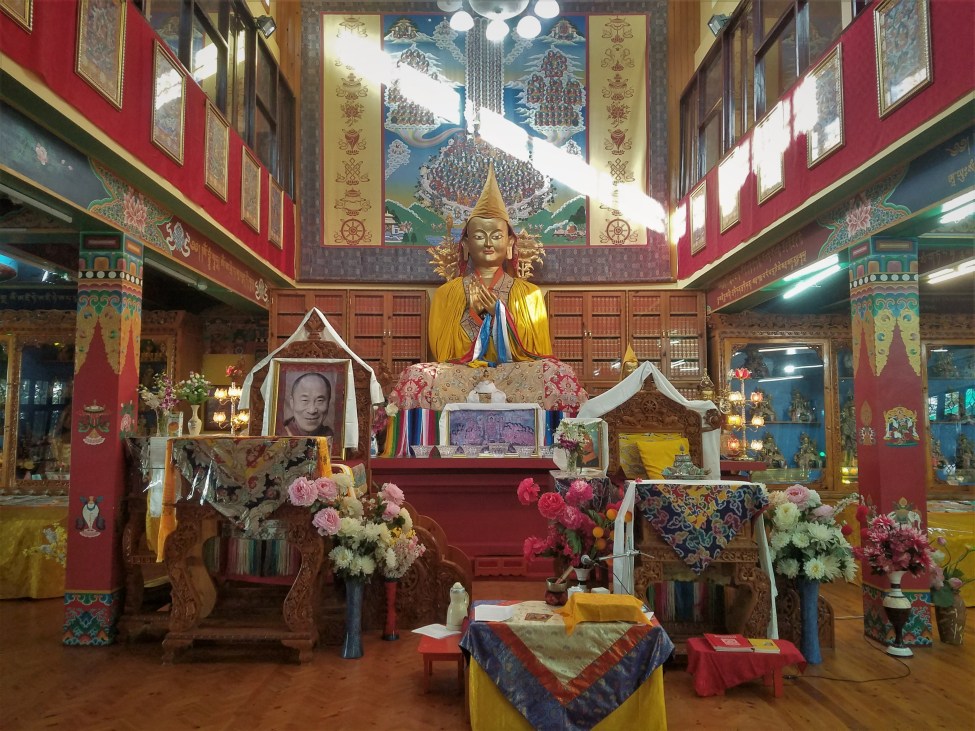
Also called the main gompa, the big meditation hall was a colorful temple, presided by a big golden statue of Buddhist teacher Tsongkhapa and decorated with colorful paintings on the walls and ceiling. On the wooden floor were low, tiny wooden tables and flat cushions, arranged in rows from front to back, leaving an open passage in the middle. We’d leave our shoes at the door in order to keep the temple and especially the cushions clean. After some moving around during the first couple of sessions, everyone eventually ended up with a fixed spot. Mine was somewhere in the middle of the right half, which I was happy with.
A relaxing morning meditation
Just like the previous night, Israeli meditation leader Maya, not a nun but a passionate practitioner whose big curly hair was so magnificent it would have been a shame had she shaved it off anyway, guided us in relaxing our bodies and focusing on our breath. I listened with an open mind to her softly spoken instructions for what is called a ‘calm abiding meditation’. Being given the opportunity to fully relax in the comforting morning silence, surrounded by people who had all come to learn and grow, I suddenly felt very safe and peaceful.
‘This is actually not so bad,’ I thought to myself, ‘I can probably keep this up for a while.’
This was the first full retreat day with the fixed schedule, which would only be interrupted on days 4 and 5, for a very good reason (but more on that later). The silence had now firmly been established and it was interesting to see how I reacted to it. I was eating a comfy breakfast – oatmeal with bananas, honey, peanut butter and bread – and for now, the lack of pressure to socialize with others turned out to actually be quite nice for a parttime introvert like me.
An American teacher
Breakfast was followed by the first class of the day in the main gompa. Our teacher was Venerable Drolma, an American Buddhist nun. She was the resident teacher at Tushita and just like German nun Kunpen she had a shaven head and was dressed in dark red robes. She talked in a somewhat calm and laid-back way and was not too comfortable with having to speak in the microphone, but she liked to slip in a funny remark every once in a while, which made her easy to listen to.
Learning about Buddha’s life and philosophy
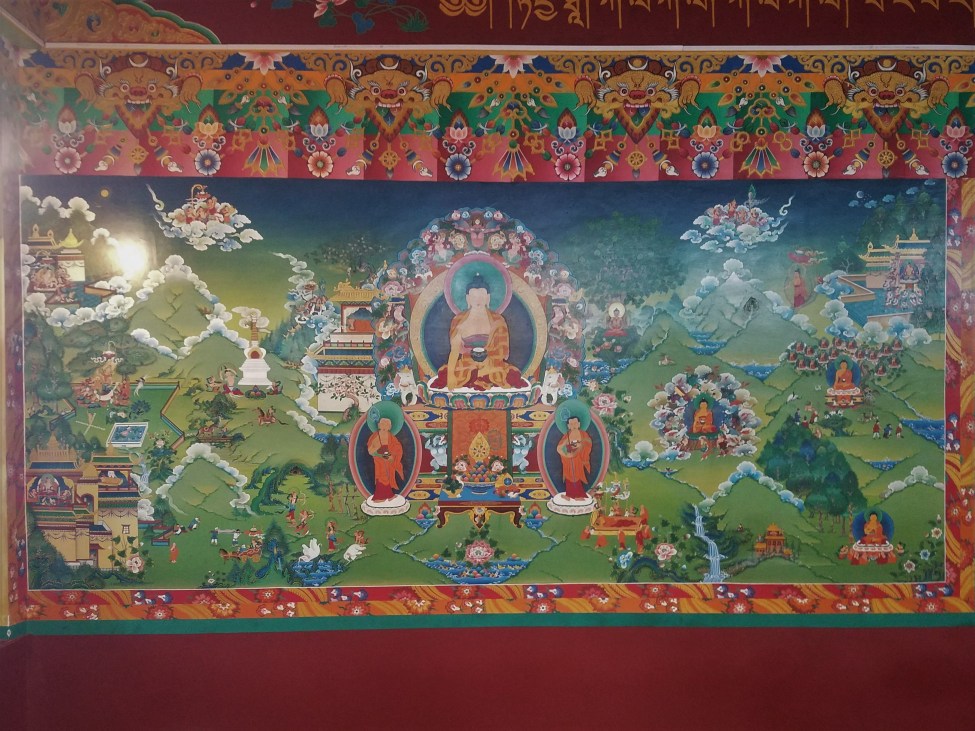
On the first night, she had told us about Buddha’s life story, who left his family and his comfortable life in a sheltered palace behind in order to find out what happened in the world. He was disturbed to discover people suffering from sickness, old age and death and decided he wanted to find a way for humanity to escape this suffering. After trying to live an ascetic life and almost dying of physical deprivation, he changed his tactics and started meditating under the bodhi tree instead. He did not leave his spot until he reached enlightenment, therefore being free from all suffering. He then spent the next 40 years of his life teaching others about the path to enlightenment. His teachings have survived until this day, albeit in different variations. The Tibetan variant of the teachings are what Tushita aimed at teaching us during this introduction course.

“The Buddha asks that you use your own reasoning and intelligence,” Venerable Drolma told us. This is something that I really appreciate about Buddhist philosophy: you’re not supposed to blindly follow or believe the teachings. You have to examine them, see for yourself what happens when you apply them and draw your own conclusions from there. This is precisely why we talk about Buddhist philosophy and not religion – even though in a lot of Buddhist practices, religious aspects have slipped in over the course of the centuries.
How humans suffer
In this morning class, Venerable Drolma talked about the ways in which humans suffer. Aside from basic types of suffering like physical pain, ageing or death, there is also the suffering of change: we expect things coming from outside of ourselves to bring us happiness – a new car, sexual experiences, good food… – but as soon as these things or experiences change or end, we are left behind with disappointment, one of the biggest causes of our suffering. We have to alter our view of reality and understand that all things constantly change and therefore cannot bring us genuine lasting happiness. In order to familiarize ourselves with these insights, it is important to acquire a calm and peaceful mind, which is where meditation practice comes in.
Aspects of an enlightened nature
After the tea break halfway through the three-hour class, Drolma proceeded to teach us about the enlightened nature. We all have the possibility to become enlightened, she assured us, since our minds are no different in essence than that of the Buddha’s. Any negativity that exists within our minds, is not necessarily part of it: if it couldn’t be removed, we would always feel negative. We all have basic goodness which can be developed limitlessly. Love and compassion are an essential aspect of an enlightened nature, Drolma explained. Another one is purity of mind, being present without thoughts (when you watch your thoughts, you realize that you are not your thoughts, you are a silent observer), but also inner wisdom: knowing what is right beyond any rationalizations.
Any negativity that exists within our minds, is not necessarily part of it: if it couldn’t be removed, we would always feel negative.
I smiled, because I knew about inner wisdom. I had discovered the value of it years ago and it has served me as a guide since, like a lighthouse in the storms of anxiety that life sometimes likes to present you with. This helped me understand what Drolma had just explained about love and compassion: they lead to genuine lasting happiness. With my inner wisdom, or my gut as I used to call it, I knew that this was true. This realization opened me up even more for the rest of the teachings.
Lunch break with adapted reading
Once the class was finished, it was time for lunch. Big pots filled with steaming vegetables, dal and rice were waiting for us in the dining hall. We queued to fill our plates and picked a spot inside or outside to eat our meal in silence. Normally, I would be reading a novel, but since I had handed in my e-reader during the check-in, I now sat with the book that we all had been gifted at the start of the retreat, about ego and attachment. An interesting and accessible read, it was written by the late Lama Yeshe, one of the two founders of Tushita.
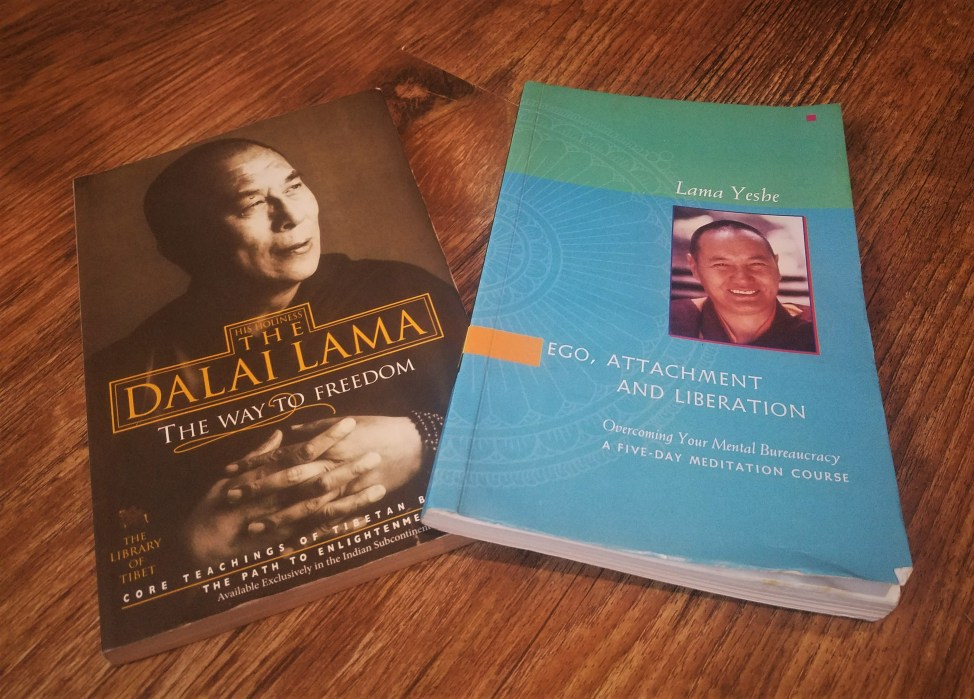
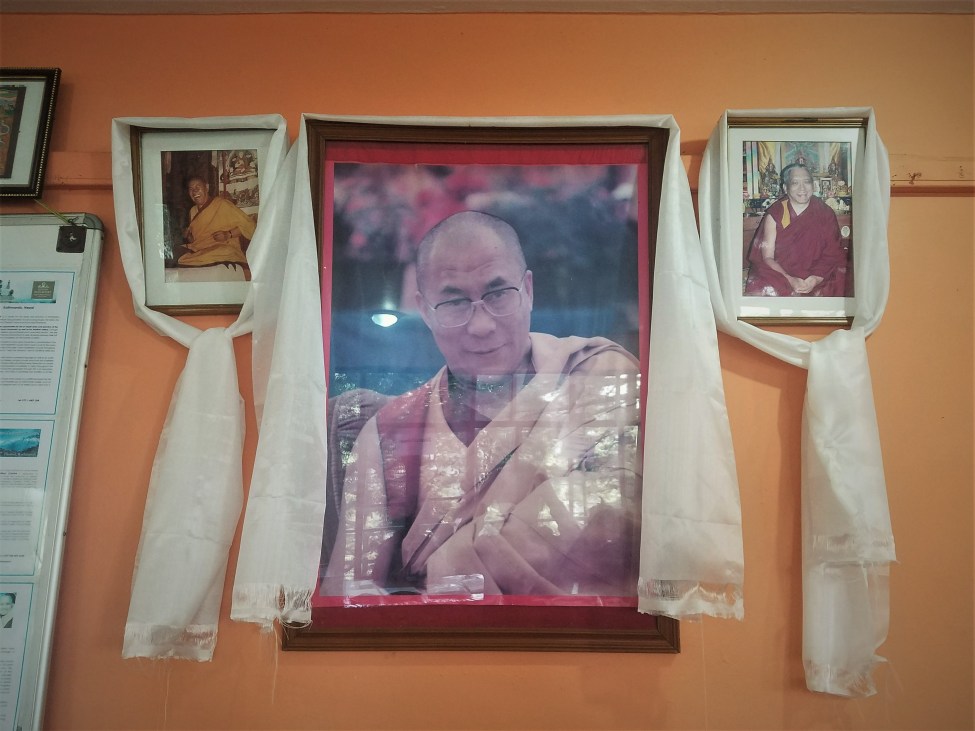
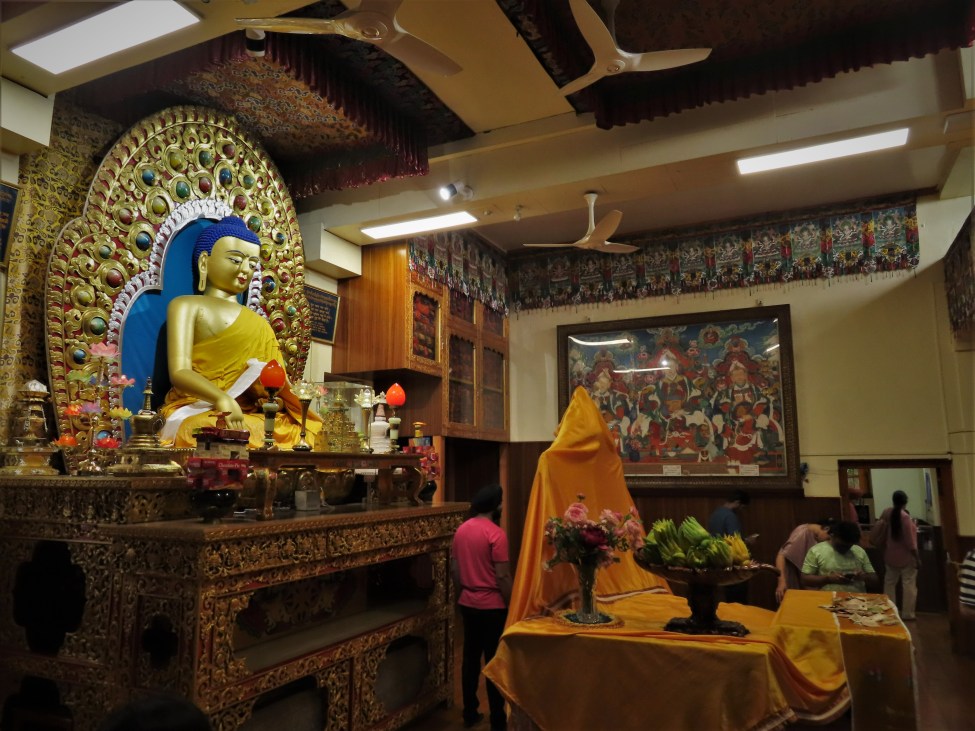
A fascinating figure, he was a monk who fled Tibet after the Chinese occupation and ended up in Darjeeling, Northeast India, where he met western hippies for the first time. They taught him English and he started teaching them about Tibetan Buddhism. “Lama” indeed is Tibetan for ‘teacher’. Lama Yeshe and his student Lama Zopa found a very interested audience in these westerners and several years later they founded first Kopan Monastery in Kathmandu, Nepal, and then Tushita in Dharamshala, in order to offer Tibetan Buddhist courses and retreats. When the Dalai Lama, political and spiritual leader of Tibet, received the Nobel Peace Prize in 1998, the interest in Tibetan Buddhism grew in the West and the Tushita site was expanded. Pictures of both Lama Yeshe and the Dalai Lama never failed to remind me of their importance here, as they adorned the walls in the dining hall and the altar in the main gompa.
Karma yoga
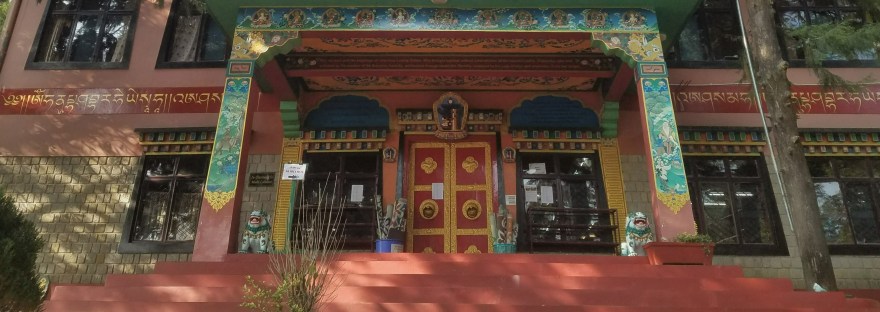
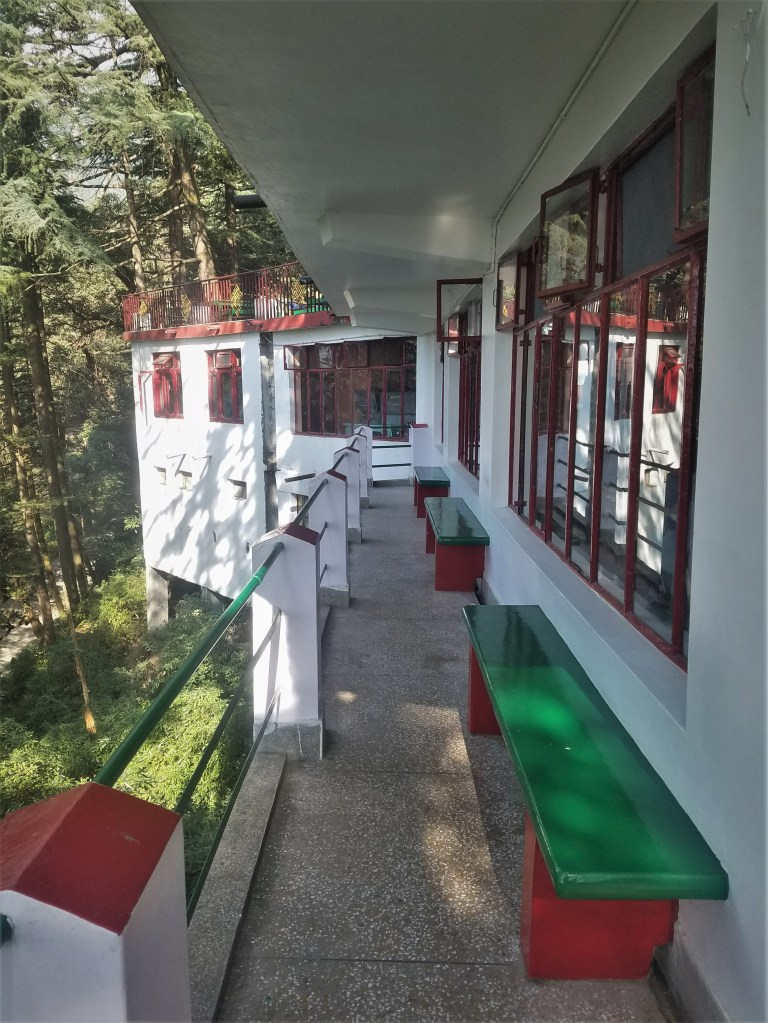
Not much later, I found myself mopping the pink stone steps at the entrance of the main building for the first time. As I swatted away dead beetles and carefully avoided the living ones, I wondered if I would at some point get tired of my daily task. This karma yoga job was part of the deal, though. Every participant had been assigned a specific chore upon check-in. The idea behind it was that it is a big task to keep a place like Tushita clean when some hundred people are eating, sleeping and walking around there for ten days in a row, but with each of them contributing a little bit on a daily basis, the problem would solve itself while also teaching us about the Buddhist principle of selfless service.
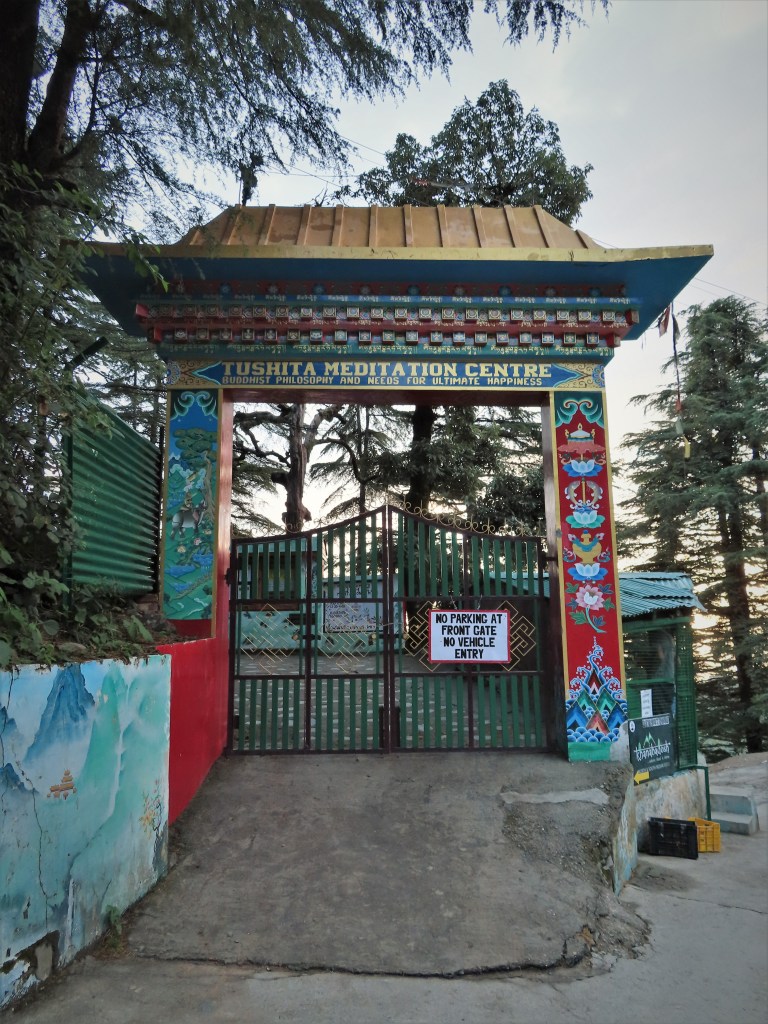
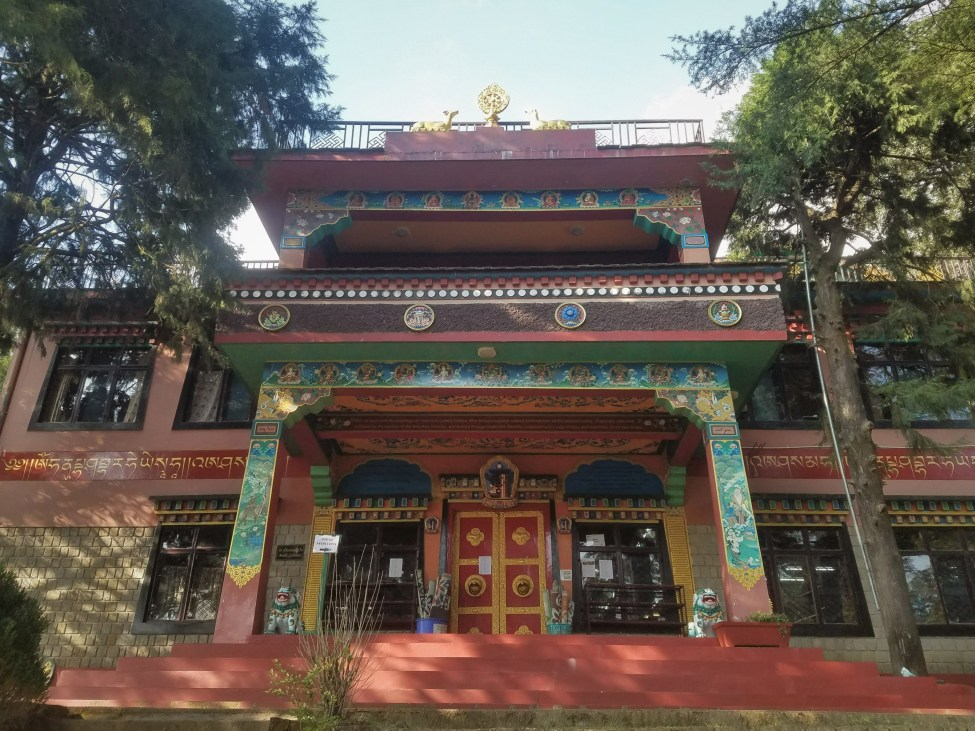
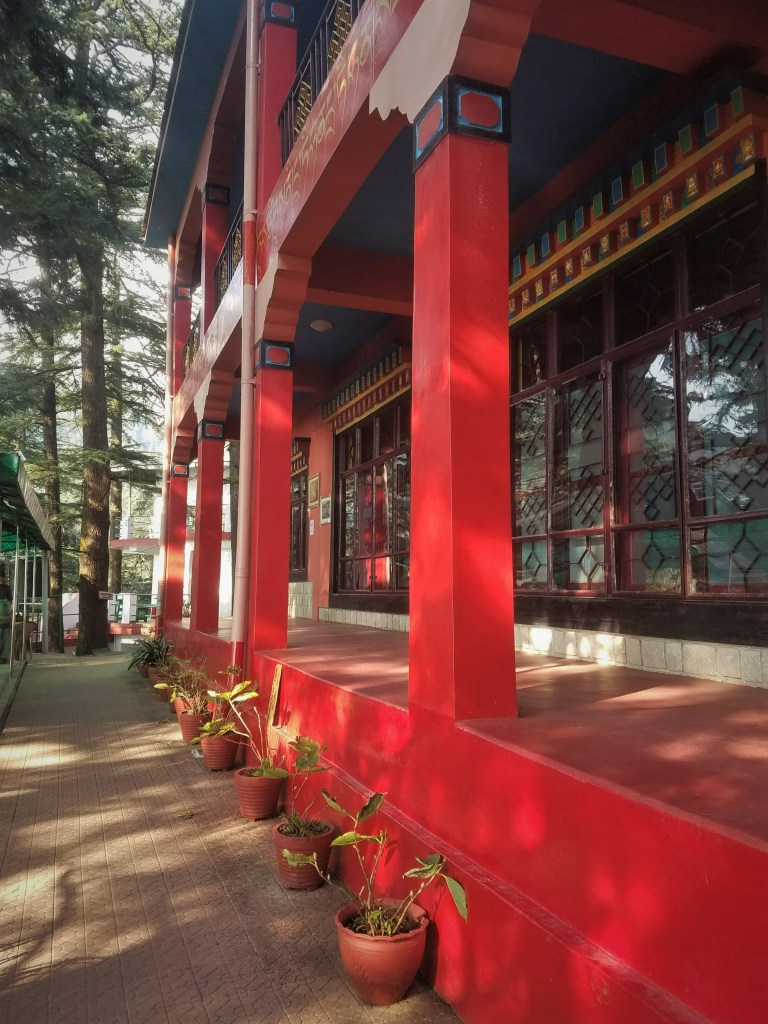
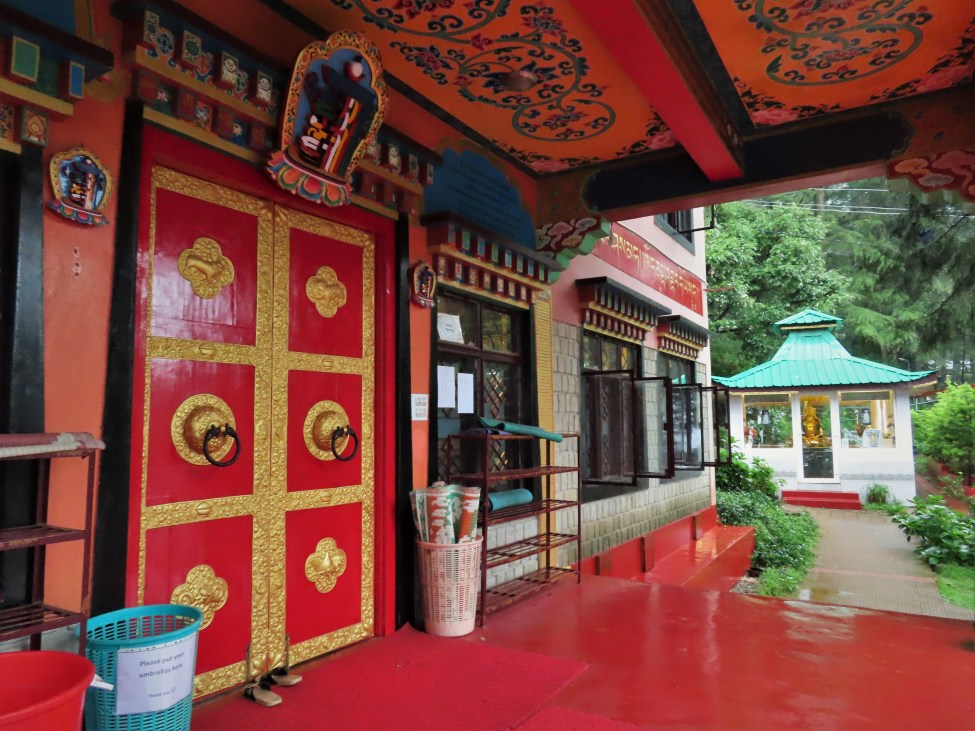
Since the lunch break was the most propitious time to squeeze in our assigned chore, at this time of day the Tushita premises turned into an impressive ant nest of people sweeping, wiping and mopping. If one were to walk through the colorful Tushita main entrance at that time, they would see a person every two meters sweeping the pine needles away all across the long and winding driveway overshadowed by pine trees, then walk past the kitchen and see the dishwashers at work behind the lower window on their right.
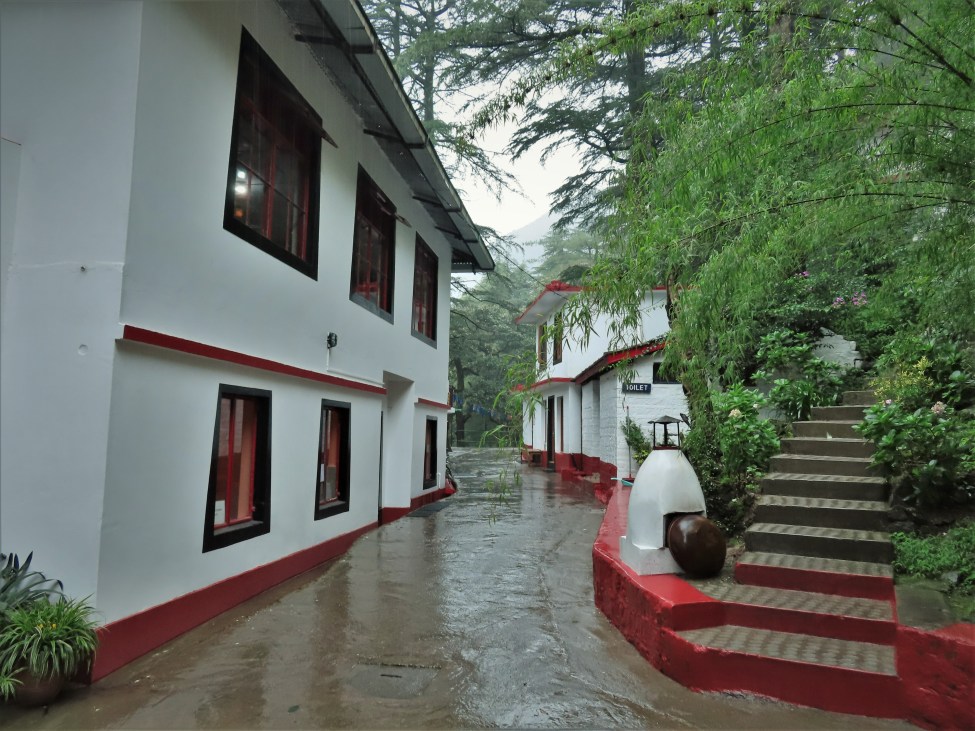
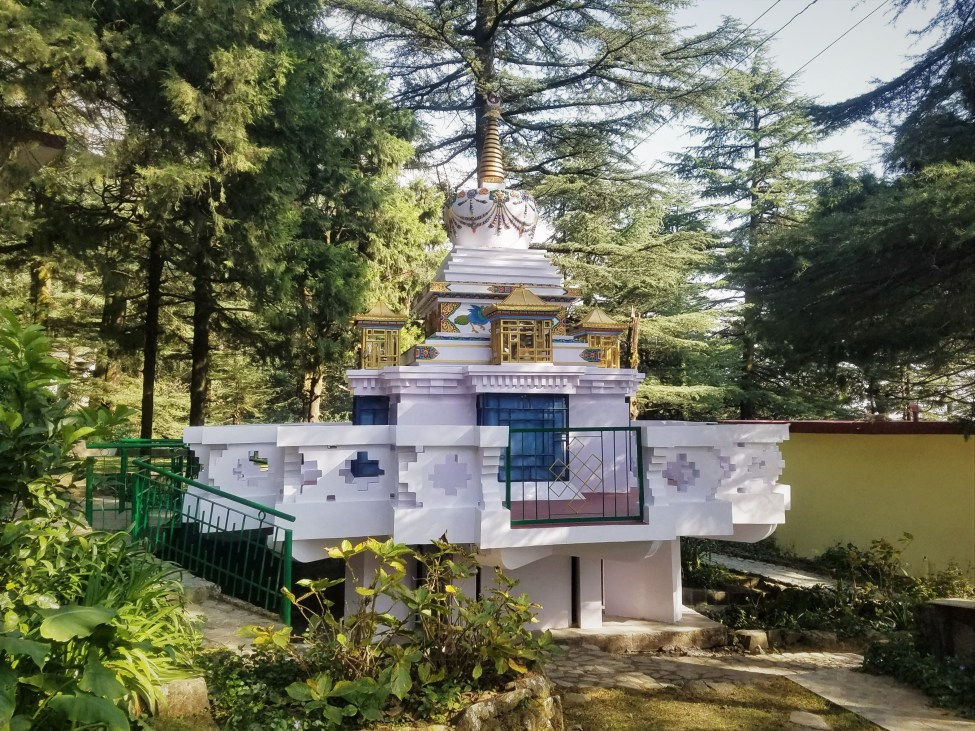
Meanwhile, the toilet cleaners, on the losing end of the karma yoga job lottery, would be handling their rags and buckets in the little white building to the left of the passage. Arriving on the tiny main square, our visitor would encounter more sweepers as well as me, mopping the entrance to the pink-and-red main building on the far side of the little square. There were the table cleaners in the dining hall across, and on the patio with the plastic furniture. Someone would even be cleaning the outside windows of the meditation hall around the corner of the main building. As our visitor would turn the next corner and enter the meditation hall through the heavy door facing the little garden with the Lama Yeshe memorial stupa, they would find it to be empty, as everybody would be busy with their chore. This would change, however, when the person with the task of ringing the gong would announce the start of the next activity on the schedule ten minutes ahead of time, causing all of the participants to gradually trickle in and fill up the entire gompa.
Meanwhile, the toilet cleaners, on the losing end of the karma yoga job lottery, would be handling their rags and buckets in the little white building to the left of the passage.
Discussion hour
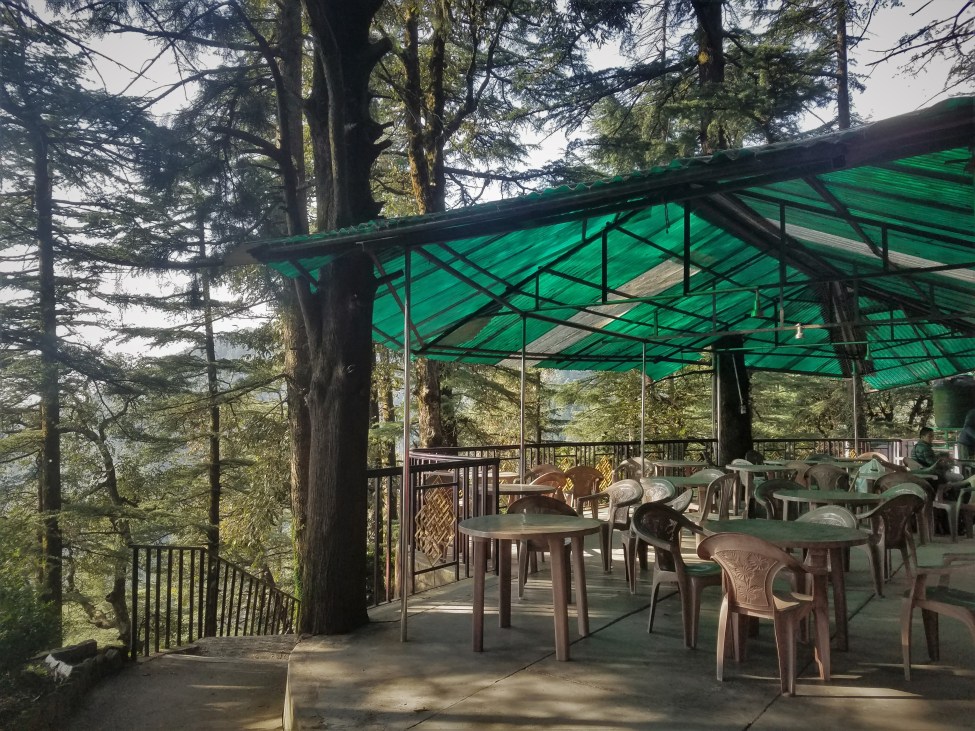
“Thank you for sharing that,” my Indian companion Vishad said to me quietly. I was sitting with him and five other young people on the little patio under the green corrugated plastic sheets, with plastic chairs and tables, and I had just finished telling them a quite personal story. We were gathered for what turned out to be the most fun part of the day and also the only exception to the silence rule: the discussion group! Nun Kunpen had divided all of the retreat participants into 12 smaller groups and every day, we had one hour to discuss questions about what we had learned in class.
“Yes, thank you,” Ma’ayan from Israel and Lisa from Germany joined in. Soon, Vishad and Lisa followed my example and shared a personal story in the common attempt to apply to our own lives what we had learned in class about the causes and cessation of suffering. Antoine from France and Maher*, also from India and my roommate as well, joined in on the conversation. Yael*, from Israel, was having some difficulties with the English but the entire group patiently waited to hear from her anyway and whenever necessary, Ma’ayan would translate something into Hebrew to make sure she could contribute. The gong at the end of the hour came way too soon.
*These are fictitious names for people from whom I did not receive explicit permission to use their own names.
The first monkey visit
The schedule followed its course throughout the rest of the day: after the tea break, with Dalai Lama birthday cake (he turned 87 on this day!), we had another two hour class in the main gompa, followed by a guided meditation with Maya. There was soup and bread for dinner and another last meditation after that, before everybody started making their way to bed.
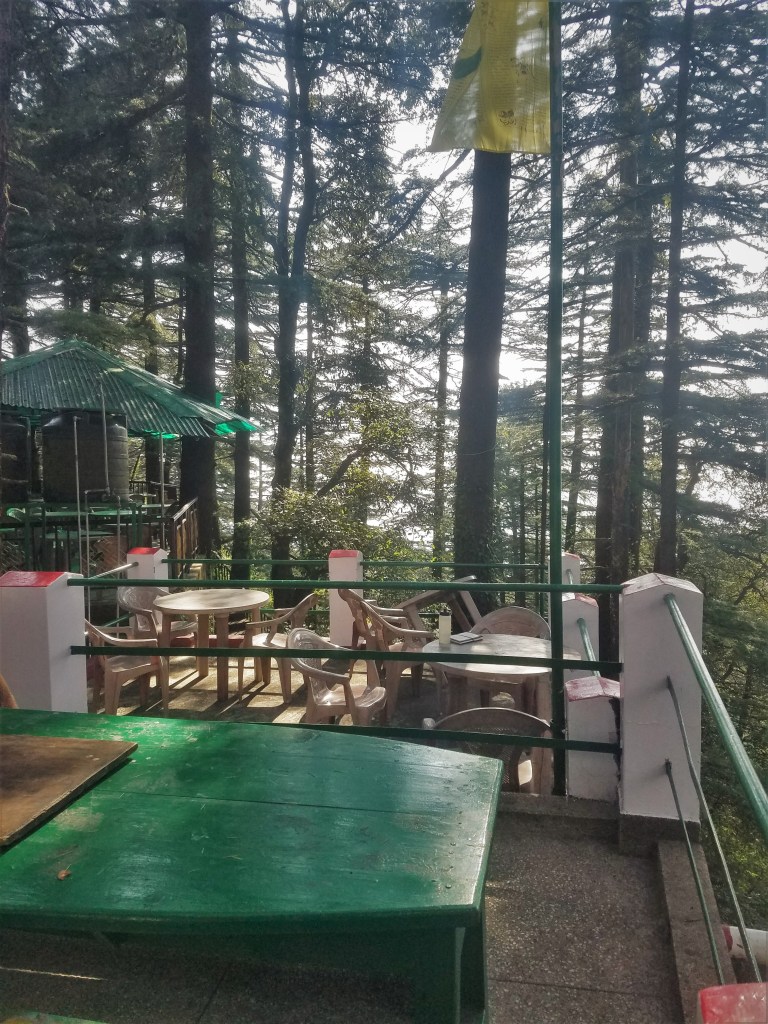
All of it was rather uneventful, as it was supposed to be at a retreat with no distractions (which would change on day 4), except for dinner. Along with some other people, I was dining outside when I suddenly heard a loud bang. A monkey had landed on one of the tables and was hastily preparing an offensive on a little cup that was still lingering there. Some people scared it away while the rest of us quickly retreated from the little outdoor seating area. Nun Kunpen had warned us about these long-tailed macaques. They live in the surrounding trees and know the Tushita premises better than anyone else. In a sense, they are the true residents of the place. They obviously don’t care about retreat rules, but all the more about food and will not shy away from trying to steal it. For that reason, Kunpen also insisted that we close the windows and doors of our dorms at all times.
“Otherwise,” she said in her beloved German accent, “the monkeys will have a party in your room. And they might leave a little present on your pillow. And then you will come to my office. You don’t want to clean it – I don’t want to clean it – so please, please, keep the windows of your room shut.”

When I went to bed that night, the windows of our dorm were shut indeed but I could hardly fall asleep. Vicious bites all over my legs, courtesy of relentless mosquitoes, were torturing me when I noticed some sort of fanfare music resounding from somewhere outside Tushita which just wouldn’t stop, even though it was the middle of the night. Confused and slightly frustrated, I thought of how I couldn’t afford to be too tired. There was one more normal retreat day ahead of us and after that, we would go and see the Dalai Lama… in person.
Chapter 4: Struggles, anticipation and a game in my head
Looking forward to the Dalai Lama teachings
Anticipation was in the air when nun Kunpen explained to us that we would meet the next day at 5 in the morning to start walking to the Dalai Lama teaching grounds together. We would break our silence and mingle with thousands of other people in order to listen to what His Holiness, as the Tibetan Buddhists call him, had to say. The event of the Dalai Lama giving these public teachings had been announced rather late, when the Tushita retreat was already scheduled. Since Tushita wanted to offer us the opportunity to attend these, without having to cancel the entire retreat, they sent us that noteworthy email to let us know they had decided to include it in the program. And so it was that we were now only one day away from seeing one of the most important people in the world in real life. It all seemed quite surreal. But for now, we had to stay focused on the regular retreat schedule.
And so it was that we were now only one day away from seeing one of the most important people in the world in real life.
Meditation problems
The day had not started well for me, though. I was tired after a night of bad sleep, making it hard to focus in class. Moreover, my meditations were not going well. I had trouble getting comfortable on the cushion, since it was hard on my back to sit in that position for too long. By now, we did not limit ourselves to the calm abiding meditations – the ones where we simply focus on our breath to calm our minds – but in the evening we also did analytical meditations, in which we brought a certain concept into our awareness, like how precious of a chance we actually have to live a human life and the potential of what we can do with it. But my aching back was so distracting that I felt like these meditations that could be so insightful, were partly going to waste for me. I needed to find a solution.
Reincarnation
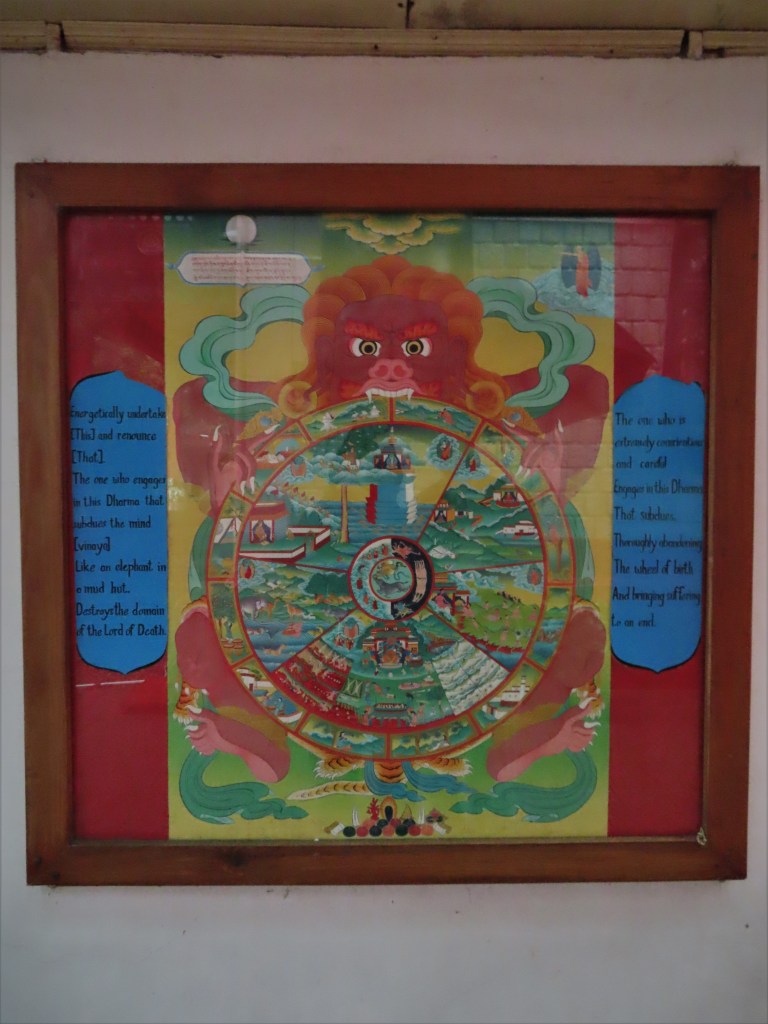
Drolma taught us about the possibility of reincarnation and the different realms of existence one can be reborn in. There were some thought-provoking arguments made for considering the possibility of reincarnation, such as scientific evidence pointing towards the possibility of consciousness existing without being supported by the brain or body. It was a great exercise in opening my mind to something beyond my understanding. However, since I did not rationally grasp it as a fact nor could my inner wisdom enlighten me on it at all, and I didn’t want to rely on belief (which the Buddha would not encourage me to do, either), I decided to move forward assuming I will not reincarnate, leaving the possibility open for the opposite to be true yet beyond my understanding.
We talked about this and other topics in the discussion group, which was the highlight of my day. Vishad was all about insightful suggestions, while Antoine liked to ask challenging questions. Ma’ayan loved drawing from her personal experiences as a teacher at a boarding school and Lisa, in the midst of a soul-searching journey, was always happy to join in with some questions or insights of her own. My Indian roommate Maher was overall keeping rather quiet, although she calmly joined in when she deemed it appropriate. We kept encouraging Yael to share her views as well, even though she remained slightly uncomfortable with the English.
A faces game
During dinner, I quietly shared a table with my discussion group companion Ma’ayan and with the American whom I called the ‘gong girl’ in my head, in reference to her karma yoga job. This was a little game I had started entertaining myself with: as I was enjoying a meal or my tea, if I wasn’t writing in my journal or reading one of my spiritual books, I tried to recognize as many as possible other retreat participants as I could. Some I remembered from earlier encounters, some from certain actions I had observed from them: there were people I had talked to before the start of the silence, others were my roommate or my neighbor in the main gompa, yet some others had asked a specific question in class that had stuck with me. Or sometimes a person would just have a very striking physical appearance (a specific tattoo, impressive hair…) and I would recognize them that way. Throughout the retreat, I would try to add to my ‘collection’ of people I recognized and I would give them little nicknames to match, since I didn’t know their real names.
The evening meditation
After dinner, I tried using one of the little meditation benches that were available in the main gompa and help you sit on your knees. Suddenly, I was so comfortable that I could entirely focus on the meditations at hand. Yet, I felt like I still needed to grow more into these meditations. Maybe I was trying to go too fast or hoping for some magical effect when it doesn’t necessarily work that way. I still had seven retreat days ahead of me to explore it more, though. What I definitely was looking forward to, in any case, was the next morning. Even though the gong would ring at 4 AM this time.
Chapter 5: The big day
An early departure
It was still dark and it drizzled a little when I joined the group of people who had gathered on the little Tushita square. In silence, we all started walking down the many steps in the direction of the road, leaving Tushita through a little back entrance. Once outside, we were allowed to break our silence. D and I used this opportunity to catch up with each other as we followed the road that kept sloping downwards. Slowly, daylight crept in upon us.
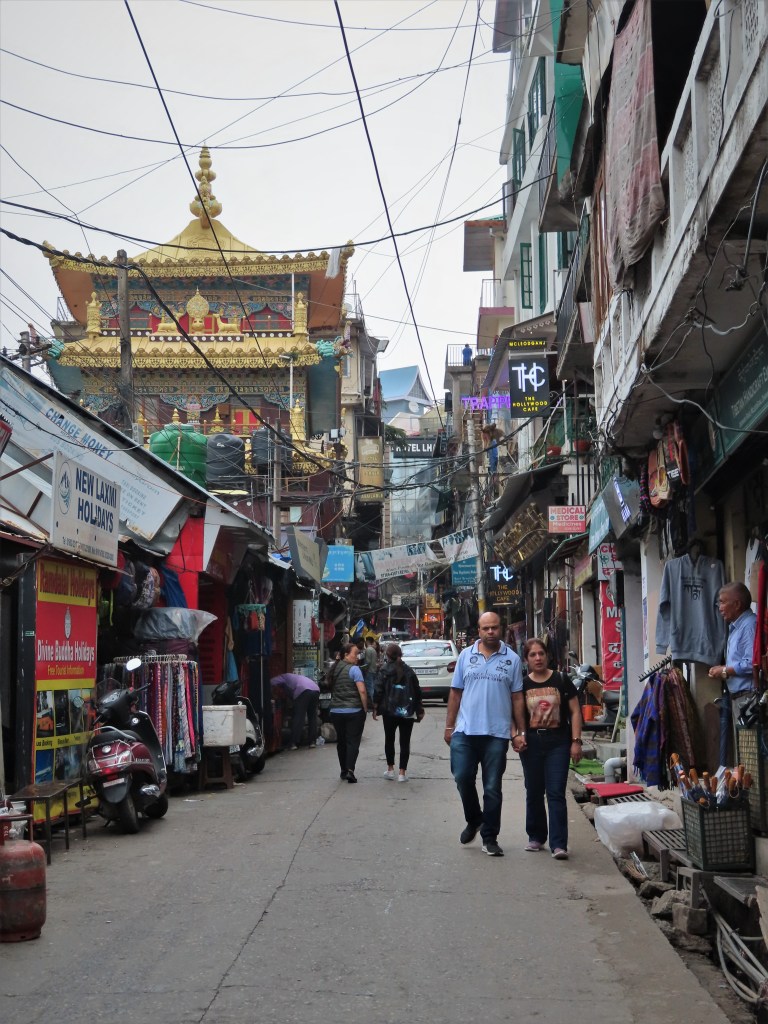
Suddenly, we were back in the center of McLeod Ganj, which we had explored upon arriving in Dharamshala, but this time around there were no cars getting tangled up into a traffic mess, no heaps of people walking in all directions, no open shops or restaurants attracting attention. It was almost like an entirely different place that still felt oddly familiar. How strange to have been tucked away in the quiet and wholesome Tushita universe for several days in a row, away from the world, I thought.
Waiting in line
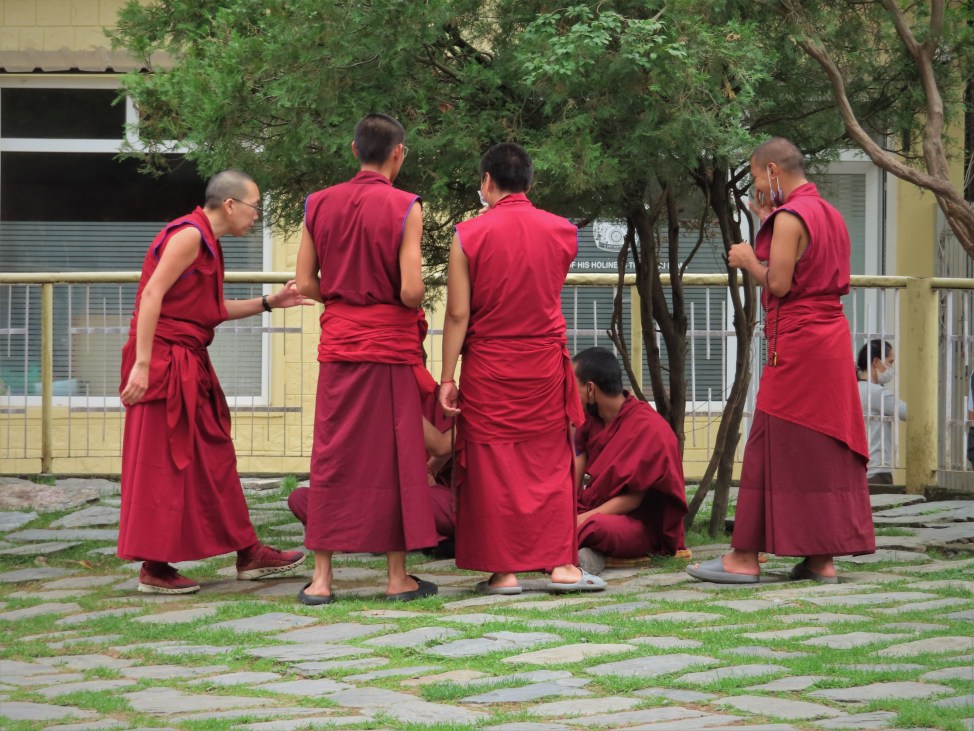
Soon however, it was not just us in the streets anymore. As we neared the teaching grounds, we noticed more and more people headed in the same direction, most of whom were monks. At some point, we arrived at the end of the queue assigned specifically to them. As far as I could see, the street was lined with monks in red robes, some of them still kids, and most of them carrying an umbrella. It was a magnificent sight. Since my camera was still locked away in the safe at Tushita, I took a mental picture that I stored away in my memory.
As far as I could see, the street was lined with monks in red robes, some of them still kids, and most of them carrying an umbrella. It was a magnificent sight.
We waited in the line for lay people. From inside the building, we heard continuous throat singing, adding to the anticipation that was already palpable among the crowd. Since men and women were to go through different security checkpoints, D and I had to move into separate lines, both getting swallowed by the crowd in the process. After a very meticulous security check and being pushed around by other women in the line, I came out on the other side a little rattled. I took a moment to overlook the scene before me.
The scene of the teachings
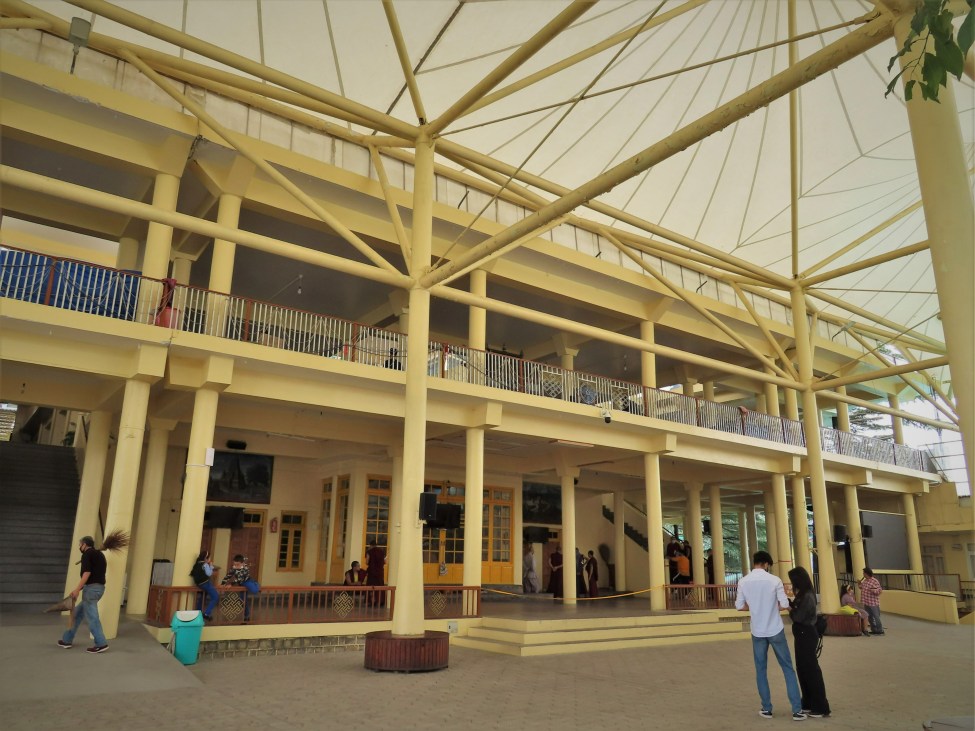
We had visited this place before: the monastic complex where the Dalai Lama has his private quarters. Behind the main building, where I was standing, was a garden with a lawn, separated in the middle by a passage that linked the main building with the gate to the private quarters. It was way more crowded now than on our first visit, but soon enough, I noticed some Tushita people in one half of the garden. I made my way over there and it seemed like almost everybody was here. However, D was nowhere to be seen. I had expected to lose him in the crowd, but now that all the Tushita people were here, I suddenly felt sad that I couldn’t find him. Meanwhile, the monotonous throat singing continued to envelop the crowd in a mystical atmosphere.
Unexpected good company
Suddenly, Aratrika walked up to me. She’s an Indian girl who sat near me in the main gompa and whom I talked to on the first day when we were allowed to exchange with our neighbors in class. I told her we could share one of the mats Tushita had provided us with, since I had carried one with me. Soon, my roommate and discussion group companion Maher showed up and asked if there was some space for her there as well, which we were happy to offer. Aratrika was very bubbly and funny, while Maher turned out to be an incredibly sweet and warm person. And just like that, I was suddenly having a very good time with these two girls.
The big moment
Some commotion traversed the crowd like a ripple and soon, everybody gathered near the fences separating the garden from the middle passage. All eyes were on the big gate in the back which had just opened. Several people were coming out, dressed in orange robes and wearing yellow hats in the shape of a half moon. Is one of them the Dalai Lama? I wondered, peering at the people standing there, but I figured I would be able to tell if it were the case.
Some commotion traversed the crowd like a ripple and soon, everybody gathered near the fences separating the garden from the middle passage.
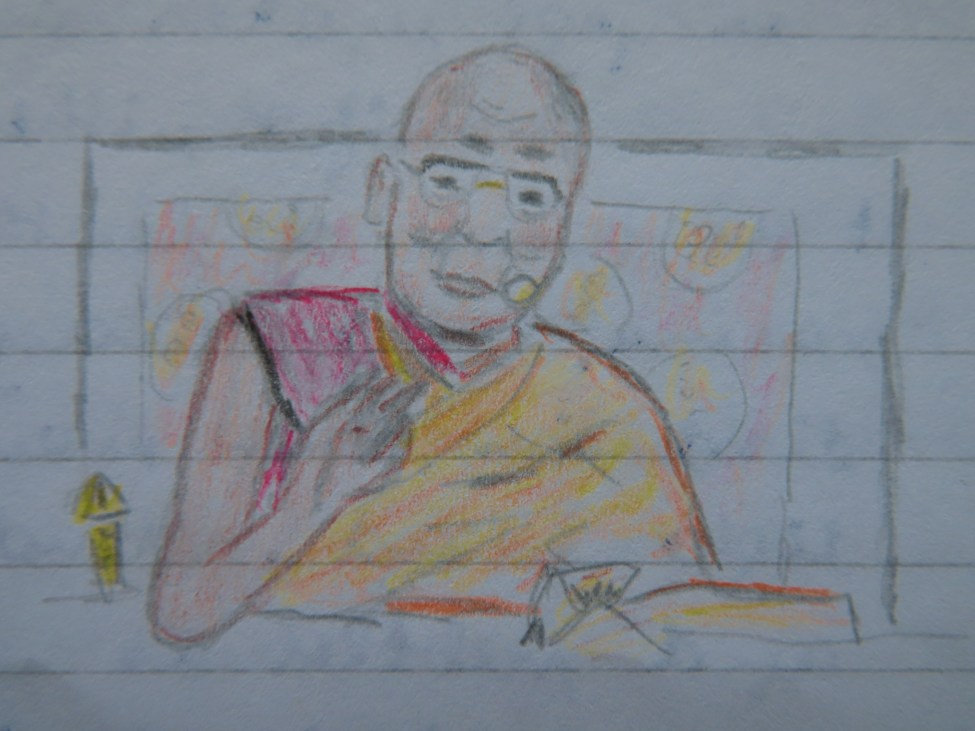
I knew it immediately. It was not so much that I recognized him from the pictures. I simply had never experienced being near someone with such an immense radiation of positive energy to the degree that I could notice it from meters away, where I was standing. Helped by two men each holding one of his arms, the freshly turned 87-year-old Dalai Lama was slowly stepping out of the gate, smiling at the crowd with such genuine, heartfelt happiness, probably warming each and every single heart present out there in that moment, including mine.
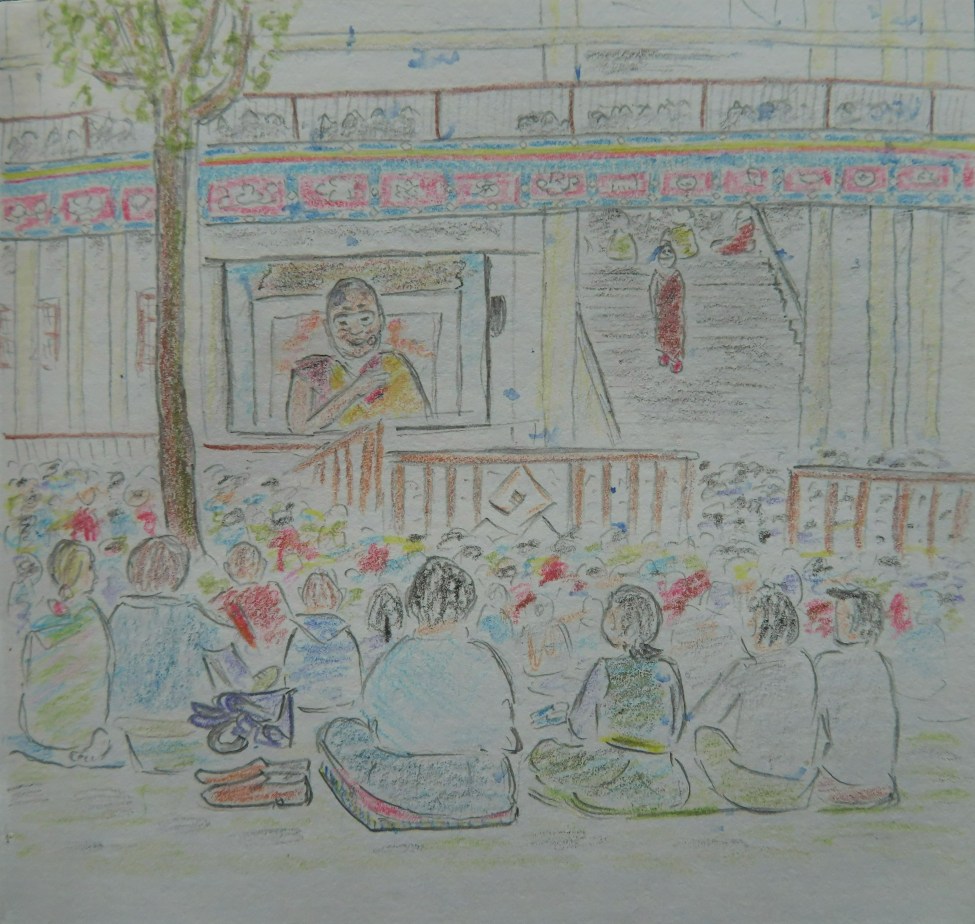
I was impressed. As he walked down the passage and into the main building, all of which we could closely follow on the big screen in front of the garden, he smiled at the crowd and greeted many individual people, without a single trace of vanity. It was not a smile inspired by pride, witnessing how many people had come to see him. No, somehow you could tell that he really was genuinely happy to meet each and every person on his path. A true selfless love emanated from him. He gets it, I thought. He understands how to be happy. And so many good things spring from there. It was truly inspiring.
Bread and butter tea
Accompanied by the relentlessly ongoing throat singing, the Dalai Lama proceeded to enter the little temple inside the main building and ascend onto the teaching throne. Meanwhile, monks arduously made their way through the crowd, handing out bread at first and butter tea later, served from huge teapots into little cardboard cups. There were thousands of people present yet somehow, every single person received a share of the bread and the tea. I was stunned. Should an event of a similar magnitude have been organized in the West, food trucks would have surrounded the place, creating huge lines of people who had the motivation to wait and pay for overpriced mediocre food, leaving others to their own means. Here, it was a given that everybody had the right to bread and tea and should not even have to leave their spot to obtain it. That may have been what impressed me the most about this whole event.
The teachings
The throat singing stopped as the Dalai Lama was ready to start speaking. His speech was interrupted by a lot of rituals, because this occasion actually was an initiation to a specific sort of Buddhist teaching, asked for by the many monks of the nearby monasteries. We listened to the English translation through a little FM radio that we had purchased beforehand, as recommended by Tushita. I took a moment to try and realize where I was: amid a crowd of mostly monks in Dharamshala, India, listening to the Dalai Lama speaking to us in his very own backyard. Surreal.
A precious souvenir
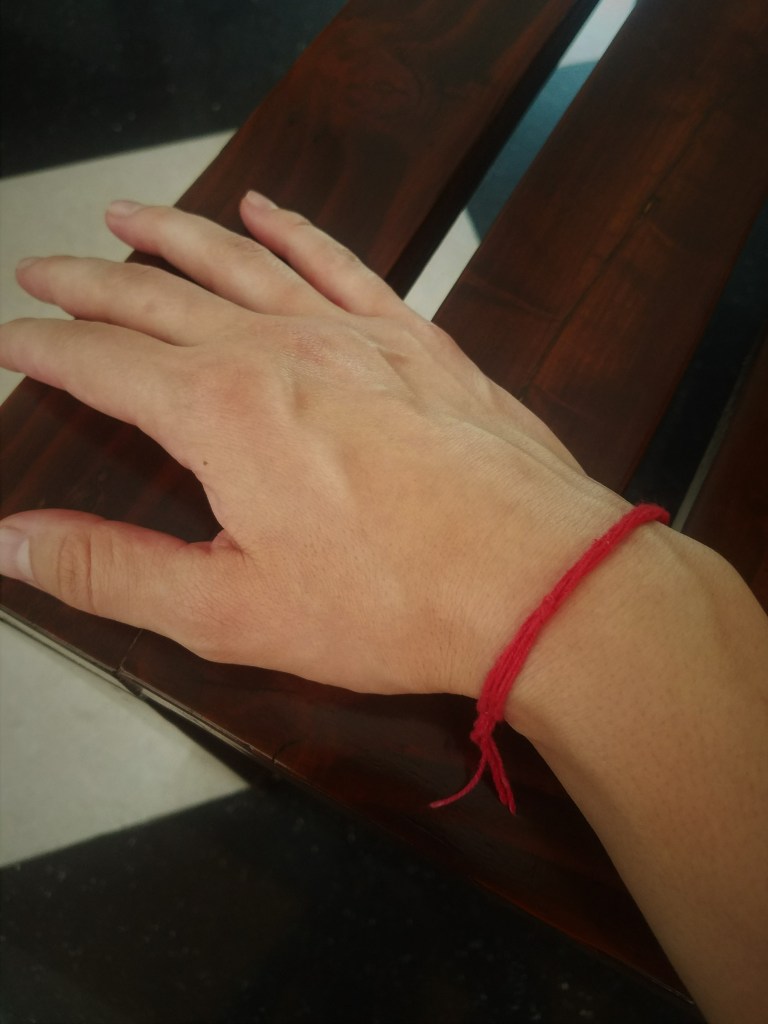
In the same fashion as the bread and butter had been distributed, everybody obtained a little red piece of string to tie around their arm for a blessing. I had just finished tying it around my left wrist, when the old monk who sat behind me, tapped me on the shoulder. He pointed out that it should be on the other arm and with my permission, proceeded to tie it onto my right wrist. To this day, that piece of string hasn’t left my arm, even though over time it did fade to a very light shade of pink.
Another day of teachings
As we walked out a couple of hours later, I was happy to have experienced all of this but also a bit sad not to have been able to share it with D. I only saw him again once I had reached Tushita. The next day, we were among the reduced amount of people who went to the second day of the teachings and this time, we did sit through it together, sharing our mat with a sweet, old Tibetan lady. There seemed to be even more rituals than the first time, making it difficult to learn much from the teachings, but seeing the way in which this old man conducts himself and approaches life was a very inspiring lesson to me in its own right.
Chapter 6: Continuing the meditation retreat: a remarkable sequence of emotions and events
Back to silence
After the Dalai Lama events, I felt like I was falling into a little bit of a slump. Connecting with other retreat participants had been so nice, but back at Tushita, the silence was still well and firmly established. On the teaching days, there was no discussion group either, to make sure we would not fall behind with the contents of the course. All I had were the meditations, the classes and the spiritual books. I did manage to find a novel in the Tushita library, surprisingly, but I kept it tucked away in my room and decided I would only read it if I really started feeling bad.
The workings of karma
Meanwhile, class never became uninteresting to me. I really liked diving deeper into the different topics of Buddhist philosophy, which most often seemed to offer some very valuable wisdom. At some point, we learned about karma: positive actions will lead to positive results, just as negative actions will lead to negative results. Of course, when something positive or negative happens to us, it is impossible to trace back exactly what caused this because the nature of reality is simpy too complex for that. However, I could definitely see the truth in the general idea and it seemed clear to me that choosing positive actions over negative ones will lead to a better and happier life.
At some point, we learned about karma: positive actions will lead to positive results, just as negative actions will lead to negative results.
Building blocks of happiness and enlightenment: loving-kindness and compassion
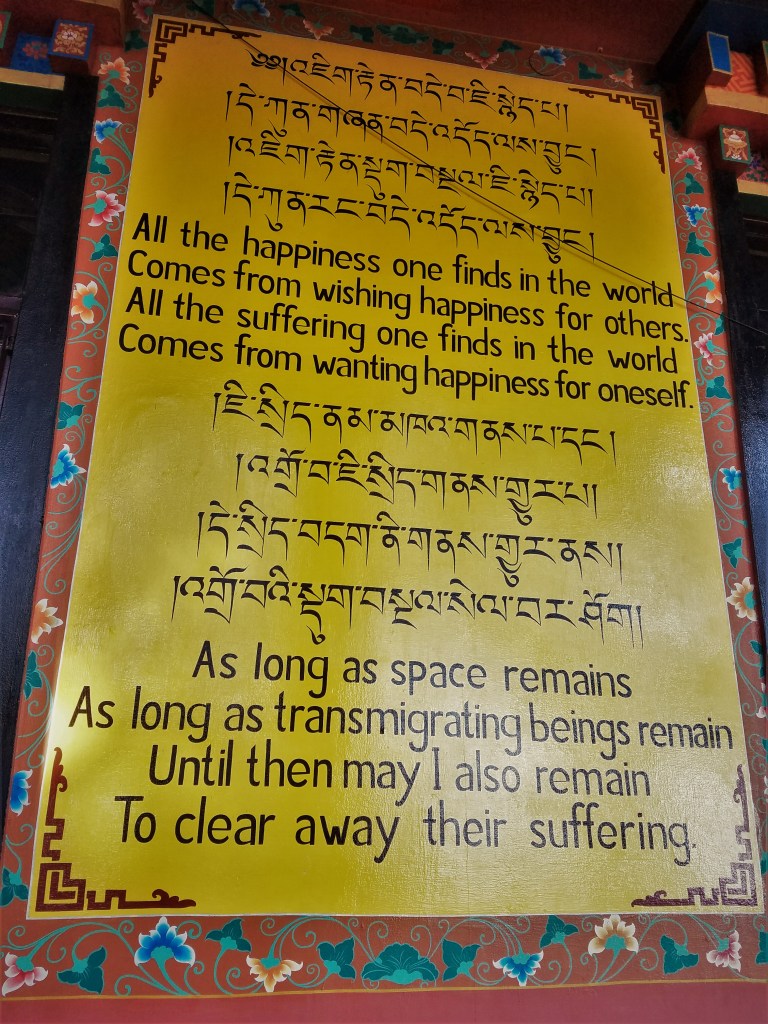
We also went deeper into what loving-kindness and compassion truly mean: loving-kindness is the sort of love you extend towards others without expecting anything from them in return. Because if you do expect something in return, it becomes attachment, one of the biggest sources of human suffering. Compassion is the wish for others, but also yourself – with a western audience, it is important to stress the need for self-compassion, said Drolma – to be free of suffering. Deep inside myself, I could recognize the huge value of this part of the teachings. Aren’t they universal values, anyway? Don’t we all know, at our deepest level, that these are the way forward if we intend to be genuinely happy?
Precious encounters
One night, we were doing a guided meditation in which Maya asked us to picture an instance when we had stolen something, even if it was something small. I felt a bit odd, since I could not remember any such instance in my life. As the guided meditation went on, how did we feel about that object, did it provide us happiness and so on, I meanwhile was just racking my brain for any memory of stealing at all, without success. Of course I am no saint, I’ve committed my share of mistakes. But not stealing, apparently. By the end of the meditation, I sat on my cushion feeling somewhat frustrated, since I hadn’t managed to get anything out of the entire half hour. I decided to go and talk to Maya.
As I stood in line in the middle passage in the gompa, I noticed the person currently talking to Maya was one of the girls from my dorm. She had introduced herself to me during the first Dalai Lama teaching, when she noticed that Maher and I, both her roommates, were sitting right behind her in the grass. In our little conversation, she had shared that she is dealing with a lot of anxiety, which made me feel bad for her.
I noticed now as she was talking to Maya, that she was really not feeling good. Maya tried to reassure her the best she could, but wasn’t in a position to do more than that. My roommate walked away, looking defeated, with nobody to reassure her or comfort her now. That was a rather disturbing thought. In a sudden impulse, I followed her to the back of the gompa, where she was assembling her stuff. I remembered that Kunpen had told us on the first day that you can break your silence if someone is clearly in distress.
“Are you okay?” I asked in a whisper. She looked at me in some surprise, then nodded timidly.
“I’m there for you, okay,” I added and she smiled at me, before leaving the gompa.
I remembered that Kunpen had told us on the first day that you can break your silence if someone is clearly in distress.
After this interaction, I walked back to the front, because I still wanted to share my thoughts with Maya. Gently, I asked her why we weren’t allowed to pick a past mistake of our choice.
“I’ve thought of that, but the problem is,” she said, pausing a while, “some people here likely have huge trauma caused by things they’ve done in the past. Especially among the Israelis, who have a mandatory army service. This meditation would become very heavy and maybe even traumatizing for those people. So that’s why I chose stealing; it doesn’t carry that same heaviness.”
Taken aback a little, I understood a lot better now and actually felt very respectful of this considerate choice. After wrapping up our amiable conversation, I exchanged a smile full of kindness with her and felt a warm feeling of connection. The frustrations I had felt, suddenly seemed so silly and had now completely melted away. Later, we did our last meditation after dinner, and this one was actually very helpful for me and I left the gompa filled with peace and gratitude.
The magic of loving-kindness
The next day, we did a meditation that touched me to my core. We had to imagine the part within ourselves that is loving-kindness, as a bright light that keeps ever growing and spreading its rays in all directions, touching everything and everyone on its path. It made me connect with the most beautiful part of myself and it was such a bright and warm feeling, and an amazing idea to be able to spread that all around me. It was such an intense experience that it made tears of joy and amazement stream down my face throughout.
It made me connect with the most beautiful part of myself and it was such a bright and warm feeling, and an amazing idea to be able to spread that all around me.
That evening, I wrote my unhappy roommate a note. I had told Drolma I was worried about her and asked if there was something I could do to be there for her. She appreciated the gesture and allowed me to break my silence towards her should she seem to be feeling very bad that night.
“Thank you,” my roommate gestured from the other side of the dorm after reading my note. Unfortunately, there was not much more that I could do.
The next morning, she handed me a note of her own and a bar of chocolate. “Thank you for your kindness,” she had written, “it means a lot.” A warm feeling crept up on me. At least my reaching out had made some difference. I thought back to my beautiful meditation of the previous night, my inner light almost impatient to travel wherever it could.
Doubts, frustration and sadness
Later that day however, my bright sky gradually started clouding over. Several discussion groups could not stop talking after the gong had rung the end of the hour. Against the rules, they continued their conversations with much enthusiasm. In a way, I could hardly blame them. Although my group and I had conscientiously stuck to the rule, connecting and exchanging with them had been some of the highlights of my retreat. I had really come to like my little bunch of kind and quirky people and enjoyed my interactions with them a lot. I started reflecting on the silence rule. Wouldn’t it make more sense if it were only in place for part of the day? Weren’t these human connections with likeminded people incredibly valuable?
Maher had not participated in the discussion group. I had gone looking for her in the dorm, where I found her in bed, sleeping. I wondered if everything was okay with her. Later, I saw her outside the gompa at the end of the afternoon class.
“Are you okay?” I checked with a whisper. She only nodded and smiled. Suddenly, I felt disturbed. How was I to know whether she was actually feeling okay? How could I extend my loving-kindness and compassion to her if I wasn’t allowed to talk to her?
After dinner, I lingered in the dining hall, where Aratrika was sitting to my left. A dull headache had started to creep up on me, when I noticed Aratrika didn’t give the impression to be feeling too good herself. The meal was over now and most people had left the dining hall. Outside, the rain was beating down.
“Are you okay?” It was the second time today I felt the urge to ask someone that question.
“Tired,” her lips said without the sound. My headache seemed to be growing stronger. Everything about her told me she was not just tired. But I could not be there for her the way I wanted to; there was almost nothing I could do to help. I looked at D, who was sitting nearby and seemed to be dealing with some difficulties of his own and could probably use some comfort, which I was not in the possible condition to provide.
Suddenly, something inside me snapped and I got up, grabbed my umbrella near the door and stepped out into the pouring rain. Unable to hold my tears, I hurried away from the dining hall, in the direction of the driveway, until I found a spot that was out of sight where nobody would notice me. As I cried under my umbrella, I started talking to myself, my words covered up by the sound of the rain that was streaming down along with my tears. They teach us all about love and compassion, I whimpered, but when we want to put it into practice, we have to remain silent. It doesn’t feel right!
Unable to hold my tears, I hurried away from the dining hall, in the direction of the driveway, until I found a spot that was out of sight where nobody would notice me.
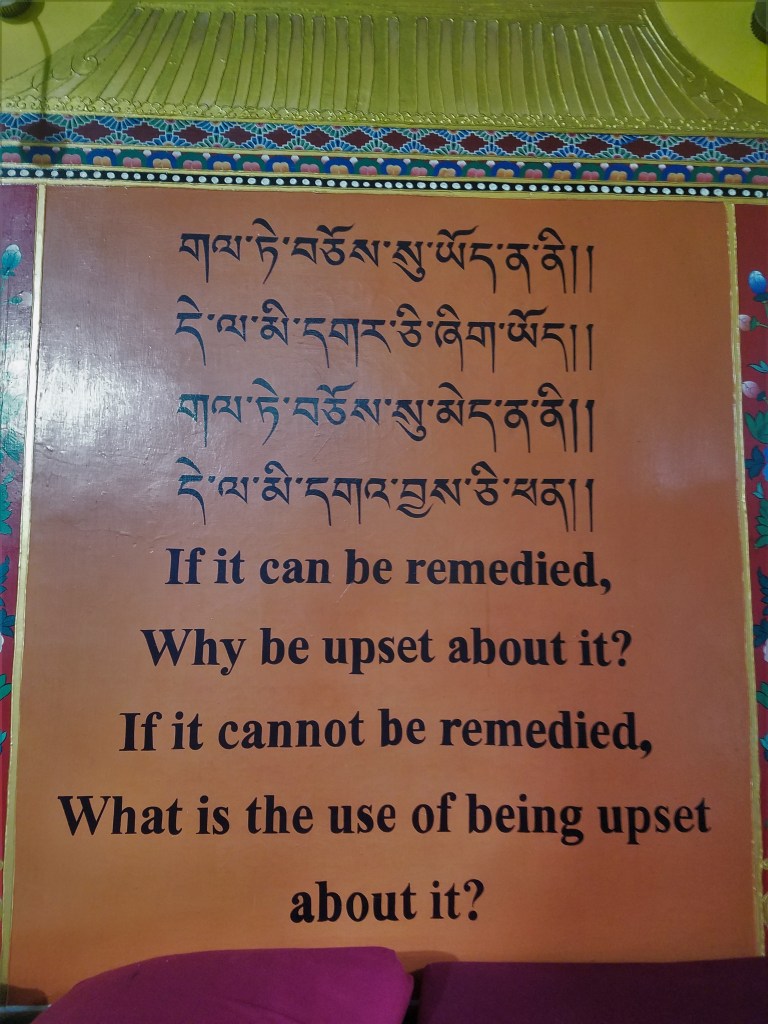
Ironically, at this point I was in need of comfort myself. I wasn’t even able to tell whether I was overreacting. Eventually, I just resigned to the idea that I was having a difficult moment, and I understood that I would have to wait until the next day to try and start feeling better. I made a promise to take good care of myself.
The loving-kindness of others
“People have been breaking the silence rule.” It was Vishad who brought the topic on the table in the discussion group the next day. The others agreed with him that it was not nice that some participants were not respecting the silence.
“I actually have been feeling bad about the silence rule,” I ventured to say. My companions turned to listen to me and I felt encouraged when I noticed that there was no judgement on their faces.
“I felt very upset last night,” I continued and I explained to them what had happened and how it had made me feel.
“That’s different,” Vishad answered, “those are no trivialities like some other people break their silence for.” The others reassuringly expressed their agreement with this.
“When it is to show compassion, it is allowed,” Ma’ayan joined in kindly, “definitely don’t feel bad about it.”
“Thank you,” I replied, “it’s been confusing, because the loving-kindness meditation was my best one so far –”
“It was for me too!” Ma’ayan retorted enthusiastically. She then showed me a sketch in a her notebook she had made after that meditation and when I saw that it depicted exactly how it had made me feel, I suddenly felt deeply connected to her.

I had actually already started feeling better at the start of the day. The calm abiding meditation in the morning was very relaxing and peaceful as usual, and that feeling stayed with me afterwards. I started realizing that anger had gotten the best of me the night before. Now that it had subsided, the silence around me was also present inside myself and I understood once again that Tushita was actually providing us with a unique opportunity by organizing this silent retreat. Under what other circumstances would it be possible to abide in a context with such a low amount of pressure or distractions for ten days straight, while we learn about some of the most prescious ancient wisdom known to humanity? The space to reflect on all of these teachings and to make clear resolutions moving forward, was actually a priceless gift handed to us. This understanding and the kindness that my companions had shown me, carried me through the two silent meditations days before the end of the retreat: two days without any classes or discussion groups.
Under what other circumstances would it be possible to abide in a context with such a low amount of pressure or distractions for ten days straight, while we learn about some of the most prescious ancient wisdom known to humanity?
Meditation days
There was a lot of meditating and a lot of silence. I improved my meditation skills, even though I had a hard time focusing sometimes, mostly when I felt tired. I had ditched the little bench a while ago, when that started feeling uncomfortable as well, so I was back to the initial position on the cushion. I got somewhat used to it but had to accept that my back wasn’t among the strongest. I could only envy the perfect posture of the girl in front of me, unknowingly providing me a goal to strive towards during the entire retreat. When we were not meditating, I made a lot of progress in the books I was reading. I still did my slightly annoying karma yoga job during the lunch breaks, hoping the rain would not intrude. During the breaks, the monkeys never failed to provide us with some entertainment. The retreat was nearing its end and when I played my little game, my collection of people I recognized had grown to almost everybody there.
The lights ceremony
On the last evening, it was time for our last evening meditation with Maya. It was a special one: after sitting on the cushion for the first part of it, we all lit the candle we had each received, took it in our hands and made our way for the door. Outside, in a line we slowly walked all around the building, quietly chanting the widely known Buddhist mantra ‘om mani padme hum’. After all the silence, the chanting sounded magical and I almost felt absorbed by it. We eventually stopped at the Lama Yeshe memorial stupa in the garden opposite the main gompa. One by one, we put down our little candle on the stupa, making a silent wish, after which we gathered in the grass and watched all the little lights, all the wishes, shining silently under the moonlit sky. Nobody talked but everybody was connected. The retreat would end the next day and we would break our silence, but for now I enjoyed the magical beauty and the stillness of the present moment.
Ending the retreat
I had learned so much, about Buddhism, about myself, about connecting with others in ways I hadn’t experienced before. I definitely had dealt with some struggles, but ultimately felt incredibly grateful for everything I had learned and experienced. I knew that I had changed for the better and that my life would not be the same after this.
When we broke our silence at lunch, everybody started talking and exchanging, and we felt that we had experienced something truly special, apart and together at the same time. I wasn’t even excited to turn my phone back on when I recuperated it from the safe along with my other stuff. D and I went and found each other in the crowd and hugged intensely. I put the novel back in the library – I hadn’t felt the necessity to start reading it after all. In the dorm, while I packed up my belongings, Maher reassured me that she had been doing very well in the past days and that she simply didn’t want to break her silence. She looked so peaceful, and I understood that she must have had a blissful experience, which made me happy for her.
I wasn’t even excited to turn my phone back on when I recuperated it from the safe along with my other stuff.
I exchanged with my new friends for a long time before finally walking out of the colored front gate of Tushita. That evening, I saw them again when most participants gathered in a restaurant in town for a last supper together, before everybody would go on their separate ways again. A beautiful image formed in my head, of about one hundred little seeds of loving-kindness and compassion, that would now be sown all around the world.
| Practical information We did the 10 day Tibetan Buddhist retreat at Tushita Meditation Centre in Dharamshala. Specifically, this was an “Introduction to Buddhism” course. The schedule for these and the intermediate courses can be found on their website: tushita.info. The course was given in English. The price is entirely donation-based; in order to cover the costs, as a guideline, Tushita asks for a donation of minimum about €100 for the 10 day retreat, which includes accommodation and 3 meals per day. It is encouraged to give more, which we did, in order to support the teachers and the organization. This can be done upfront or at the end of the retreat during checkout. In Dharamshala, we stayed at: Nomadic Inn (comfortable upscale hotel in Bhagsu, recommended) The Cocoon Project (boutique accommodation in Dharamkot, with good food at the on-site restaurant, recommended) Shalom Backpackers (budget accommodation in Dharamkot, recommended) |
More about India:
Looking for peace in holy Rishikesh
The Jogini Waterfalls hiking quest
3 days in Delhi: learning to survive India the hard way
 Morgane's Travel Tales
Merci Morgane d’avoir partagé cette magnifique expérience ! C’est très émouvant et en même temps ça beaucoup de bien. Et tes dessins sont magnifiques ! J’adore…. plein de douceur ! ❤️❤️❤️
LikeLike
Merci marraine !! Je suis contente d’apprendre que tu aies autant apprécié mon récit et que celui-ci ait pu t’apporter quelque chose. Je t’envoie tout mon amour !
LikeLike
J’ai même envie d’encadrer tes dessins ! Ils sont inspirants et apaisant !! 😘😘❤️❤️
LikeLike